Sol LeWitt Torn Orange Paper

a square of orange paper with two diagonal tears  from the upper corners toward the center, a 1975 artwork by sol lewitt
Sol LeWitt, From the Upper Left and Right Corners Toward the Center of the Page. R 324, 3/29/1975, torn orange paper, 50 x 50 cm, via Native
a square of orange paper with two tears from the left edge toward the center, a 1975 artwork by sol lewitt
Sol LeWitt, From the Midpoint of the Left and a Point Halfway Between the Mid Point of the Left Side and Upper Left Corner Towards the Center of the Page. R327, 3/29/1975, torn orange paper, 50 x 50 cm, via Native
a square of orange paper with two tears from the center of either side toward the center of the page, a 1975 artwork by sol lewitt
Sol LeWitt, From the Midpoint of the Left and Right Sides Toward the Center of the Page. R329, 3/29/1975, torn orange paper, 50 x 50 cm, via Native

I’m not sure who’s going harder here: Sol LeWitt for his 1975 show of serially torn orange paper in the House of Orange’s own backyard in Amsterdam; Art and Project, the gallery which had been a fiery nexus of conceptual art for decades, and whose gallery exhibitions were complemented by the Art and Project Bulletin, a groundbreaking publication that became its own art and exhibition platform; Robert and Suzanne Pannier, the Belgian collectors who spent decades in the relentless pursuit of domestically scaled conceptual perfection.

Anyway, the Panniers added three torn works to their LeWitt collection in 1975; MoMA got one from the series (R 328) in 2007 as part of a large gift of Art and Project material, which became two shows in 2009. Jonathan A. Hill had an incredible complete set of the Art and Project Bulletins [which, there was a batch released in 2011] and other related ephemera in 2024

The tears on the Panniers’ LeWitts look almost like creases, and the verso shows no tears at all, only a second title and signature. So LeWitt mounted them. One tear on the MoMA work actually looks like a tear, though, and seems to reveal a backing board tinted orange. On all of them, LeWitt’s pencil crosshairs mark the center of the sheet, the unreached target of every tear.

The Panniers’ LeWitts are being sold at Native in Brussels next month, and honestly, if you buy more than zero but less than all three, what are you even doing? Better to stay out of someone more serious’s way.

Lawler, Buren, LeWitt

louise lawler's black and white snapshot of a truck on 53rd st in manhattan with the museum of modern art in the background, a 1978 work titled truck
Louise Lawler, Truck, 1978, offset lithograph, 3 1/2 x 5 1/2 in., a 2015 gift to MoMA from David Platzker and Susan Inglett

While studying MoMA’s Louise Lawlers the other day, this little snapshot-sized print loomed larger than it does in real life. At first Truck (1978) seems like basic street photography, out of step with the art-in-the-wild practice Lawler became known for.

But then you realize the truck that gives the photo its name is in front of MoMA. And that MoMA has Sol LeWitt banners on it. Because LeWitt’s first US retrospective opened on February 3rd. Those Lines in Four Directions read immediately as LeWitt, but they don’t map immediately onto any works in the show or the catalogue. Combined with the Museum’s name along the top, I expect these were ads, not works in themselves.

a 1978 photo titled volkswagen by louise lawler is a black and white snapshot of a vw beetle in front of the museum of modern art on 53rd st in nyc. striped banners of sol lewitt hang on the glass panel facade, and a cluster of people holding placards with vertical stripes pass under the awning, a performance art piece by daniel buren, which is why louise lawler was photographing there that day
Louise Lawler, Volkswagen, 1978, offset lithograph, 5 1/2 x 3 1/2 in., a 2015 gift to MoMA from David Platzker and Susan Inglett

The stripes sure reflect in the Harrison & Stone building’s glass panels, though. And for a second, it seems like they’ve gotten picked up by the protest signs on the street. Did LeWitt get picketed? No. Those are Daniel Buren stripes. And so 31yo Lawler has caught two of her [older] contemporaries in one shot on the street. Or, rather, two, since there’s a related picture called Volkswagen.

In fact, though, it was a setup. By Lawler herself. In 1978 Lawler and artist Chris D’Arcangelo helped organize and document ten performance works Buren staged in New York City, Twelve Ballets: Ballets #8 à #19. A continuation of his 1975 performance, Seven Ballets in Manhattan, the first two, Ballets Nos 8 & 9, were staged by Buren himself in late 1977. After Buren left, John Weber Gallery managed the rest of the project, which involved a group of five performers holding Buren-striped signs walking—and getting photographed—along various routes through town. Ballet No. 11, which went through midtown, happened on Febrary 2nd. Lawler’s photos of each performance are on Buren’s website—except for the two she made for herself, I guess.

louise lawler's black and white photo of daniel buren's 1978 performance artwork documents five white art people carrying protest signs on sticks with buren's signature vertical stripes, mingling and/or marching with an electrician union picket line on a midtown manhattan street. everyone's wearing coats because it's february, and whatever the present and future hold, february used to be the coldest of winter in the 1970s.
Daniel Buren, Ballet No. 11, 2 Feb 1978, Le long de la 5ème av., entre 6e av. (O-E.) et Lexington av. ; entre 42e rue et 53e rue (S-N.), New York, photographed by Louise Lawler, image via danielburen.com, where it has a massive copyright watermark, vive la France ig

Because now that we know they passed it, it seems like a choice that Buren’s photos don’t include MoMA, Even though 53rd Street & Sixth was the northwest corner corner of their route [a loop, I think, from 42nd & 6th, across 53rd to Lex, and then down to 4nd. Except Buren talks about walking along Fifth Avenue. idk] They do include the art protestors showing solidarity with some electricians picketing a jobsite, though. It’d be interesting to see Lawler’s contact sheets.

Until then, artist book dealer-turned-MoMA curator David Platzker does shed some light on Lawler’s process. His catalogue essay for MoMA’s 2017 Lawler show explores the development of the artist’s use of ephemera as an artistic medium. These two pictures—which he dates to Feb. 1st—were first printed as Kodak postcards, snapshots, then Lawler had them printed commercially. The examples Platzker and Susan Inglett donated to MoMA are from this offset run. With just the one word title and her name, date, and copyright on the back, they look like the barest definition of a postcard, and she apparently sent them out to people as such. Love that for her.

Sol LeWitt Was Here

windows is a grid of 72 snapshots of second story windows, arches, balconies, air conditioners, shutters, etc. of colonial era and commercial buildings in phuket thailand, all mounted on a board for an edition titled, windows
Sol LeWitt, Windows, 1980, 72 photos, each 3 1/4 in x 3 1/4 in., mounted on 34 1/4 x 30 3/4 in. museum board, ed. 15 from an edition of 20 + 5AP, via Krakow Witkin

Looking into a 1989 etching this morning led me to the Sol LeWitt Prints Catalogue Raisonné, which is great. It’s one of three postwar print CRs produced by Krakow Witkin Gallery in Boston. [The other two are for Mel Bochner and Fred Sandback.]

Which is where I saw Windows, a 1980 photogrid LeWitt made as an edition by mounting 72 snapshots onto museum board, 25 times. The example Krakow Witkin has [ed. 15/20] still includes the pencil marks for mounting, which makes them feel like a carefully constructed collage object more than a traditional print. If only I’d made it up to Craig Starr’s show of Phong Bui and LeWitt last summer, I could have seen Windows in person.

a white hand carefully opens a softcover photobook by sol lewitt to a full page full bleed spread of a black and white photo of daylight playing across the rough, uneven surface of a pretty shittily laid brick wall out sol lewitt's window at one point.
Sol LeWitt, Brick Wall, 1977, offset print artist book, made for the opening of Printed Matter

LeWitt used photography more than it might seem. Edweard Muybridge’s time and motion studies were an early part of LeWitt’s engagement with seriality. And he made artist books with photos, including some incredible photos of the variations of sunlight on a rough brick wall outside his window that feel like gritty urban Monets. Some books make the SLPCR, but not this one, I guess. Anyway, point is, photographs.

I’d thought of Brick Walls because of how LeWitt’s photos of light on brick captured a sense of space, which an earlier photo book/series Stone Walls (1975) doesn’t. Because while it first appears as just found typology, Windows actually conjures a sense of place. Seeing all the arches in a jpg, I just assumed LeWitt had been shooting lofts in SoHo. But that is not at all what’s going on.

six fading snapshots of second story arched windows of colonial era buildings in phuket, part of a larger grid of photos by sol lewitt made in 1980
Detail of Sol LeWitt, Windows (1980) with the Phuket branch of the Bangkok Bank of Commerce on the upper left, via Krakow Witkin

A closer look at the signage shows LeWitt’s photos are from Thailand, specifically Phuket. Place was not something I usually associate with LeWitt’s work—at least not before some highly site- and context-specific works here.

[Now I’m racking my brain to remember which artist had compiled a massive archive of photographs in various typologies and grids, was it the TIME LIFE project Mungo Thompson did?]

a thin narrow woodcut print of multicolored rectanges in various shapes and orientations which are aligned on the top edge, but uneven on the bottom, floats in the center of a cream colored sheet of handmade japanese paper with a raw bottom edge. the image is of the wall drawing with doorway cutouts sol lewitt created for the centro pecci museum in prato italy, turned into a fundraising print in 1994
Sol LeWitt, Rectangles of Color (Prato), 1994, woodcut, image: 4 1/4 x 23 7/8 in. (10.8 x 60.6 cm), ed. 100 +15 AP, &c. via Krakow Witkin

Anyway, like learning a new word, I started to see references to place in LeWitt’s work where I’d least expected it. Or at least this once, on another fascinating but atypical-seeming print. Rectangles of Color (Prato) is a woodcut from 1994 that, tbh kind of gives the game away by having a place in the title. It turns out to be an edition published by the Museo Pecci in Prato, Italy, in conjunction with their 1993 commission of a wall drawing for their lobby.

a dark ceiling and floor and dark stained wood doorways on either side of a curved white wall covered with a frieze along the top edge of rectangles of color in fresco like tones, this is the sol lewitt work commissioned for the entry foyer of the centro pecci in prato, italy, in 1993
Sol LeWitt, Wall Drawing #736 Rectangles of Color, 1993, ink wash on plaster, at the Centro Pecci, Prato, via @garadinervi

Seeing the print first was baffling, but then I realized it includes the doorways in the museum’s curved wall. I’d imagine many of LeWitt’s wall drawings have similar site-specific characteristics, but none of them had souvenir prints. And the wall drawings catalogue raisonné is $600 for a single login, plus $60/year.

Hesse’s Lewitt Table & Lewitt’s Hesse Table

a black and white photo of eva hesse, a young white woman with dark straight hair lying on a velvet divan  in an art studio, with her arms at her sides, and she is covered with what looks like cord or spaghetti. above her is a ziggurat-shaped sculpture sticking out from the wall. at the bottom of the image is a clutterd coffee table, painted white with a grid on it, and a buch of stuff. hermann landshoff took this pic for harper's bazaar, and kirsten swenson used it on the cover of her 2015 book on hesse, irrational judgments
Eva Hesse photographed by Harper’s Bazaar’s Hermann Landshoff in her Bowery studio, 1968-69

After the immediate bafflement of whatever Eva Hesse is covered with, I find my eye rushing to the isolated, geometric certainty of Robert Smithson’s untitled ziggurat sculpture. And only then does it head to the cluttered table, filled with items obscuring a painted grid, which turns out to be a gift from Hesse’s friend, Sol Lewitt.

Anna M. Chave made a close read of the objects, works, studies, and models on the table in her 1996 book, Three Artists (Three Women): Modernism and the Art of Hesse, Krasner, and O’Keeffe. I’m gonna be real, right now I’m here for the table itself, and mostly for the table it replaced.

a black and white photo of geometric artworks in a gallery, including a table-shaped sculpture painted with a grid of squares, with three open cubes on it, a 1964 work by sol lewitt
Installation view of Sol Lewitt’s Table Piece with Three Cubes, 1964, since destroyed, at Kaymar Gallery, published in Irrational Judgments

In 1967, Hesse made Washer Table out of a low-slung, plywood table that had been given to her by Lewitt. It began as part of a Lewitt table/sculpture he made for a group show in 1964. After that show—curated by Dan Flavin—Lewitt tried it in another sculpture, then cut it down to coffee table height and gave it to Hesse. She, in turn, covered its grid-painted surface with thousands of rubber washers and a sheet of glass, and gave it back.

It’s recognized as one of Hesse’s first sculptural objects now, and one of the first to use rubber, but Hesse herself considered the placement of around 5,700 washers to be a form of drawing. Lewitt explained to art historian Kirsten Swenson that Hesse “only used the surface of the table as a drawing surface before returning it to me.”

a black and white photo of sol lewitt's loft, with a low glass topped coffee table on an old wood floor, in front of a low bench with some pillows and a bookcase behind. the coffee table has a bunch of stuff neatly lined up across it, but it is actually, or eventually, an artwork by eva hesse
Eva Hesse’s Washer Table, 1967, in a 1968 photo of Sol Lewitt’s studio from the Lewitt Archive, as published in 2015 in Irrational Judgments by Kirsten Swenson

The timeline is not clear here, but the table sure is. Swenson opens her 2015 book, Irrational Judgments: Eva Hesse, Sol Lewitt, and 1960s New York, with this 1968 snapshot of Washer Table being used as a table in Lewitt’s Hester St. studio. It, too, is covered with studies, models, objets, tchotchkes, an ashtray arranged, as Swenson puts it, “as if fixed to points on an invisible grid.”

a taupe walled townhouse gallery with a wrought iron stair rail along the back has a cluster of framed drawings on one wall, and a dark grey square table-like sculpture on the hardwood floor, washer table by eva hesse is covered with 5700 rubber washers. the craig starr gallery showed it in 2011
2011 installation view of Washer Table in Eva Hesse & Sol Lewitt at Craig Starr Gallery

The tchotchkes—and the glass—were gone by 2011, when Washer Table was shown at Craig Starr Gallery, in a Hesse/Lewitt exhibition curated by Veronica Roberts. Amy Whitaker has a nice account of visiting the show on art21, and meeting Lewitt’s widow and Hesse’s sister.

Eva Hesse, Washer Table, 1967, 8 1/2 x 49 1/2 x 49 1/2 in., rubber washers, painted wood, metal, silver gelatin print in the Eva Hesse Archive, Allen Art Collection, Oberlin College

Among the Eva Hesse Archive at Oberlin’s Allen Art Museum [donated by Hesse’s sister Helen Hesse Charash] is the best photo of Washer Table. Where it looks even less painted than in Lewitt’s studio. In fact, it looks downright unpainted. Lewitt had already painted or stripped it at least twice, and some time after 1968, it seems someone painted it again.

Lingerie & The John Cage Kimono

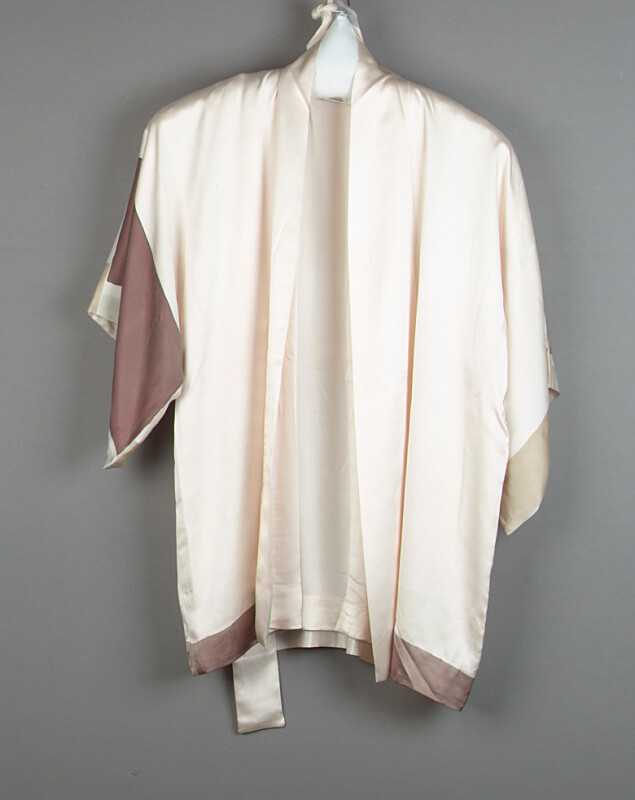
a hip-length kimono style robe in cream charmeuse silk with one sleeve in mauve, one striped with bone, and the bottom edge striped in mauve or light grey, on an archival hanger against a grey background. designed by john cage, or rather, conceived by john cage and designed using chance operations, and produced by crown point press, now in the collection of famsf
John Cage Kimono and Sash, 1982, hand-painted silk, published [sic] by Crown Point Press, via FAMSF

Is it really chance operations if a seemingly tangential Google search leads me to The John Cage Kimono?? From the Crown Point Press Archive, a gift to the de Young and/or Legion of Honor Fine Arts Museum of San Francisco?

And then an immediate follow-on search turns up the Crown Point Press Spring 1984 newsletter [pdf] which, the contemporary editions drama! I’ll get to the computers and fraud later, but first the “lingerie business”:

Continue reading “Lingerie & The John Cage Kimono”

On And Beyond Sol LeWitt’s Other Memorials

This just in from Our Correspondent In Berlin: the recent blog post about Sol LeWitt’s Black Form — Memorial to the Missing Jews (1987/89) is as incomplete as it was unexpected. Let’s go in chronological order, and from what should have been most obvious.

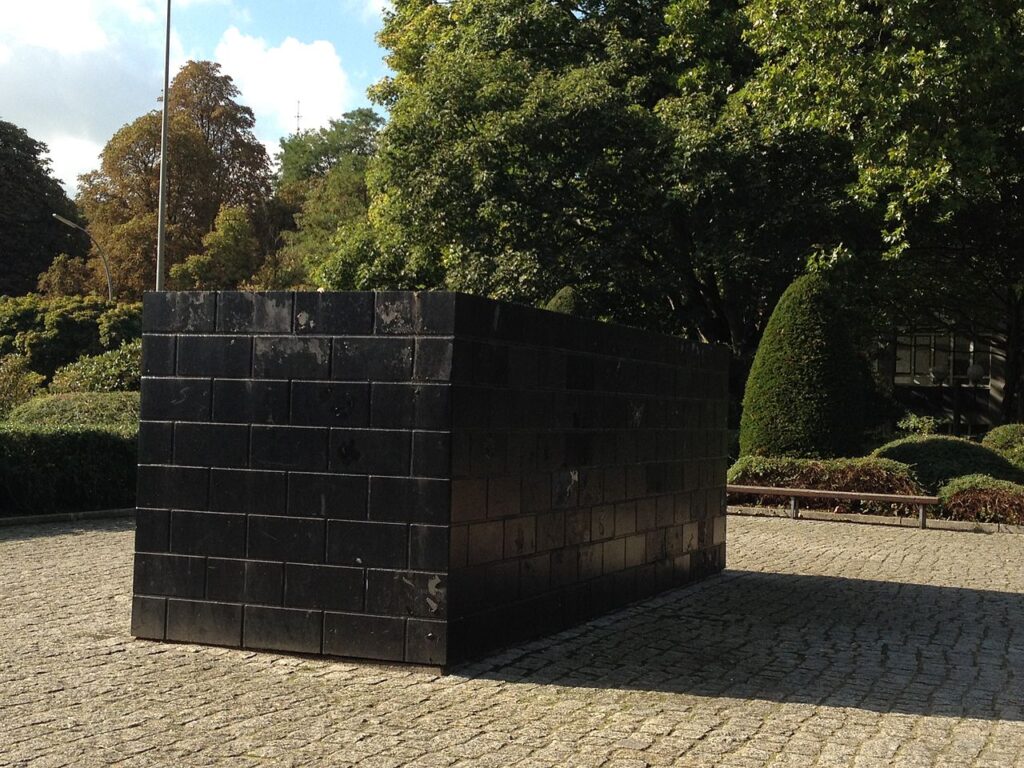
Sol LeWitt, Black Form – Dedicated To The Missing Jews, 1987/89, painted concrete, Hamburg, via

It is not enough to site the 1987 sculpture in the context of a Germany—actually Germanies—that had yet to address the issue of memorials or counter-memorials to the Holocaust. Or even to note—which I didn’t—that the 1989 re-creation of Black Form in Hamburg was not only larger, but happened just as the Berlin Wall was taken down. And of course, Black Form has existed in Hamburg ever since.

What most needs correcting is the context of LeWitt’s statement, “This was the only political art that I made and the only political thing about it was the title, but I thought I owed it to the Germans – and the Jews – to make one comment.” And the perception of exceptionalism it gave to the Skulptur Projekte, and the constraint it put on the political and memorializing element of LeWitt’s work.

Because that LeWitt quote was from 2000. And while it may have been true that Black Form was the only political art he made to that point, it was not the last, either for the Germans or the Jews. And those later memorials were very much related to Black Form, and not just because of their titles.

Continue reading “On And Beyond Sol LeWitt’s Other Memorials”

Destroyed Sol Lewitt Holocaust Memorial

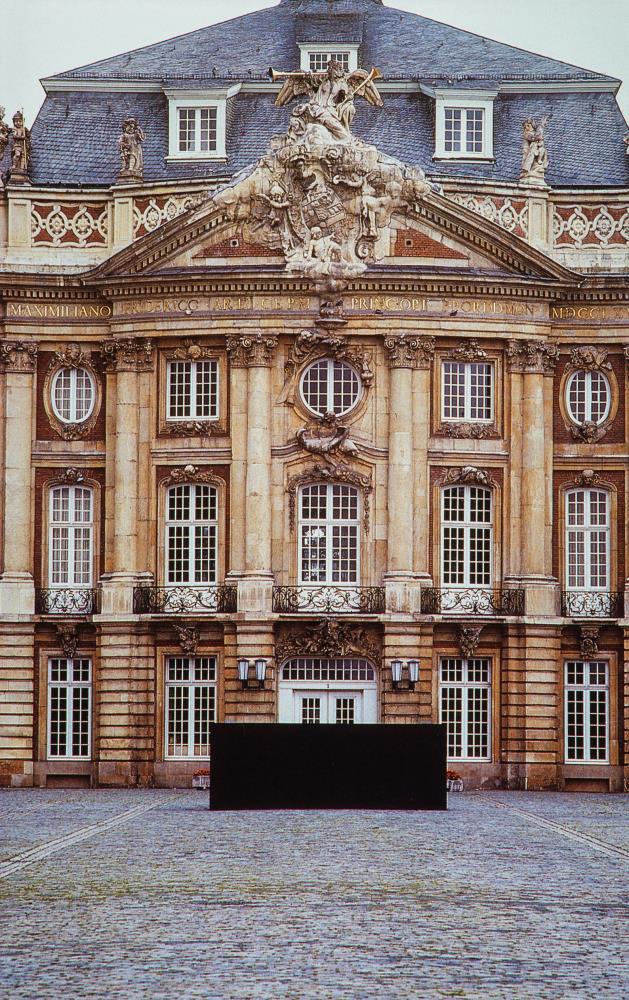
Sol Lewitt’s Black Form – Dedicated To The Missing Jews, 1987, painted concrete block, installed at the Schloss Münster/University of Münster for Skulptur Projekte, photo: LWL/Rudolf Wakonigg

Thanks to baileybobbailey’s reblog of archiveofaffinities I became aware of what Sol Lewitt described as his only political work: Black Form — Dedicated to the Missing Jews, which was one of two works he installed at Skulptur Projekte Münster in 1987.

The sculpture, an elongated block of painted concrete bricks, was at the entrance to the University of Münster, in the Schloss Münster. Lewitt felt compelled to give a politically charged title referencing not the Jews who were murdered in the Holocaust, but the generations of descendants of those Jews, who would never be born, leaving a permanent void in German society.

Lewitt was ready to donate the work to the city, or the university, but it was perhaps ahead of its time; in a divided country where Holocaust memorials were not yet a thing, Lewitt’s Black Form generated tremendous controversy and critique. It was actually destroyed after the Sculpture Project ended—in 2023 Stefan Goebel wrote a fascinating blog post about Black Form‘s fate—and in 1989, Lewitt ended up donating another version of it to the city of Hamburg, which still stands.

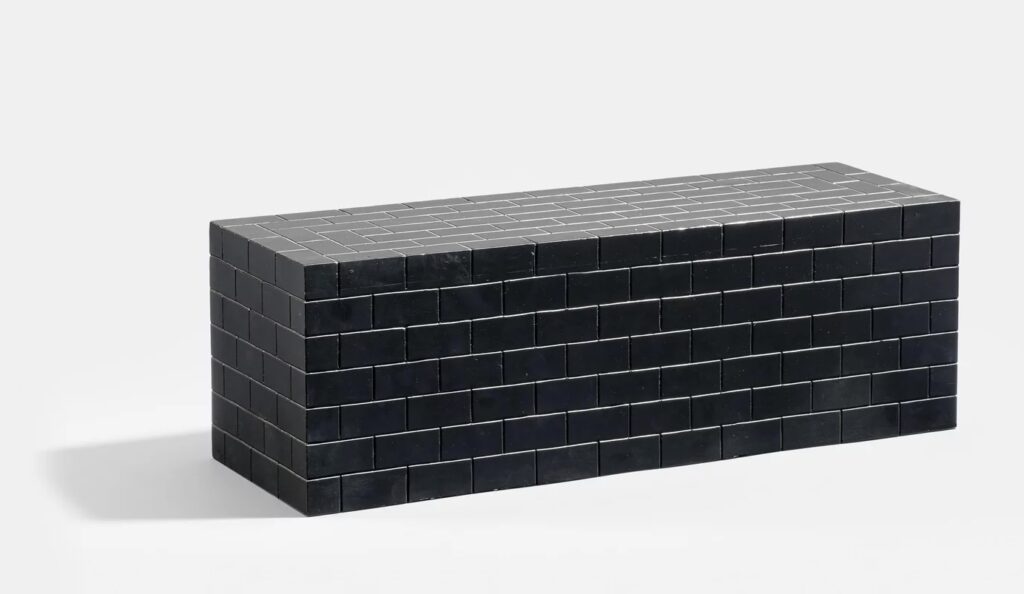
Sol Lewitt’s Black Form… sold at Van-Ham in 2019, tho the image is via artsy

Oddly/amazingly, a carved and painted wood replica of Black Form, dated 1985, so perhaps a maquette, turned up for sale in Hamburg. What has not turned up yet is discussion of the relationship between this early Holocaust memorial to the Missing Jews and Peter Eisenman’s (and, once, Richard Serra’s) Monument to the Murdered Jews of Europe that was eventually built in Berlin.

Skulptur Projekte Archive, 1987, Sol Lewitt [skulptur-projekte-archiv.de]
Black Form (Dedicated to the Missing Jews): The Destruction of a Holocaust Memorial [munitions of the mind, kent.ac.uk]

Hmm. Sol Lewitt São Paulo Biennale T-Shirt

Lot 110: Sol Lewitt Sao Paulo Biennale t-shirt by M. Officer, est. $500-700, 7 June at Wright20

After he made a giant Italian fresco-colored wall work for them in Hartford, the Wadsworth Atheneum curated Sol Lewitt into the 1996 São Paulo Biennale, where he made giant fresco-colored wall works there, too. Bands of color radiated off of three-, four-, five-, six-, seven-, eight-, and nine-pointed stars. The project was memorialized in a t-shirt collab with M. Officer, the Brazilian Gap. The giant label on the front confirms it was sponsored by the United States Information Agency, The National Endowment for The Arts, The Pew Charitable Trusts, and Arts International IIE [The Institute for International Education].

Verso via Wright20

Five years ago, you could have bought two of these t-shirts for $418. Or you can get one right now on eBay for $1500. If you want to try splitting the difference, a t-shirt owned by modern design aficionados Michael and Gabrielle Boyd is being auctioned in a few days. Me, except for figuring out if these were really screenprinted, I’m not that interested. I’m happy to see what the next Uniqlo collab drags in.

7 June 2023, Lot 110: Sol Lewitt, T-shirt for the 1996 São Paulo Biennale [update: sold for $2,772, almost 2x the price of the one on ebay rn. please explain capitalism to me; I only have an mba.][wright20]

Sol LeWitt Fold Piece, 1972

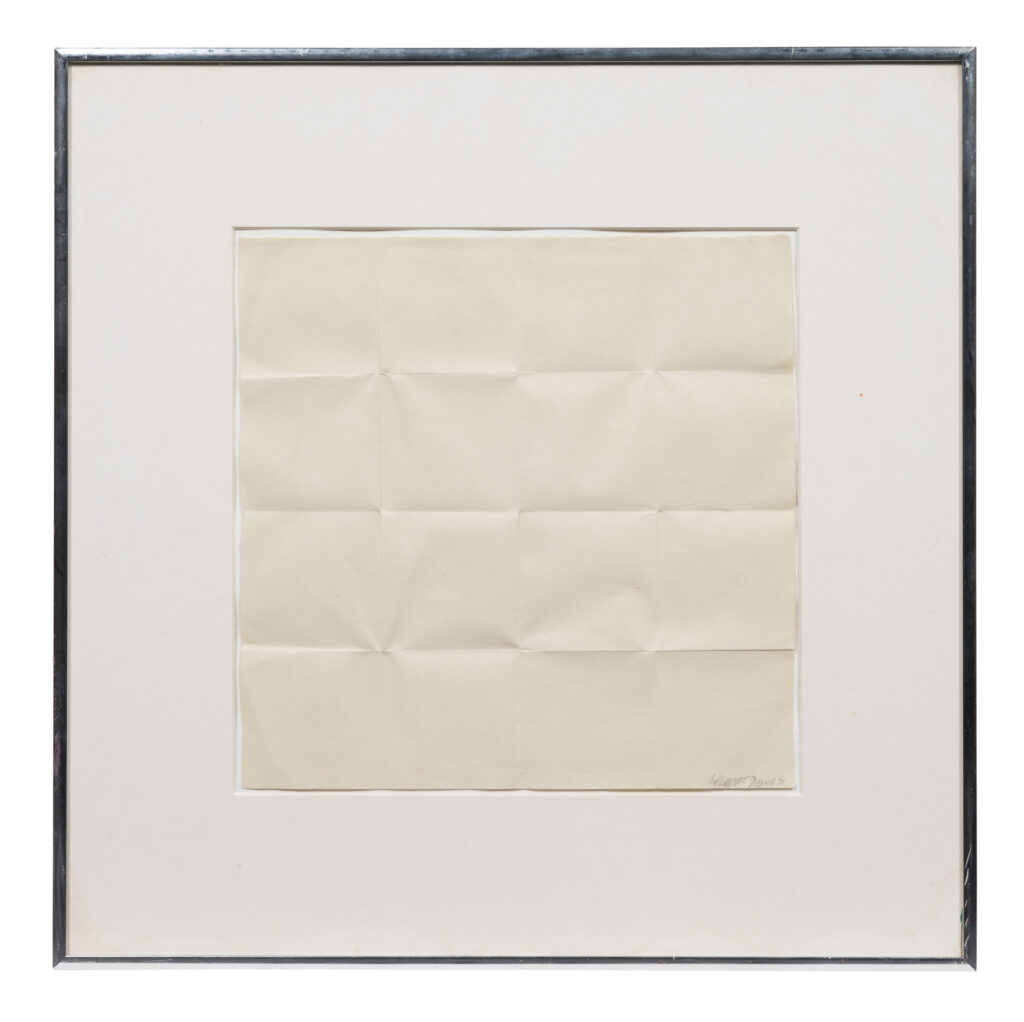
Sol LeWitt, Fold Piece, Sixteen Squares, 1972, 10.5 x 10.5 in., image via Hindman Auctions, where it will be sold May 4 (not April 9 as I first imagined somehow)

Without access to museums or galleries, I notice I have been looking at far more art via auction sites than is typical. I am OK with this.

Especially when it surfaces objects like this, a piece of square paper creased into sixteen smaller squares, by Sol LeWitt. It is signed and dated March 1971 on the front, 1972 on the Max Protetch label on the back, where it is called “Fold Piece” instead of “Folded Paper Piece,” an insignificant difference magnified in our Google-based world.

Continue reading “Sol LeWitt Fold Piece, 1972”

Webdriver Torso As Found Painting System

What you need is a system. To keep you going, to avoid artist’s block, to keep the pipeline filled.
I think Lewitt’s cubes were less a system than an idiom. Flavin’s fluorescent tubes, too.
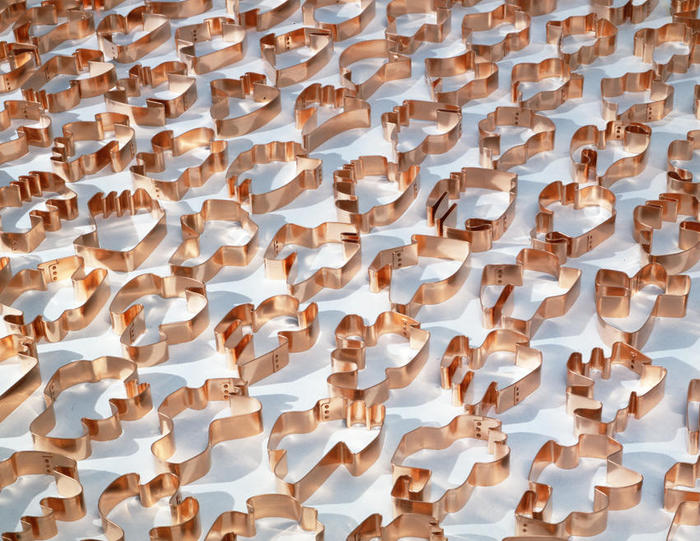
mccollum_shapes_cookie_cutters_petzel.jpg
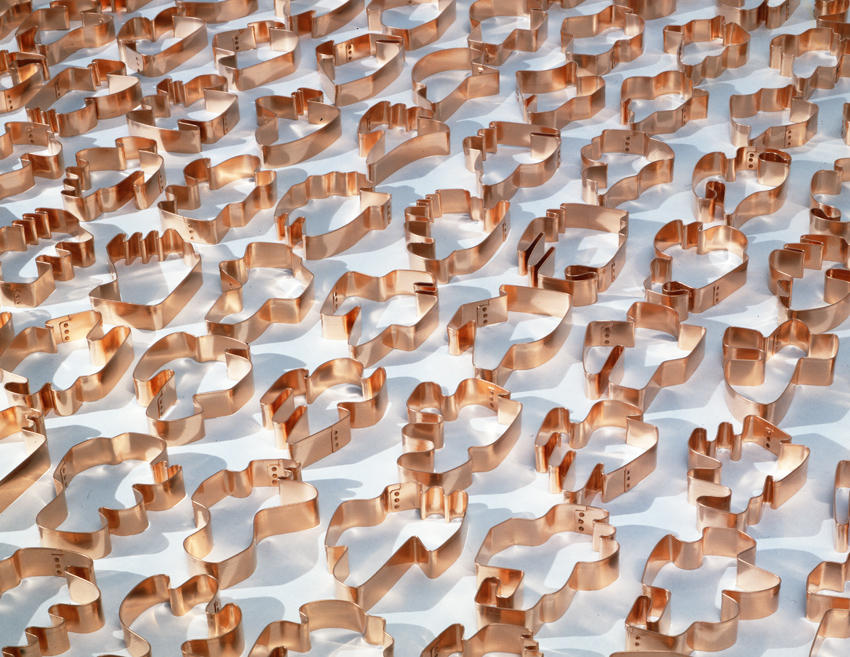
Shapes from Maine, 2009, image: petzel.com
Allan McCollum’s got a few systems going. Systems are his medium. Define some parameters, calculate the total set, start producing, and don’t stop till you–or your market–drops. The Shapes Project, started in 2005, has 31 billion possible permutations, enough for everyone ever to be born on earth to have one. Personally, I’m largely unmoved by McCollum’s results, but I respect their jawdropping systemic integrity.
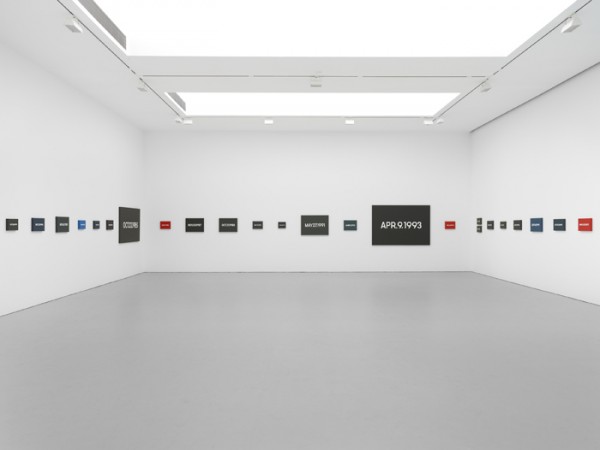
on_kawara_date_zwirner.jpg
But On Kawara’s Today Series, now that’s a system I can get behind. It’s a bonus when your system is conceptually tight, also when it can carry you out of this world.
hirst_lying_spot_nyt.jpg
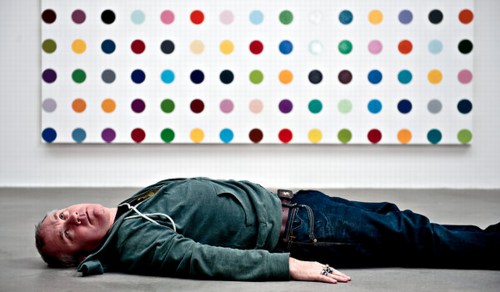
As that Kawara link above mentions, Hirst’s spots are also a system, which operates autonomously and, he’s even hinted, which could continue posthumously. [Kawara’s date paintings and Hirst’s spots were up in NYC at the same time in 2012, and Karen Rosenberg said one series was about time, and the other was about money. I love that.]
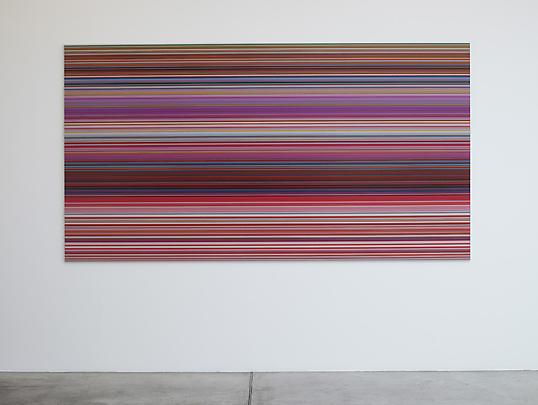
Anyway, you want to make sure you don’t get trapped by your system. Flavin had a helluva time with that, especially towards the end. So keep enough irons in the fire, throw a system or two into the merchandise mix. Like Richter’s new Strip paintings; he’ll be able to pull those off the printer till the very last. And he could leave the print queue open in his will, even. [I wish him all the continued health and happiness and look forward to seeing his show at the Beyeler.]
richter_strip_mgp.jpg
One would want a system to be ambitious, to stake a large claim, but to be doable, sustainable, saleable over the course of its realization. When Bruce High Quality Foundation announced their project to recreate all 17,000 objects in the Metropolitan Museum’s antiquities collection in Play-Doh, it seemed daunting. I guess you could say they’ll probably have product available as long as they’re able to keep selling.
PAF_DanhVo_WeThePeople_JamesEwing-0915.jpg.jpg
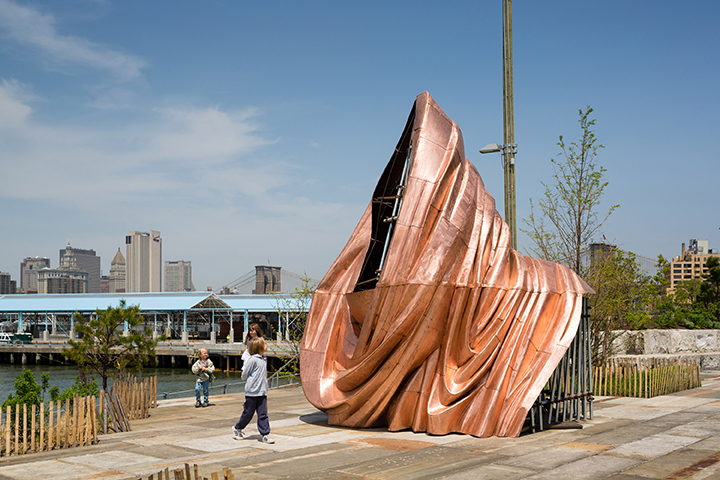
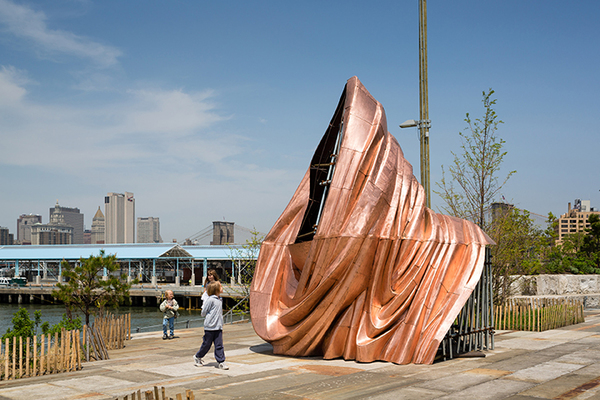
Danh Vo, We The People, 2014 installation at Brooklyn Bridge Park, Public Art Fund, image: James Ewing
Danh Vo’s We The People project to recreate the Statue of Liberty as 250 separate panels, meanwhile, has a finite end, even though the ridiculously awesome scale of the project seems impossible. On a purely physical object level, this has to be one of my favorite art undertakings ever, a confluence of abstraction & representation, metaphor & literalism, presence & absence. As soon as I get to Vo’s pieces on view in City Hall Park and Brooklyn, I’ll try to write more about it.
From Kawara [solo] to Hirst [factory] to McCollum [vector files] and Richter [digital] we can see a diminishment of the artist’s hand in inverse proportion with the expansion in scope, approaching capitalist nirvana, an industrial-scale infinity.
This is all nice and terribly important, but it’s also prelude to what might be the most ambitious readymade art generation system ever, which I’m totally calling dibs on: Webdriver Torso.
webdriver_torso_screenshot.jpg
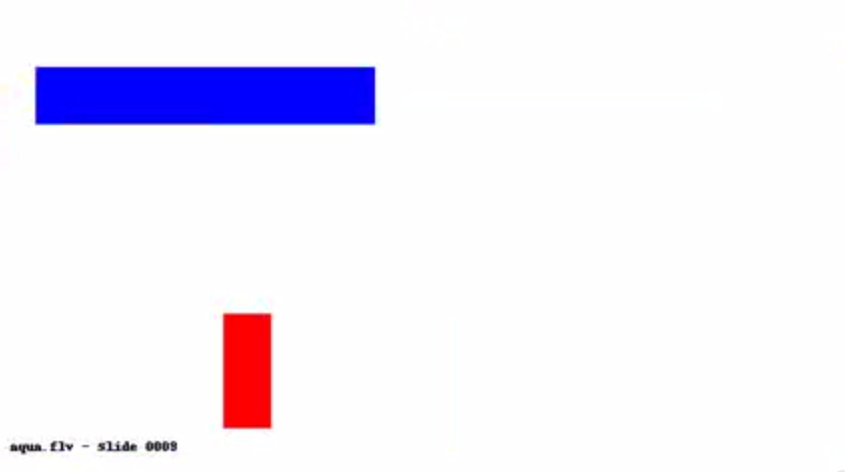
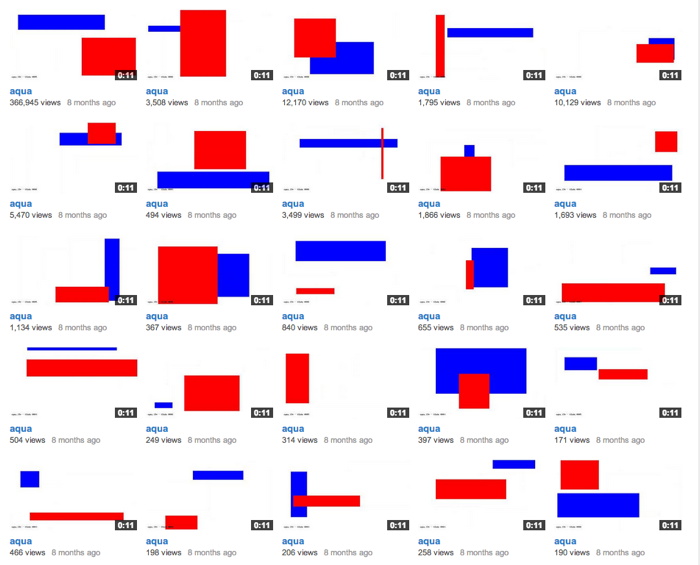
Webdriver Torso is the largest of at least four related YouTube accounts which have been uploading randomly generated videos [the pace is currently two videos ever 8-12 minutes] since mid-2013. Webdriver Torso has nearly 80,000 videos now; on all four accounts there are more than 130,000 videos total. Webdriver Torso’s channel now has more than 38,000 subscribers. Where a few weeks ago, almost all the videos had zero views, or maybe one, now videos of seemingly nothing immediately get several dozen views. [The other channels still have mostly zero views.]
Since being discovered and publicized a few months ago, various websites have speculated on the purpose and origin of Webdriver Torso, calling it an alien communications tool, or a crypto-spy numbers station, or a test channel for some video software developer. The most persuasive explanation I’ve seen so far is Italian blogger Paolo B.’s theory that the Webdriver channels are connected with a YouTube uploader development initiative for 3D videos or multiple videos, run out of Google’s Zurich office.
Each video is eleven seconds long and contains ten slides, each with a composition of blue and red quadrilaterals. That’s 1.3 million possible compositions, with more being added at an average rate of one every six seconds. And they all look more or less like a Malevich, or Lazslo Moholy-Nagy’s Telephone Paintings.
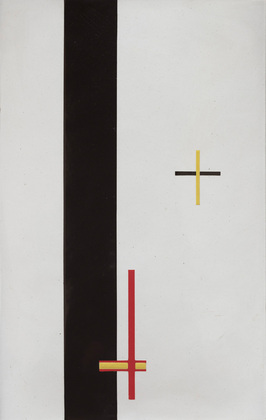
moholy_nagy_em3.jpg
So obviously turn them into paintings. It seems impractical to sort through all the videos, looking for some “best” composition. Better to stay true to Webdriver Torso’s random nature, and grab a few. Or even grab one and use it [all], make nine paintings at a crack. Or maybe use the slides in the most recently uploaded file from the moment you make a sale, or the moment you place the order with Chinese Paint Mill. Then it becomes an indelible, but meaningless, marker, an index of its own creation. Like On Kawara’s date paintings, they can be made in various sizes. Maybe you get a giant hard edge monster to anchor an important wall. Or maybe you get a smaller, complete set and grid them up, a la Olafur.
A web storefront that offers paintings in only the compositions from the last few minutes of uploads wouldn’t just reward quick purchase decisions: it would demand it. Out with this fair-wandering nonsense of, “Oh put it on hold for me, I’ll let you know.” and in with Buy It Now. Of course, what’ll happen is that someone will sit there and hit refresh all day, in eternal hope that the next batch of nine will have the Webdriver Torso Mona Lisa in it. [Just a second, gotta check Twitter.]

webdriver_torso_tmpK89znn_00-02.jpg
webdriver_torso_tmpK89znn_03-05.jpg
webdriver_torso_tmpK89znn_06-08.jpg
Ooh, tmpK89znn, which just went up, has some really nice ones in it:
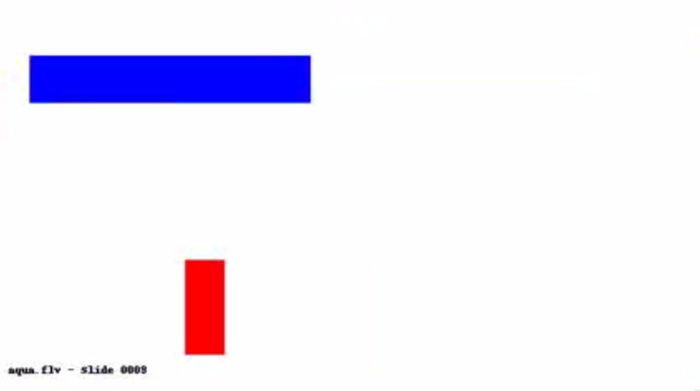
webdriver_torso_tmpK89znn_09.jpg
Let’s see how those turn out.
A timeline of Webdriver Torso [botpoet via @soulellis]
the truth about Webdriver Torso [ventunosu21]
Ex Collectio: The Bernard Madoff Provenance Project

UPDATE: There is now a Google Doc, your one-stop source for Madoff Provenance information. Have a detail? Send it in!
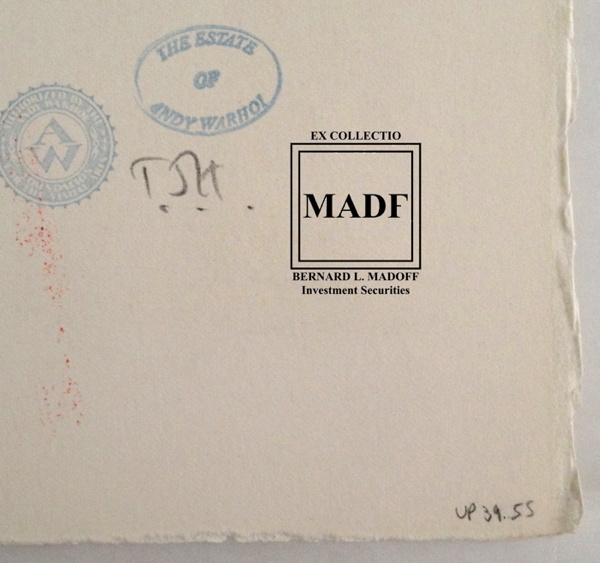
Last month I proposed that the specific artworks which had once belonged to Bernard Madoff be forever associated with him, that he and his various corporate entities become an inextricable element of their history, discourse, and meaning.
For the most part, Madoff collected prints and multiples from large editions. There are usually dozens of identical examples of each artwork he collected; they’re true investment-grade commodities. However, Bernard Madoff’s ownership of these examples differentiates them and renders them unique among their editions. How does the historical fact that these specific artworks were owned by the perpetrator of one of the financial industry’s biggest frauds affect their engagement with the art market, the art audience, and the critical structures of the art world? We shall find out.
study_for_ex-collectio_madoff_stamp.jpg
Study for Ex-Collectio MADF Stamp, 2014, digitally manipulated photocollage
Seven of the 53 artworks listed in the US attorney’s inventory of Bernard L. Madoff Investment Services, plus one additional work, are being sold by the bankruptcy trustee at Sotheby’s on May 1st.
Their lot and edition numbers are documented below, along with edition and title information for previously sold Madoff artworks whose court inventory entries were incomplete.
In accordance with art market, conservation, and art historical practice, I have created a stamp to indicate these works once belonged to Bernard Madoff and/or his corporate entities. I hereby issue an open invitation to all owners, buyers, dealers, agents and conservators handling these artworks, to accurately reflect their history, significance, and provenance by having them stamped. I am happy to provide this service, upon review, authentication, and mutual agreement, for no charge within New York City or the Hamptons or, upon prior arrangement, at art fairs in Basel, London, or Miami Beach. For other locales or times, please contact me directly. I’m sure we can work it out. This offer applies only to artworks which can be documented through court and/or auction records as having been in the collection of Bernard Madoff. No frauds or phonies.
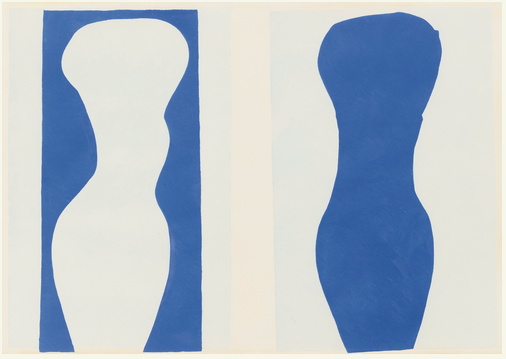
madoff_matisse_jazz_formes_pl_ix.jpg
Not in Inv.
Lot 41 Henri Matisse, FORMES, PL. IX (FROM JAZZ), 1947, pochoir print of “plate IX of XX from the edition of 100 (total edition includes the book edition of 250 with a central fold), on Arches wove paper, published by Tériade, Paris.”

Continue reading “Ex Collectio: The Bernard Madoff Provenance Project”

The Xerox Book, Infinite Loop

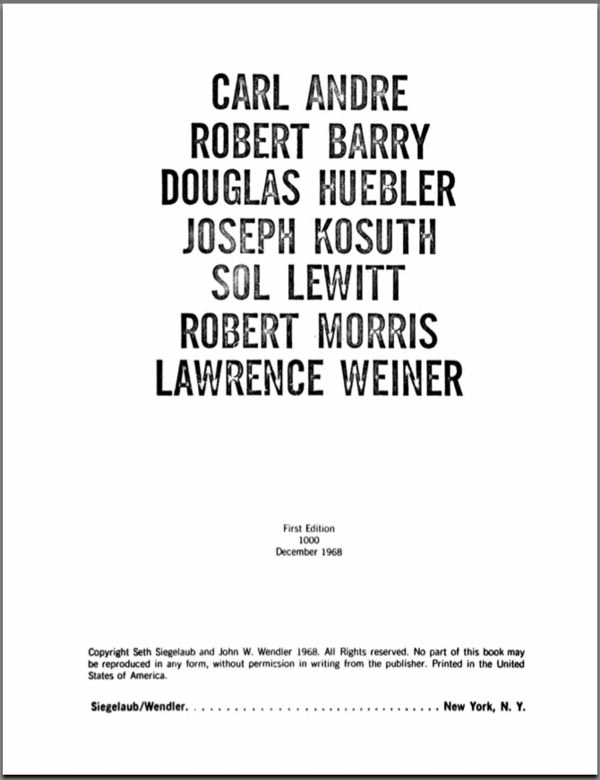
I have restaged one of Seth Siegelaub’s most influential shows, the 1968 The Xerox Book, as a series of animated GIFs [my 1st through 6th animated gifs, btw]. If only Seth could’ve been on infinite loop, too.
Siegelaub_Xerox_front.jpg
Frontispiece of The Xerox Book, 1968, organized by Seth Siegelaub and John Wendler
Primary Information has made an incredible collection of publications from Seth Siegelaub’s archive available online. That’s where The Xerox Book images came from. [pdf]
Continue reading “The Xerox Book, Infinite Loop”

Shanzhai Van Abbemuseum By Li Mu

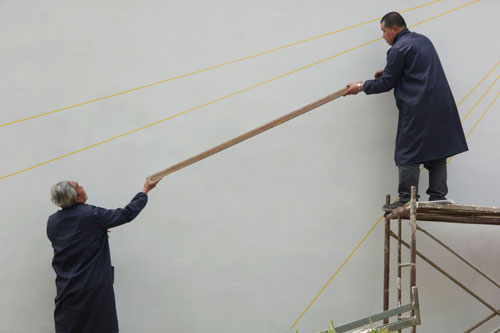
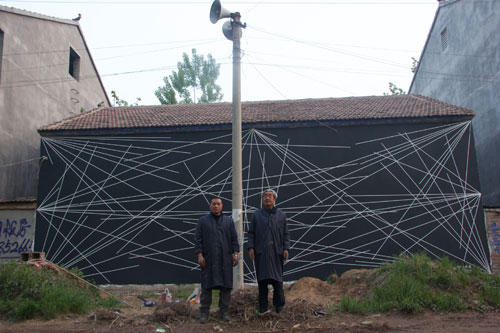
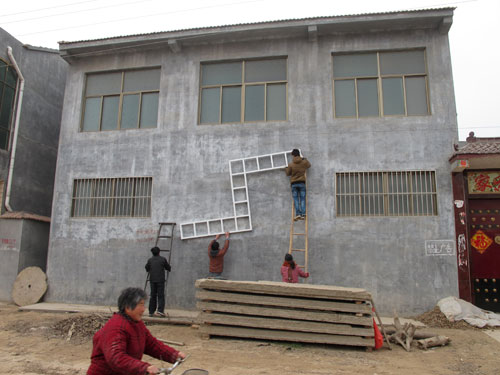
Suzhou-based artist Li Mu has established a public library and installed a collection of contemporary artworks from the Van Abbemuseum in Qiuzhuang, the small village in Jiangsu Province where he was born. Qiuzhuang Project: A dispersed museum project includes works by Sol Lewitt, Richard Long, Andy Warhol, Carl Andre, Dan Flavin, Ulay & Marina Abramovic, Daniel Buren, and John Kormeling. With the exception of the video pieces, all the artworks in Qiuzhuang Project have been or are being fabricated on-site.
Here are Mu and an associate creating one of two of Lewitt wall paintings [images via iamlimu.org]:
limu_lewitt_wall_1.jpg
limu_lewitt_wall_2.jpg
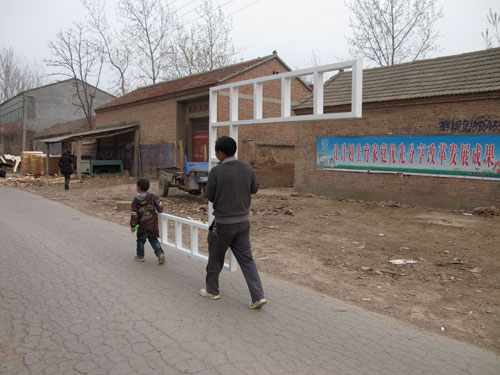
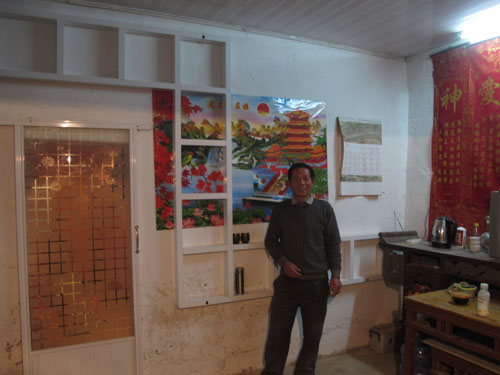
Earlier this year, after the library was up and running, Mu began fabricating copies of Lewitt’s Untitled (Wall Structure) (1972) and distributing them to villagers, mirroring FREE SOL LEWITT, a 2010 project by SUPERFLEX, which sent full-size Lewitt copies home with museumgoers in Eindhoven. It’s not clear whether the Qiuzhuang Lewitts are considered Lewitts, SUPERFLEXES, or Mus, but they look fantastic:
limu_lewitt_1.jpg
limu_lewitt_2.jpg
limu_lewitt_3.jpg
And that points to a complicated question. The Shanzhai (山寨) in the title usually implies a knockoff, a cheap or poorly made copy, ingenious perhaps, but an inferior or even illicit substitute for an authentic original. But none of that really applies to the art being made or shown here. From the Western or art-savvy perspective, at least, it’s the context that’s 山寨, not the work, specifically, the incongruity of seeing iconic contemporary artworks in this rural Chinese village setting. Which is pretty much the exact inverse of the project’s primary audience, the residents of Qiuzhuang.
I wonder what the impact of the project will be? The library, we’re told, will be permanent. But will Qiuzhuang experience an influx of art-related tourism for the show? How will that go? Or if not, what will that mean?
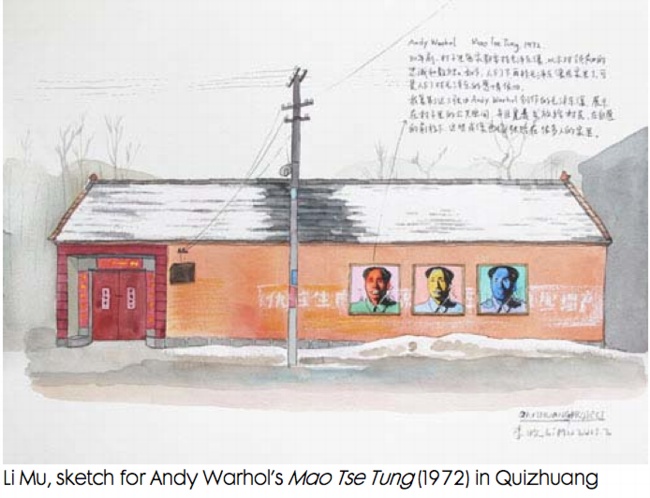
Is there a visitor guide? A map? Will the grocery store be thrilled, annoyed, or disappointed by daytrippers coming to see Ulay & Ambramovic’s bow & arrow video? How much of the contemporary art/culture/ museum/ economic development paradigm is actually being transplanted here? Will speculators descend on the town and try to buy up the Lewitt/SUPERFLEX/Mu sculptures? Will Mu be able to exhibit Mao paintings that were censored when they were by technically by Warhol?
limu_warhol_mao.jpg
The Van Abbemuseum is one of the more sophisticated institutions when it comes to engaging such questions. And Li Mu seems fairly well-attuned to the subtleties of both his art and his hometown. It will be interesting to see what unfolds as the Qiuzhuang Project continues.
I Am Li Mu [iamlimu.org]
ArtHub Asia is a sponsor of the Qiuzhuang Project [arthubasia.org]
The Van Abbemuseum seems not yet to have a permanent page for the Qiuzhuang Project [vanabbemuseum.nl]
Previously: Fau Sol Mio: FREE SOL LEWITT by SUPERFLEX

What I Looked At: Sol LeWitt Structures


I finally made it down to City Hall Park to see the Public Art Fund’s installation of Sol LeWitt structures. Which, first or now, you must watch the discussion of working with LeWitt at the New School. Go ahead, I’ll wait.
OK.
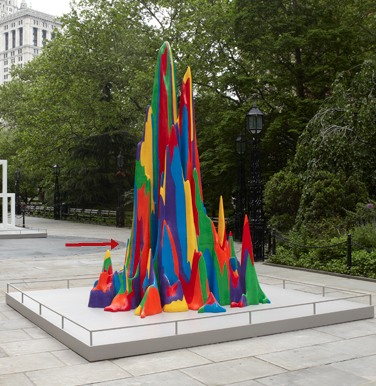
So along with the general admiration and pleasure of seeing so many LeWitts, the first thing I think is: picturesque.
lewitt_scenic_paf.jpg
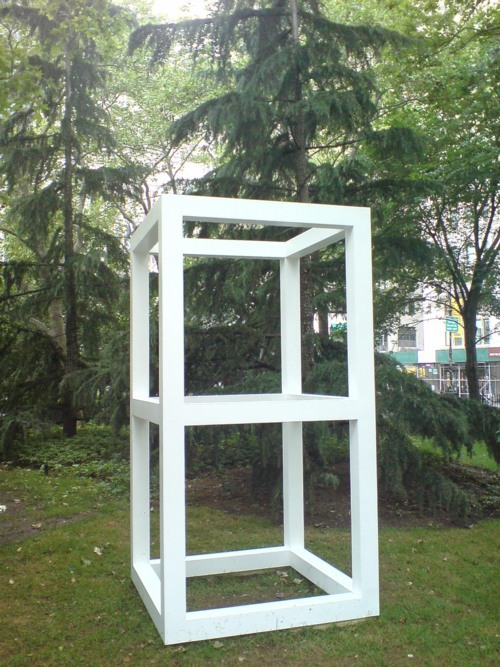
Double Modular Cube, 1969
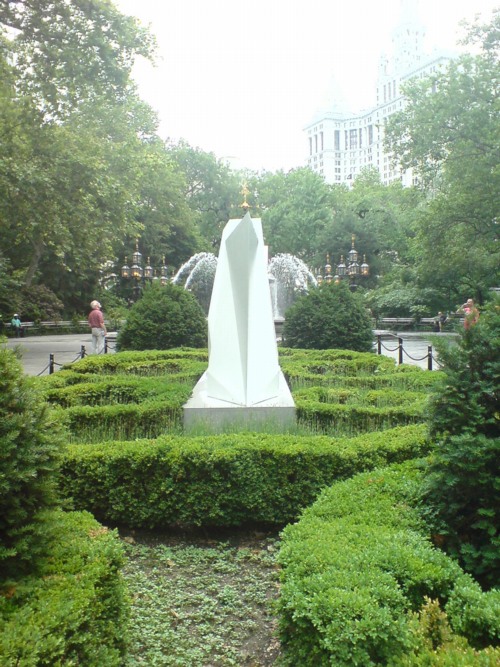
Lewitt introduced human proportions into these modules, which may somehow account for why it feels like an idyllically sited pavilion or garden folly. But it’s definitely activating something in the landscape, too.
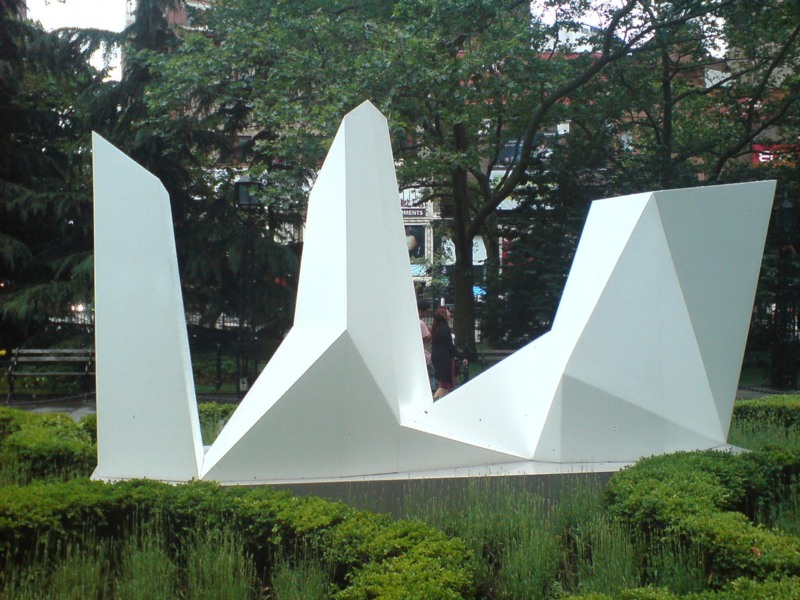
Then there is Complex Forms, 1987:
lewitt_asymmetric_side_paf.jpg
Which, I know, I know, every algorithmically-generated polygon around here gets tied to Dutch Camo Landscapes. But:

For the Complex Forms, the artist drafted a two-dimensional polygon and placed dots at various locations within it. As the form is projected into three dimensions, those interior points are elevated into space at different heights. The elevated points dictate the seams of the object’s multi-faceted surface.

So these things turn out to be topographies “projected” from two dimensions into three. Maps. So it is not a stretch.
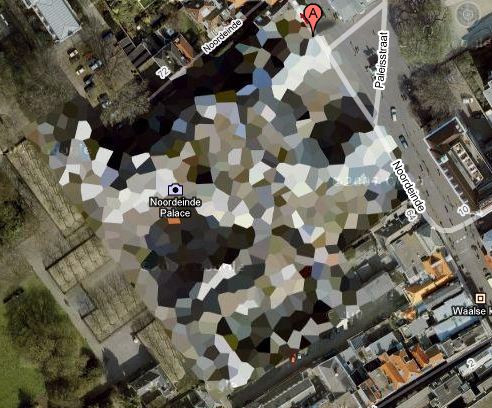
dutch_palace_gmap4.jpg
The way I found the Dutch Camo Landscapes in the first place was through architecture. They were 2D patterns generated from photos of 3D structures, which read as 3D structures themselves. As camo deployed against aerial surveillance, I’ve also imagined them as crystalline structures or surfaces, topographies, installed above whatever site is being obscured.
It’s to the point that last fall, I actually went to the Noordeinde Paleis [above] in The Hague, not *really* expecting, but kind of hoping, to see it sitting, safe from terror or whatever, under a giant, polychrome, polygonal tent. It was not. I’ll add that to my project list, though. [note to self: call Queen Beatrix.]
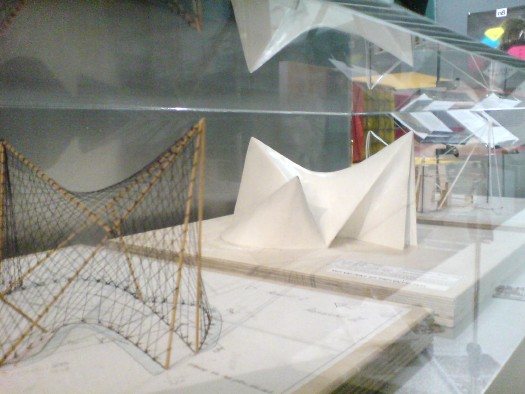
It also reminds me, even more explicitly, of Le Corbusier and Iannis Xenakis’ 1958 Philips Pavilion in Brussels, which, as these two models I found displayed shoved into a corner at ARCAM in Amsterdam one night show, was similarly constructed from 2-dimensional curves and points projected into space.
corbu_philips_arcam3.jpg
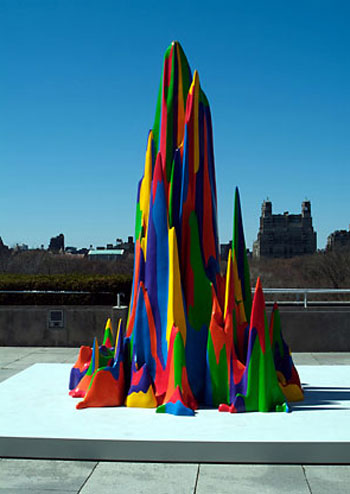
“The Complex Forms introduce irregularity into LeWitt’s work,” we are told, “which is further explored, for example,” in the Splotches. Which, again, two-dimensional drawing projected into structure via formulas for generating color and height. I can really dig these things, except–I didn’t photograph it, didn’t want to be a crank, but holy crap, I can’t stop staring at that seam.
lewitt_splotch_seam_paf.jpg
Splotch 15 [with giant $#)%ing seam], 2005
It was not like this when it was exhibited on the Met’s roof garden in 2005, was it?
splotch_fifteen_moco.jpg
No, I do not think it was. What gives?
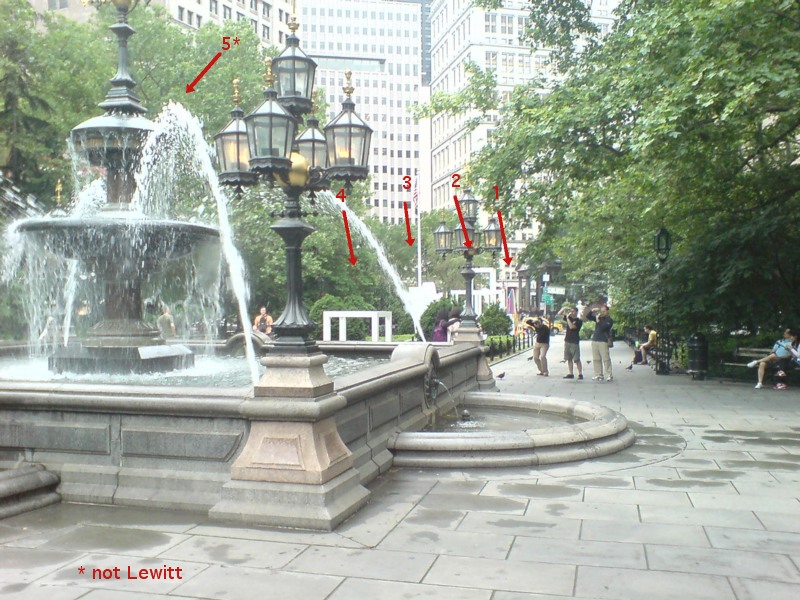
The next thing is how lush and classical City Hall Park is. Since this incarnation dates from 1999, I guess historicist is the right word. I don’t remember noticing this as acutely as I do now.
Maybe because so many LeWitts are installed along the park’s radial axis, lined up with that replica fountain just so.
lewitt_symmetrical_paf.jpg
In his opening remarks at the New School, Nicholas Baume described the Public Art Fund’s program as “looking back at radical practices dating from the 1960s and registering their contemporary resonance.” He goes on to cite the appeal of seeing “the interesting juxtaposition of natural landscape [sic], New York City skyscrapers, and the architectural and decorative elements of the park,” which “provide a fascinating and rich context.” But now this installation, I get less sense of juxtaposition, and more assimilation. Radial historicism: 1. Radical practice: 0.
As I’m walking around, trying to figure out how to process this situation, I suddenly looked at the Complex Structures head-on, i.e., the “wrong” way.
lewitt_headon_paf.jpg
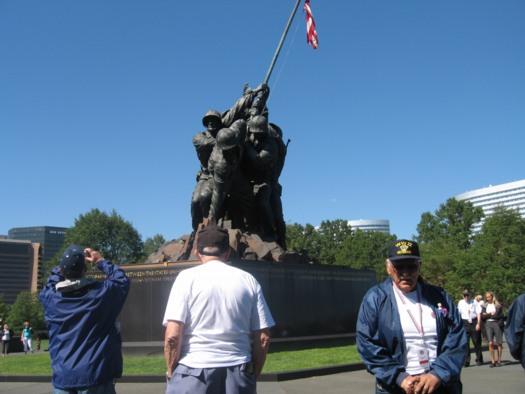
And it turns out to be radially symmetrical itself. A mirror image. And I remember writing about laughing at first at Chinese tourists who didn’t “get” the Iwo Jima Memorial, and who posed for photos at the head of the statue, only to realize they didn’t have the same LIFE Magazine photo-mediated historical context as Americans.
ct_vets_iwojima_ctgov.jpg
Connecticut veterans at the front of the Iwo Jima Memorial, image: ct.gov
Which, suddenly, LeWitt’s practice of projecting a 2D image into a 3D structure has an entirely new, complicated legacy which I’ve never seen addressed before, but maybe this City Hall Park is a good place to start.

Faux Sol Mio: SUPERFLEX/ FREE SOL LEWITT

free_sol_lewitt_2.jpg
So awesome, yet, so annoying. How did I not know of this? When it was going on? I was emailing with the Van Abbemuseum at the time about replicas of artworks, particularly their refabrications of Laszlo Moholy-Nagy’s Light Space Modulator and his Raum der Gegenwart. I’d just been working on an exhibition proposal myself for turning a gallery into a production site for sanctioned art replication. I was hanging with SUPERFLEX themselves last October after the Creative Time Summit, just weeks after the show closed. I was knee-deep in museums and artists and copyright as I released my edition with 20×200.com. And yet I only find out about FREE SOL LEWITT this morning from Half Letter Press’s tweet?? Obviously, I bought the print version of the catalogue before the download for the free pdf version was complete. So I am clearly doing something wrong to have missed this.
free_sol_lewitt_1.jpg
Anyway.
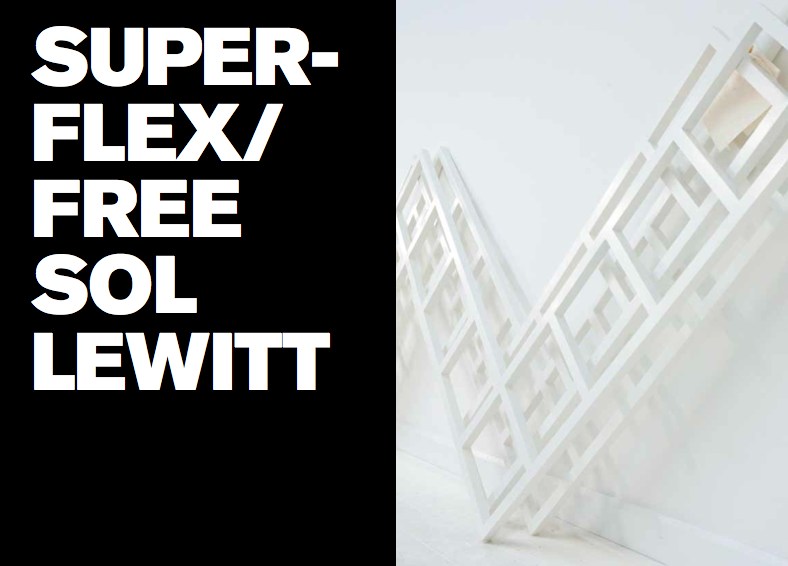
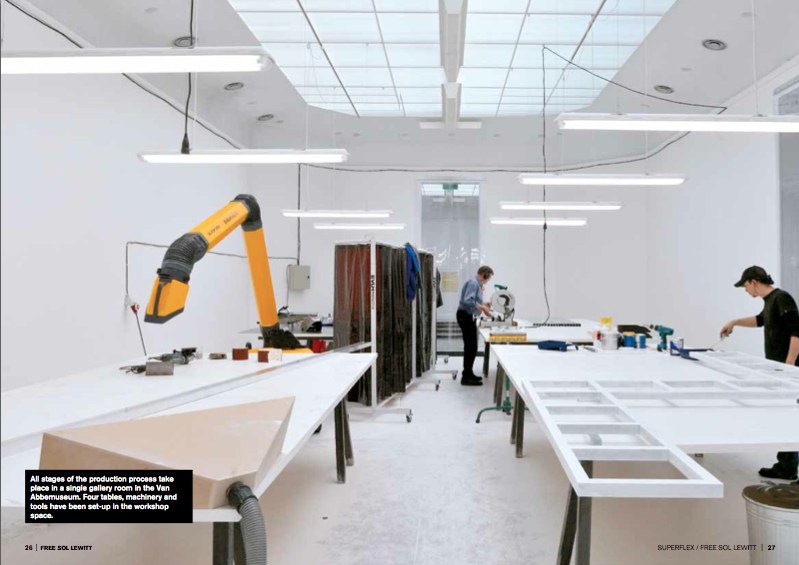
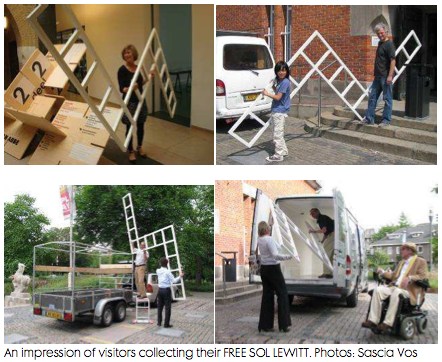
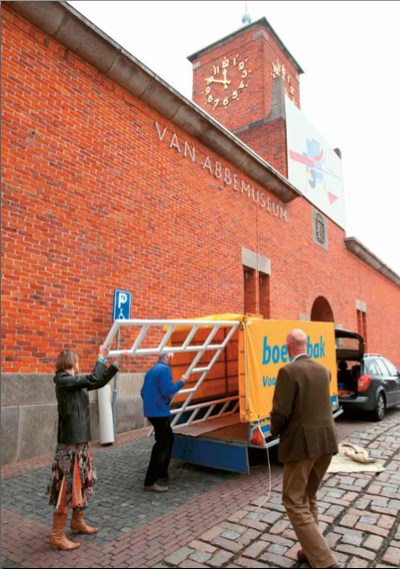
In 2010 the Danish artist collective SUPERFLEX curated an exhibition at the Van Abbemuseum in Eindhoven, “In Between Minimalisms,” that included a work of their own. [Which was in turn curated by curator-turned-lawyer Daniel McClean] FREE SOL LEWITT is a machine, a small-scale factory set up inside the museum, which created exact replicas of a work in the collection, Sol Lewitt’s Untitled (Wall Structure) (1972). The replicas, certified as new works by SUPERFLEX, were then given away to the public.
free_sol_lewitt_3.jpg
Some of the details of this production remain unclear, like how many were made. I gather that by working four hours/day, the aluminum cutter, welder, sander, and painter were able to produce 1-2 FREE SOL LEWITTs per week during the 20-week run of the show. Five were “almost finished” within the ten day interval between the opening of the show and the symposium held at the museum on the question, “Who Owns the Artwork?”.
free_sol_lewitt_shipping2.jpg
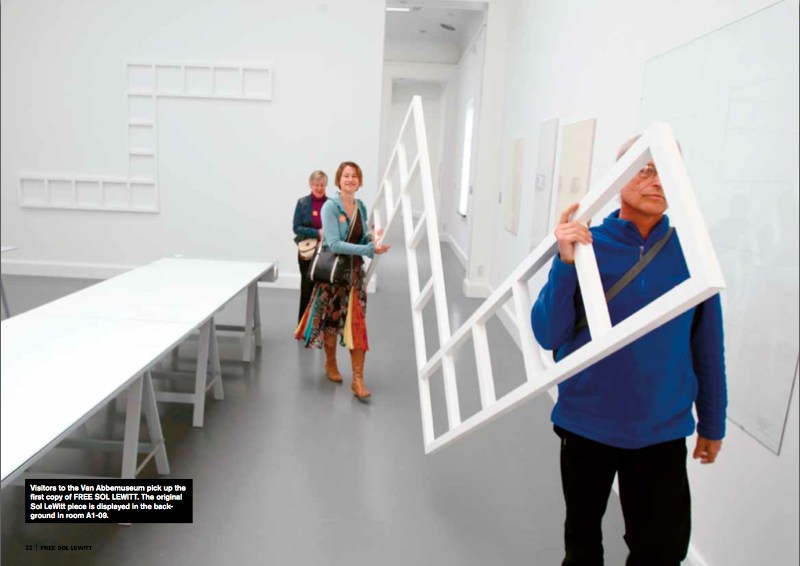
Or what happened to them. The FREE SOL LEWITTs were awarded by lottery to museum visitors who expressed interest in filling out a form. Except for the cheery faces of the lucky recipients of a few structures, who were photographed loading the almost comically large, unwieldy 2×3.5-meter work, unprotected, into rental trailers and vans, I can’t find any news of where or how the SUPERFLEX pieces are being put to use.
free_sol_lewitt_shipping.jpg
SUPERFLEX chose to replicate Lewitt’s work because his pioneering ideas of conceptualism, seriality, and art objecthood resonated with the collective’s own position toward copyright, exchange, and control.
In both essays and interviews in the catalogue, they challenged museums to make countering the constraints of copyright an integral part of their institutional missions. They spoke of the “artistic commonwealth” in which artists borrow and copy freely from each other, and artists and their estates and artists’ rights agencies do not shut down each others’ creative processes by the invocation of copyright. The project’s shape was inspired by Lewitt’s statement in 1973 that “ideas once expressed become the common property of all” and that “we artists, I believe are part of a single community sharing a common language.”
And then I laughed. Because though it’s clear Richard Prince is a citizen of the Artistic Commonwealth, it’s equally obvious that the United States is not a member.
SUPERFLEX/ FREE SOL LEWITT, April – Sept. 2010 [vanabbemuseum.nl]
Buy the FREE SOL LEWITT catalogue, $25 at Half Letter Press [halfletterpress.com]
SUPERFLEX [superflex.net]