Some Things John Waters Collected

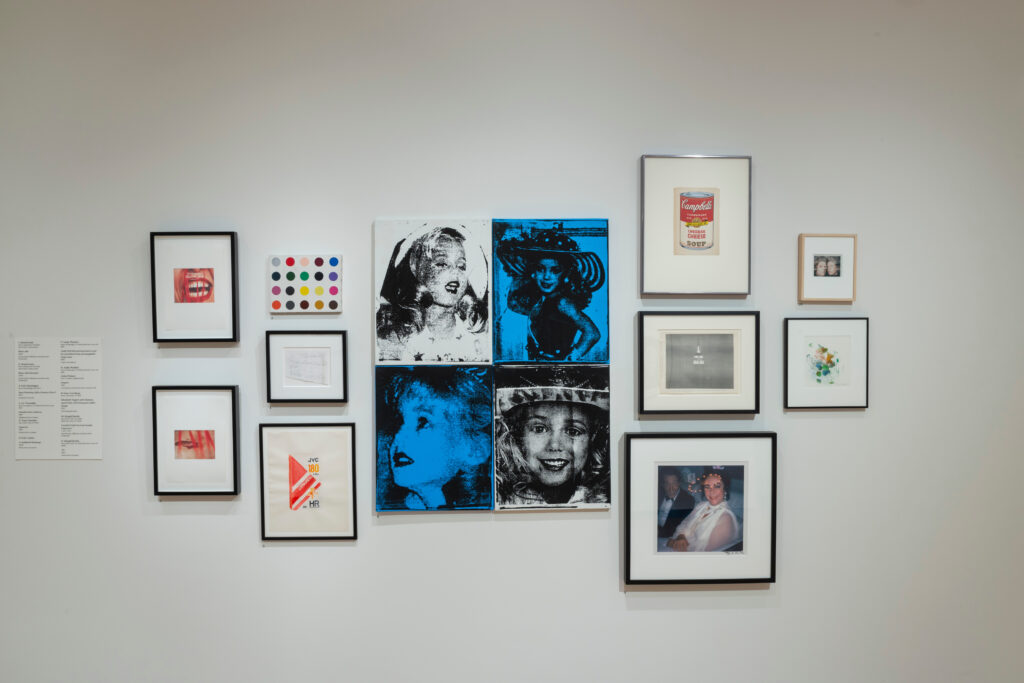
a tight cluster of smallish aworks from john waters' collection on the wall of the baltimore museum of art in 2022 includes, most prominently, at the center, four warhol jackie-style black on blue or white silkscreen paintings of jonbenet ramsay by erik luken, a campbells soup can drawing that's probably mike bidlo, above a flyer for empire, the 1964 film. on the left is most recognizably, a spot painting, which is actually an eric doeringer bootleg
Installation view from Coming Attractions: The John Waters Collection, a 2022-23 exhibition of promised gifts at the Baltimore Museum of Art

Yesterday Eric Doeringer posted his discovery of his bootleg Damien Hirst spot painting among the works John Waters has promised to the Baltimore Museum of Art. It was on view at the museum in 2022-23 in a selection—curated by Catherine Opie and Jack Pierson—from nearly 400 works from Waters’ collection. It hung next to a Warhol Jackie-style grid of Jonbenet Ramsay portraits by Eric Luken. While being perfect objects on their own terms, these two works help situate Waters in the place, moment, and discourse of art. For the Doeringer, that was on the mean streets of early 2000s Chelsea. For the Luken, that was probably an emerging art fair. [His only show (so far?) was with Joel Mesler & Daniel Hug’s short-lived LA gallery that rode the 2000s art fair wave.]
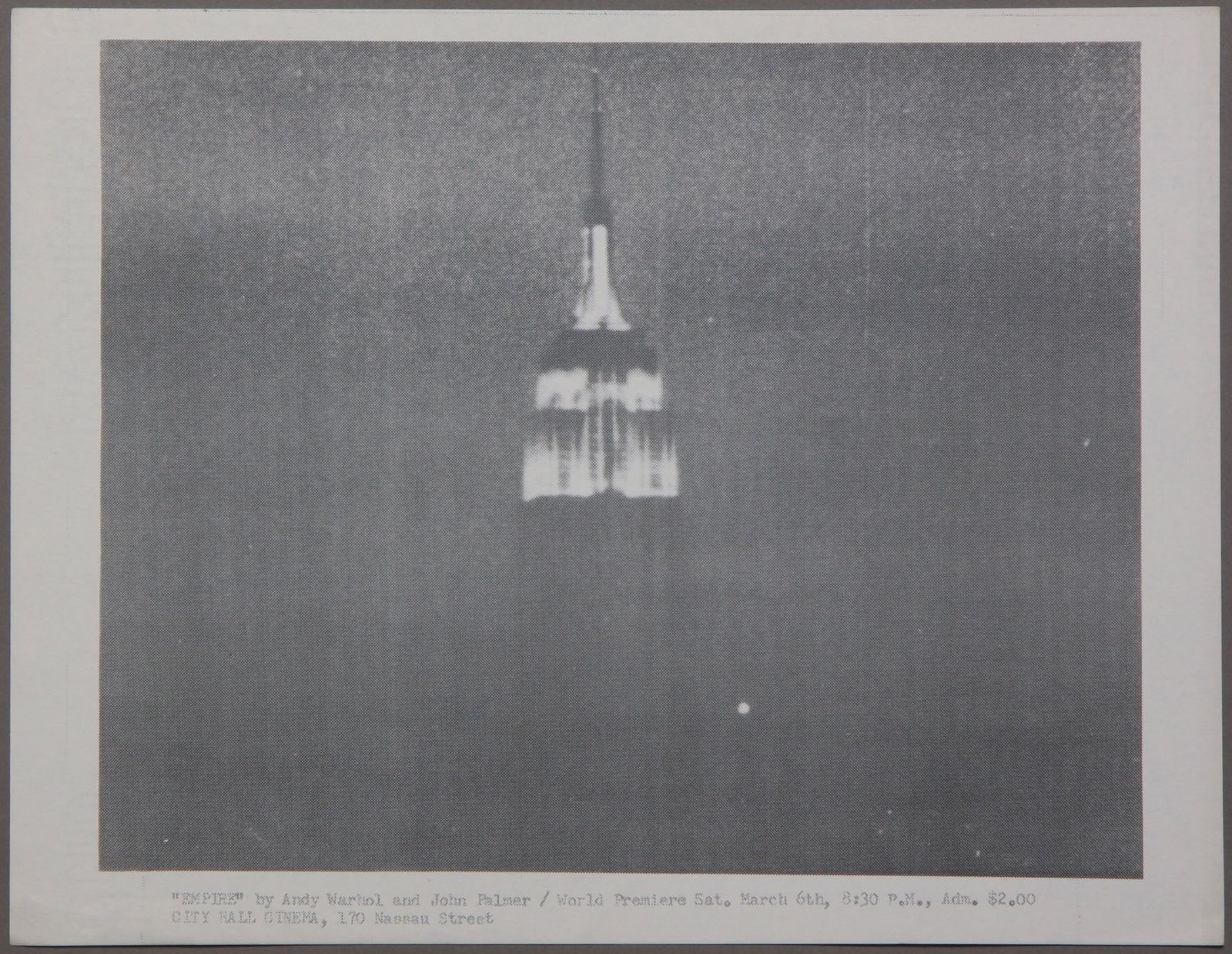
a low-contrast mimeographed flyer for the premiere of andy warhol and john palmer's 1964 film empire is a horizontally oriented film still of the top half of the empire state building against an empty evening sky, with three tiers of lighting at the top. maybe that's the moon, that tiny white dot on the lower center, or maybe it's the light on top of a distant building. made by jonas mekas in 1965

Speaking of short-lived collabs you never hear about, Waters also has the best/only thing you can really collect from one of the greatest artworks of the 20th century: a flyer made by Jonas Mekas for the world premiere of EMPIRE (1964), by Andy Warhol and John Palmer.

If you think I’m leading with all this to head off criticism that I’ve become a one-topic fanblog, you’re only partially not wrong. Because this is all stuff I found along the way while trying to get a legible image of the work beneath Doeringer’s painting, which is a scrap of paper on which Cy Twombly wrote his address.

Continue reading “Some Things John Waters Collected”
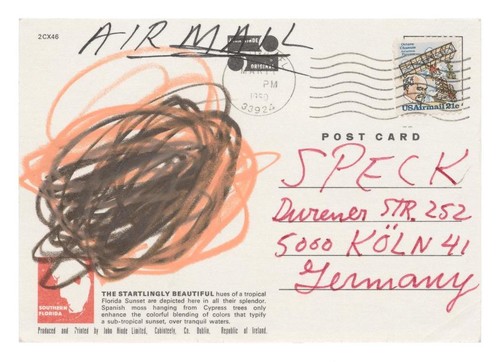
Heading To Bassano, Wish You Were Here

the back of a postcard from cy twombly to reiner speck where the message section is filled by a scribbly swirl of orange and black crayon, partly obscuring the florida peninsula logo but leaving the caption of the photo on the recto about depicting a startlingly beautiful florida sunset intact. AIRMAIL across the top and Speck's name and address on the right are written in Twombly's distinctive hand, which is all the signature you need, I guess. via maison d'art
The startlingly beautiful hues of a tropical Florida Sunset are depicted here in all their splendor and completeness that Cy Twombly didn’t need to add anything, not even his signature, via Maison d’Art

It’s the little differences. Where Marcel Duchamp’s letters to his collector friend Katherine Dreier are all, “shipping is $34, please send me $34,” Cy Twombly’s letters to his collector friend Reiner Speck are like, “we await you in the summer castle.” I have read the Twombly correspondence with noted urologist and Proust expert Herr Dr. Reiner Speck in the catalogue for Maison d’Art’s current exhibition, and here’s the expanded tl;dr:

Continue reading “Heading To Bassano, Wish You Were Here”

David Hammons Lights

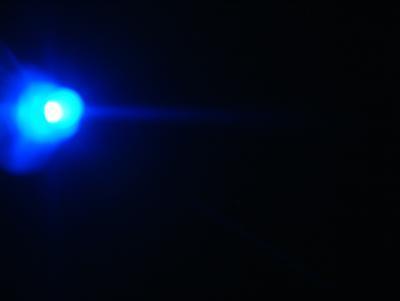
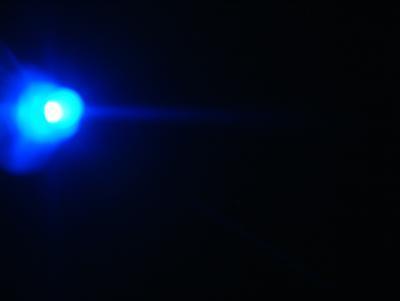
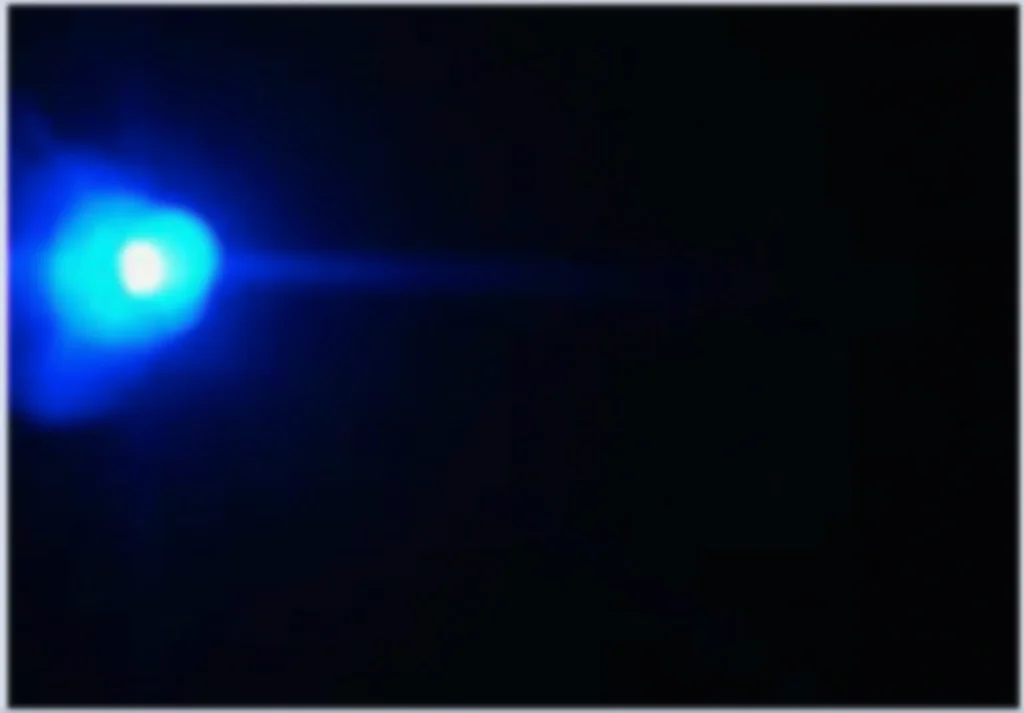
a 1933 px wide screencap of an artforum jpg of a david hammons installation is all black, with a blurry lens flare of blue, with a center of white light, from a single blue flashlight of the sort hammons distributed to guests in a little basket at the gallery entrance. via ursula, the art magazine named after the mother/mother-in-law whose pharmaceutical fortune has underwritten the hauser & wirth gallery empire, a fitting tribute
Wait, Ursula made a screenshot of the installation image from the 2002 Artforum critics’ picks of David Hammons’ Concerto in Black and Blue instead of right-click-saving it? Now I feel like I’m betraying history by renaming the file.

How has there not been more Concerto in Black and Blue content floating around? Do people not go to Hauser & Wirth LA anymore? Is the glow of people recording themselves on their phones ruining it? David Hammons has restaged his epic 2002-3 work in LA. It’s on til June MAY 25. So grab a little flashlight and become the artwork.

a circal 2002 jpg, 400 x 301 pixels wide, of david hammons' concerto in black and blue, is a field of all black, with a single slightly refracted burst of blue light on the left edge, caused by one tiny blue flashlight of the kind handed out to gallery visitors. via artforum
oh wait, the original Artforum img is actually beautiful. 2012/12/picksimg_large-6.jpg, 400×301 px. I must make this a work.

Meanwhile, Ursula has a great essay by legendary filmmaker, gallerist and Hammons whisperer Linda Goode Bryant, who filmed the opening night of Concerto in Black and Blue at the vast NYC outpost of Ace Gallery:

He allowed me to be inside for the opening, to make a short film of what happened inside. And what people didn’t know is that David was actually in there himself that night. I only knew where he was because I had a microphone on him. But he was otherwise totally invisible, moving around among everyone else, watching what they did and what they made, present and at the same time absent.

LGB talks incisively about walking and seeing with the artist, and getting hints of how he sees and works. It confirms my theory/suspicion/last-ditch hope that we are in fact living in David Hammons’ world, and often just don’t realize it.

[MAY 2025 UPDATE?? IT REALLY TAKES UNTIL MAY?] Nereya Otieno’s review of Concerto in Black and Blue explains the online silence and invisibility of Hammons’ extraordinary show: You have to bag your phone to enter. She did manage to get installation shots, though. And in some places Hauser still says it runs through June 1, and others say May 25, so don’t get stuck missing it.

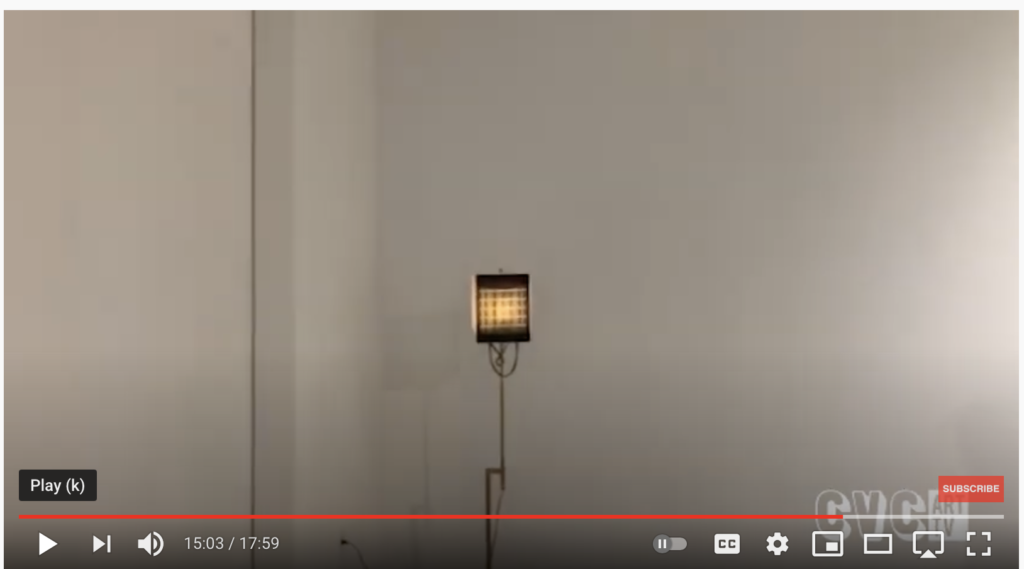
a screencap of a 2019 corey vs corey youtube video documenting a visit to the david hammons exhibition in la, where a floor lamp with a sothebys shopping bag for a lampshade stands in an otherwise empty corner of the vast gallery. youtube ux cruft and the cvc art tv watermark along the bottom of the img
Hammons Sotheby’s Bag Lamp coreyvscorey-screencap

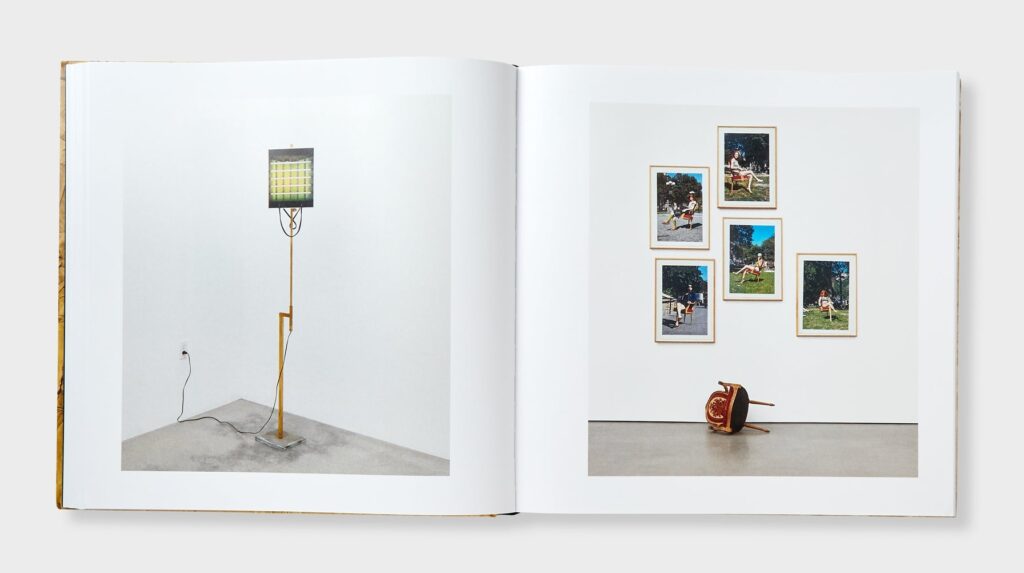
Meanwhile, the book finally documenting Hammons’ sprawling 2019 show at H&W LA is out now, not in May, which means the lamp with the Flavin X Sotheby’s shopping bag lampshade I had to scavenge screenshots in the backgrounds of peoples’ youtube videos like a dog to see is now beautifully photographed on its own.

a spread from david hammons' 2025 book about his 2019 show at hauser & wirth LA as two installation photos: on the left, a thin, mid-20th century brass floorlamp stands in the corner of a white cube gallery, plugged into the wall. its traditional lampshade has been replaced by an upside down shopping bag with a dan flavin light grid on one side, the kind that would hold an auction catalogue, or a gift bag. on the right, a french antique style red upholstered fauteuil with the front legs cut off sits on its side underneath five large, vertical framed photos of white people sitting in the chair outdoors, in a parklike setting, using their own legs to complete it. from the hauser and wirth shop

A Walker in The City | Linda Goode Bryant [hauserwirth/ursula]
David Hammons, Concerto In Black And Blue, 18 Feb – 1 June 25 May 2025 [hauserwirth la]

untitled_picksimg_large-6.jpg, 2025 [greg.org]
Previously, related: Untitled (unnamed.jpg), 2019
Previously, related jpg constraint, alternate naming convention: Untitled (300 x 404); Untitled (290 x 404)

Ellsworth Kelly Extra Small

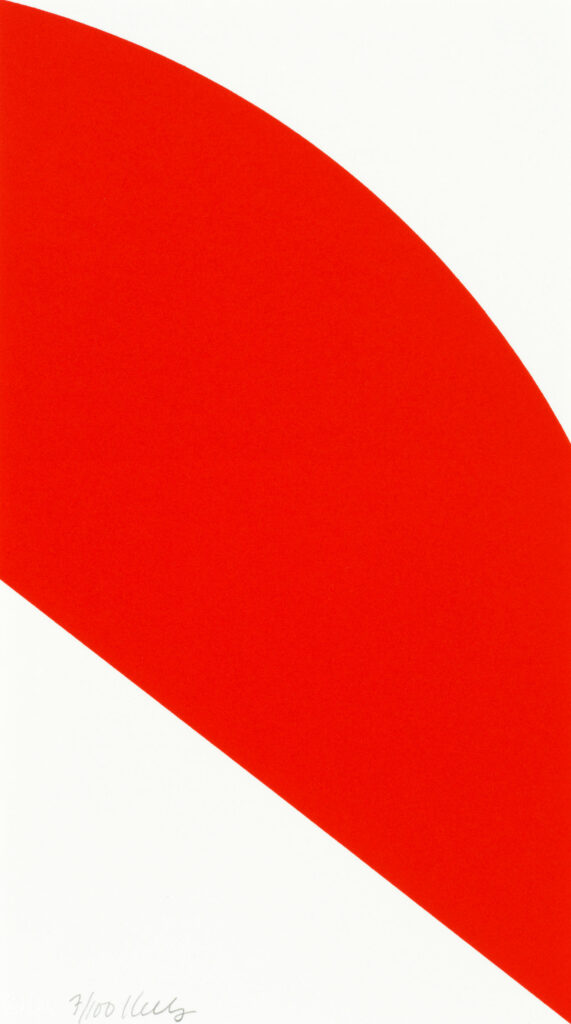
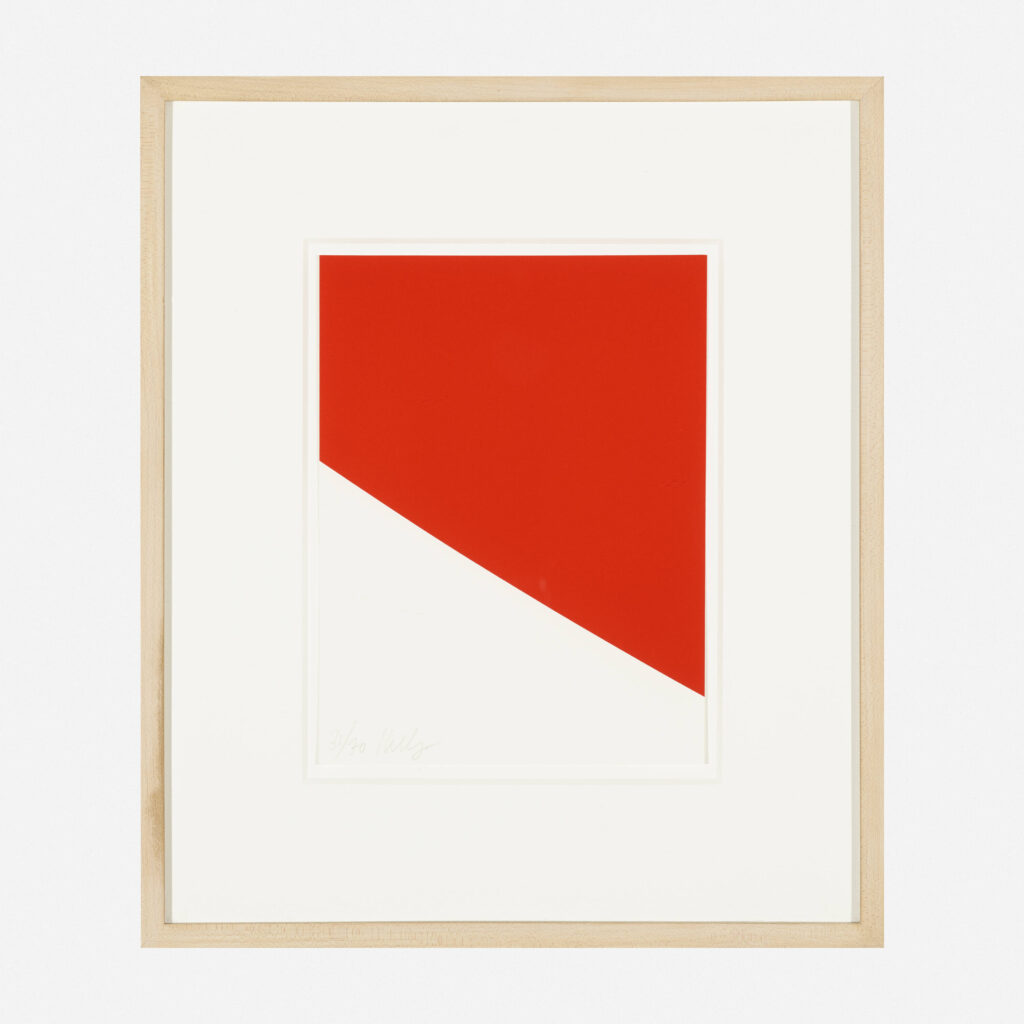
a tiny ellsworth kelly print, red curve, has a red curve from the top left corner to about 40% of the way down the right edge. The bottom edge of the red shape is straight from the lower right corner up to about the middle of the left side. no print border, it goes right to the edges. love it. now. but didn't love it enough to buy it back in the day, alas. live and learn.
Ellsworth Kelly, Red Curve, 2006, lithograph, 12 x 6 3/4 in., ed. 100, plus 20 ap and 18 sp, this one via Bonham’s

While poking around the Gemini G.E.L. CR, I was surprised to find that River II (2005), one of Ellsworth Kelly’s superlong prints, was also his second to last print made with Gemini.

I’ll have to check the Kelly prints catalogue raisonné for details—the second edition was published in 2012, but Kelly sure seemed booked and busy right up to the end in 2015.

It’s also a surprise because the last print he made with Gemini was maybe his smallest ever. Red Curve (2006) is a single color lithograph, cropped so the shape goes right to the edges and the corners of the 12 x 6 3/4 inch sheet.

Red Curve was published for Kelly’s show at the Serpentine Gallery, a cheap, unframed edition of 100. I feel like it was easily under GBP1000, and at the time, it didn’t even seem real somehow. Now it is fascinating and formally intriguing, especially after the other full-bleed prints he’d just made, that resonate between print and object. Also it’s utterly adorable.

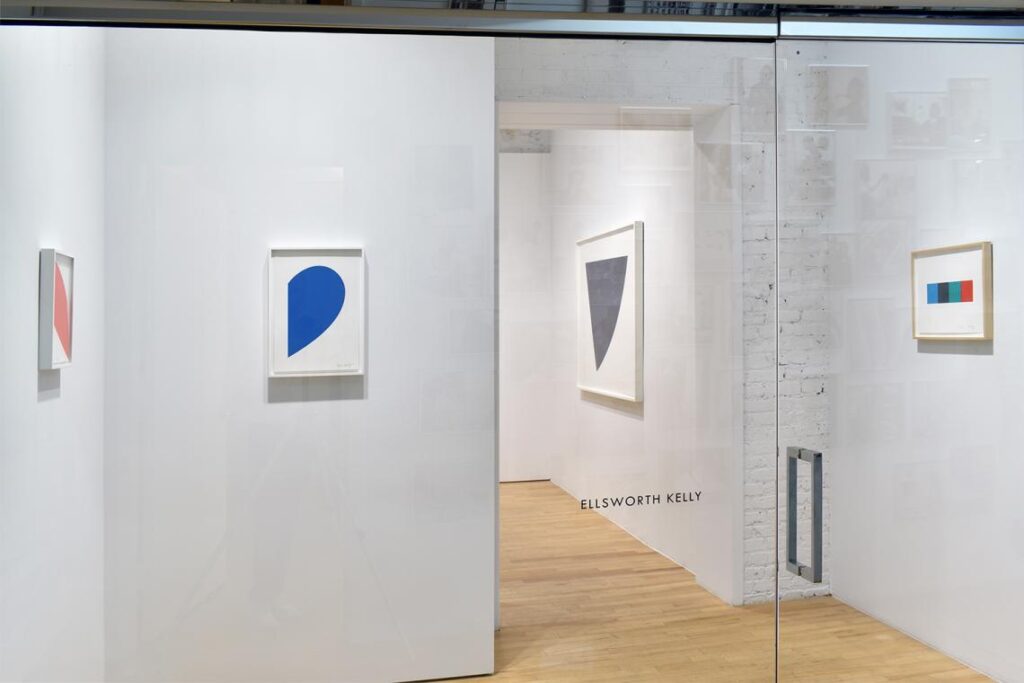
the glass walled entrance to joni weyl's gallery has ellsworth kelly painted in small all caps near the door handle. three of the smallest prints kelly made for gemini gel hang on the walls, and a fourth larger print is on the wall through the doorway. from left, red curve, blue thumb or whatever, and blue gray green red, four abutting blocks, are in simple white or natural frames. i swear, did they put the most stealable works in the entry just to tempt me?

[OK, close to the smallest but not the last: Blue Gray Green Red (2008) was part of the Gemini-organized Artists for Obama portfolio. Here they both are installed at Joni Weyl in 2019.]

later this afternoon update: I went through the CR, published in 2012, but it does end in 2008. I feel like if there were more prints coming, they could have fit them in. So what seems like the last last print for Kelly was a large (48 x 130 in.) version of Blue Gray Green Red. He went big, then he went home.

an ellsworth kelly print titled red curve in the shape of a guillotine blade, in a white matted natural frame, 10 x 7.5 inches, made for parkett and sold at rago in 2021
Ellsworth Kelly, Red Curve (for Parkett 56), 1999, 10 x 7 1/2 in., lithograph, ed. 70, this one sold by
Rago in 2021

The only smaller edition, though, might be Red Curve (1999), which he made for Parkett, which is 10 x 7 1/2 in. And for the 1973 Works By Artists in The New York Collection for Stockholm portfolio, Kelly made an untitled black on white screenprint that is 12 x 9 in. And while there are a couple of similarly sized Concorde etchings in the early 1980s, they’re on traditional, larger sheets.]

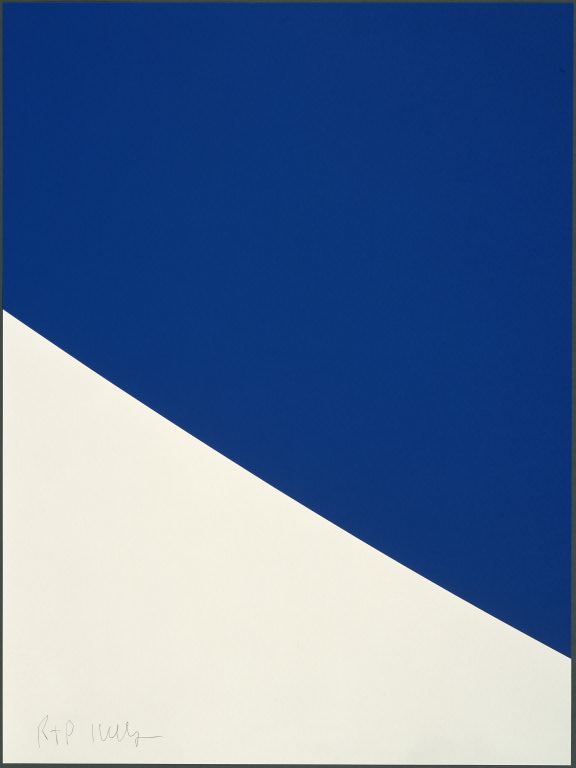
proof of a 1999 ellsworth kelly print, blue curve, is 8 x 6 inches vertical format, with a guillotine blade shaped trapezoid of deep blue litho ink filling the top 2/3 of the white sheet. gemini via nga.gov
Ellsworth Kelly, Blue Curve (Axsom 281), 1999, 8 x 6 in., litho on rives, via nga/gemini

[July 2025 update] Actually, after my systematic search through the Gemini and prints CR, I missed posting Blue Curve (1999), the next one (Axsom No. 281), which was even smaller—8 x 6 inches—and which was published in an edition of 220 to benefit the Archives of American Art.

Rather than delve into why Kelly stopped, or what the very last prints mean, Richard Axsom, the prints CR editor, looked at what was there: a complete, ambitious, and exceptional project, and said, “River is a great summa to Kelly’s prints.”

Danielle Mysliwiec Tiny Painting

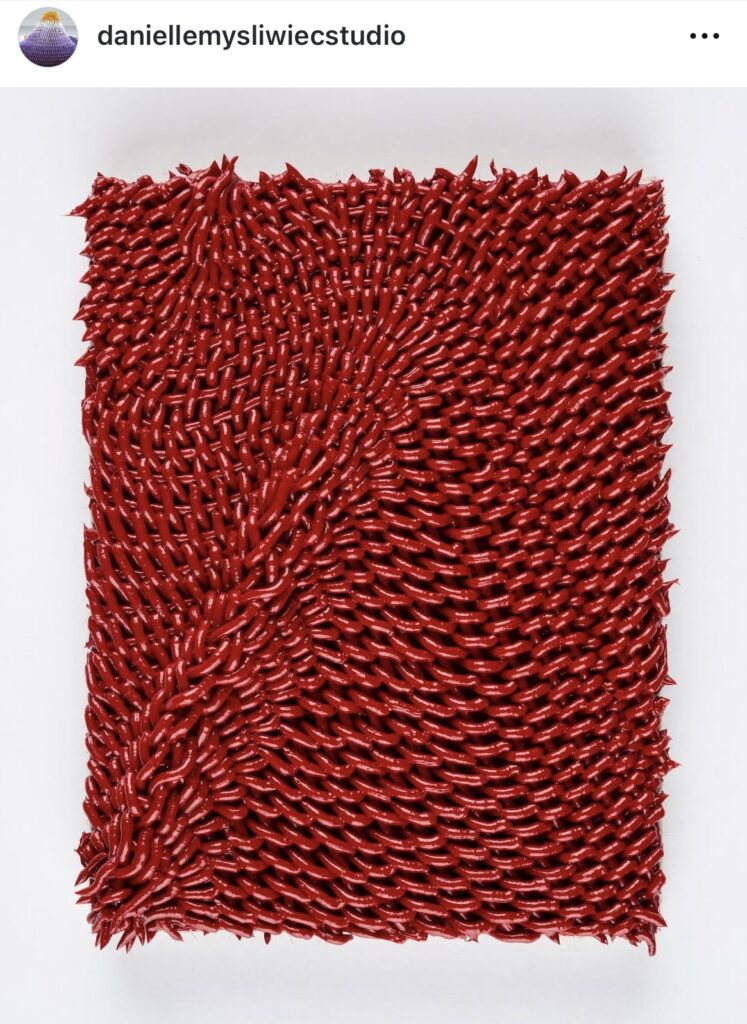
gather, miniature (red) is a 4 by 3 inch oil painting in which the red paint is extruded in such a way that it appears to be a loosely woven textile or basket, an effect enhanced by a diagonal ripple or ridge in the surface connecting to the lower left corner of the canvas-wrapped panel. the links of paint along the ridge are looser, less systematic, like a braid in some places, and around the edge of the painting, loose points of paint protrude like little anemones or spikes. by danielle mysliwiec from her insta
Danielle Mysliwiec, Gather, Miniature (red), 2024, 4 x 3 in., oil on linen on panel, via ig:daniellemysliwiecstudio

I would not say a sucker for any tiny painting. But maybe that’s like how, all evidence to the contrary, I don’t think I’m a dog painting guy, either.

Anyway, Danielle Mysliwiec just posted this gorgeous little painting to her Instagram. She made it for Barely Fair last year in Chicago. The work’s title, Gather, is perhaps a reference to the undulation in the painting’s surface, which alludes to a woven material, while being unmistakably an extruded one: paint.

Most of Mysliwiec’s works are much larger, but no less intricate, and time-intensive. So there’s something rare here: a painting made in one go.

ZOMG there are three more tiny paintings alongside this one on her website. OK, fine, I am a these tiny paintings guy.

Danielle Mysliwiec — Paintings [daniellemysliwiec]

I Shall Call Him Mini-Lee

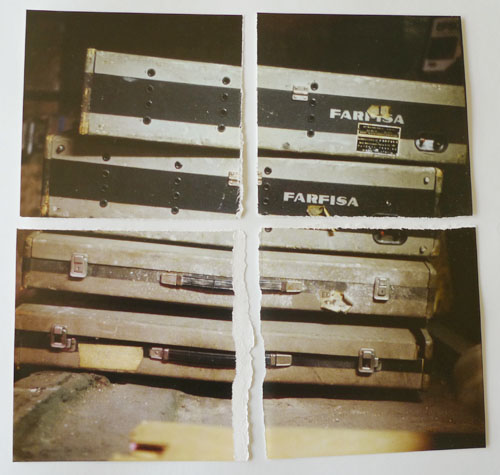
Lee Ranaldo, Four Organs (Tom), aka Torn Photograph (for SR & RS) (maquette version), 2000?
7 x 7 inches, ed. 25 at Paul + Wendy Projects

In 2000 Lee Ranaldo made a torn photo artwork for a limited edition Sonic Youth box set. It was a photo taken in the basement of his building, of the four organs minimalist composer Steve Reich used for his groundbreaking 1970 work, Four Organs.

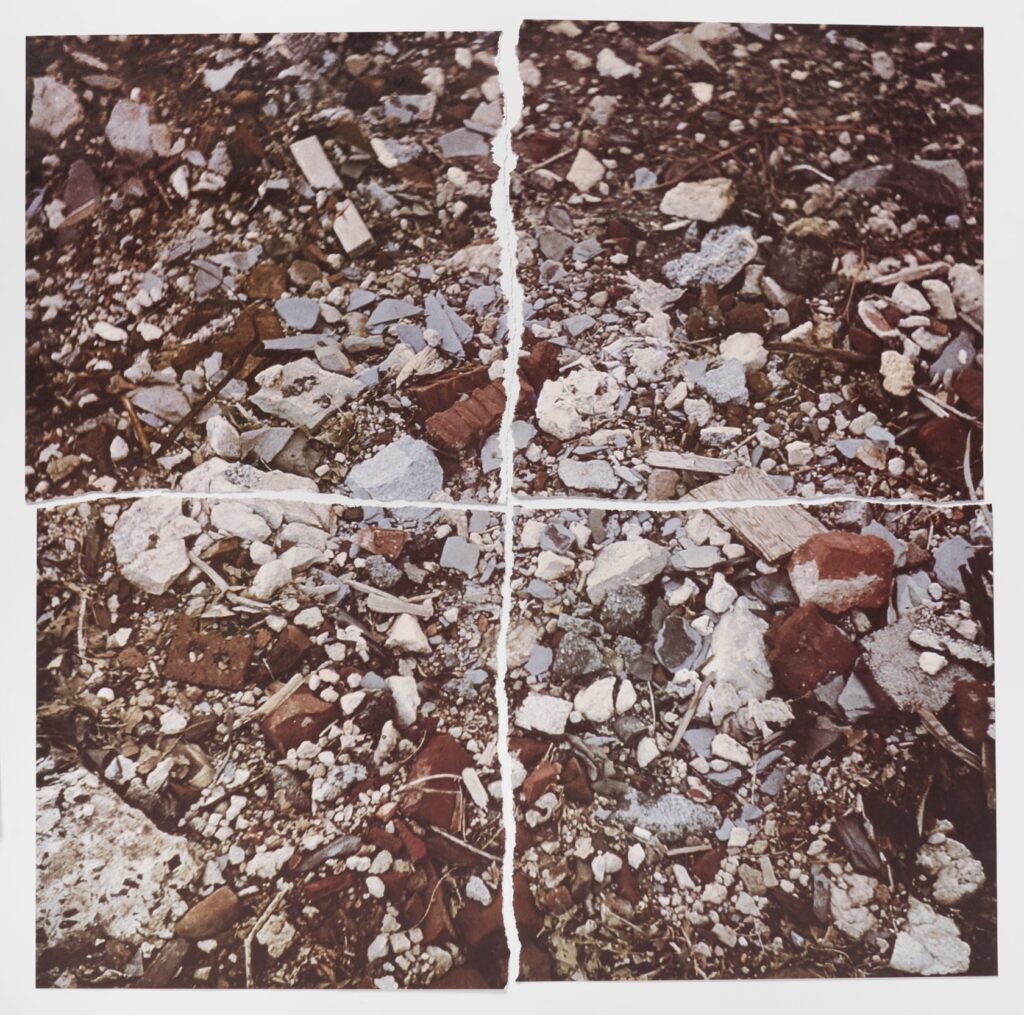
Robert Smithson, Torn Photograph, &c., 21 1/2 x 21 1/2 in., offset lithograph torn in quarters, via Marian Goodman

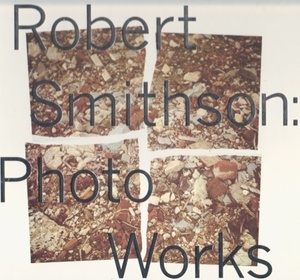
The idea of tearing a photo into quarters came from Robert Smithson, whose Torn Photograph from the 2nd Stop (Rubble) (2nd Mountain of Six Stops on a Section) was included in the Artists & Photographs box set published in 1970 by Multiples, Inc. [It was also on the cover of the catalogue for LACMA’s 1993 exhibition, Robert Smithson Photo Works.]

the 1993 exhibition catalogue for Robert Smithson: Photo Works, as once for sale Arcana Books

This was a Smithson I bought for some friends back in the day, when Marian Goodman was clearing out a bunch of loosies from the Multiples, Inc. warehouse. They were supercheap and perfect. But I just saw the Lee Ranaldo edition again while looking for art edition gifts at Paul + Wendy Projects, and I wanted to find out more.

Fortunately, Dave Dyment’s blog, Artists’ Books & Multiples, has a writeup of the whole thing, including the hilarious detail from a 2011 interview with Ranaldo, that the dimensions of digital file sent to Paul + Wendy were off, resulting in a tiny “Spinal Tap ‘Stonehenge’ version” of the print. Which explains the “(maquette version).” I love it.

Related: In 1998, Lee Ranaldo released an album, Amarillo Ramp (for Robert Smithson), with a 32-minute sound portrait of Smithson’s last work as its title track.

Miss Lucy’s 3 Day (Doll) House Party

Donald Baechler’s invitation to Miss Lucy’s 3 Day (Doll) House Party, March 1993, from a screenprinted edition of “around 20” by Cy Twombly, selling this week at Stair Galleries

It is not clear the specific circumstances during his study abroad in Rome in 1988 under which rich, Southern twink Douglas Bassett Andrews met Cy Twombly, then 60, but they became close friends. “I think it was the Southern connection,” Andrews once told The New York Times.

Continue reading “Miss Lucy’s 3 Day (Doll) House Party”

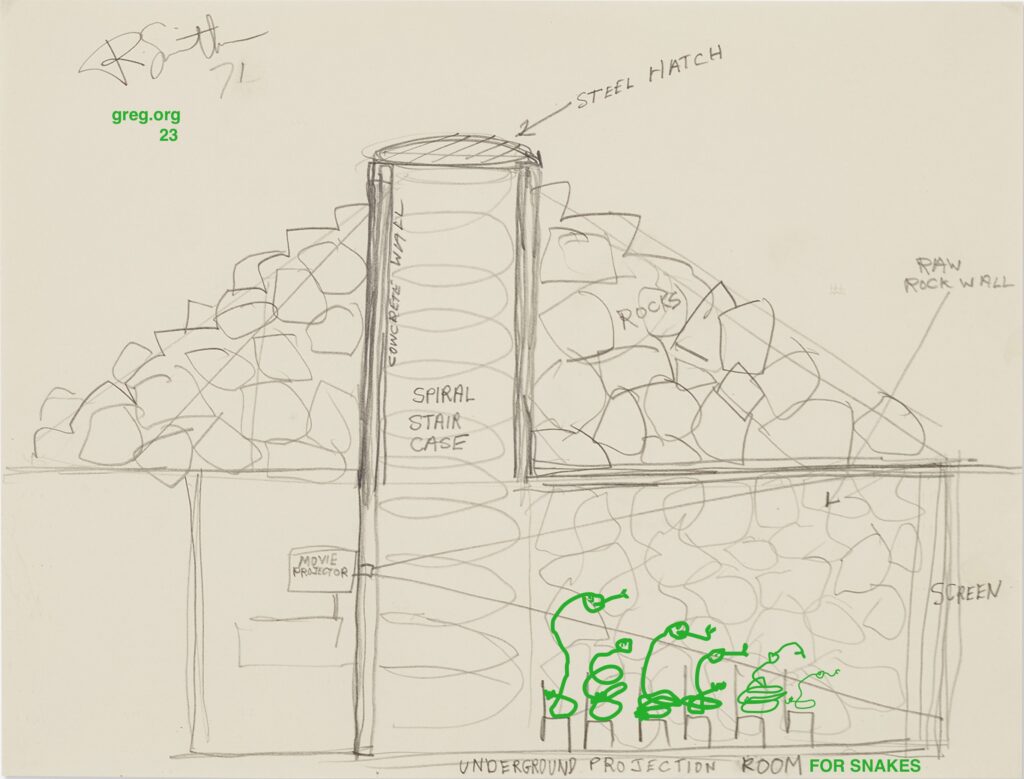
Underground Projection Room (For Rattlesnakes)

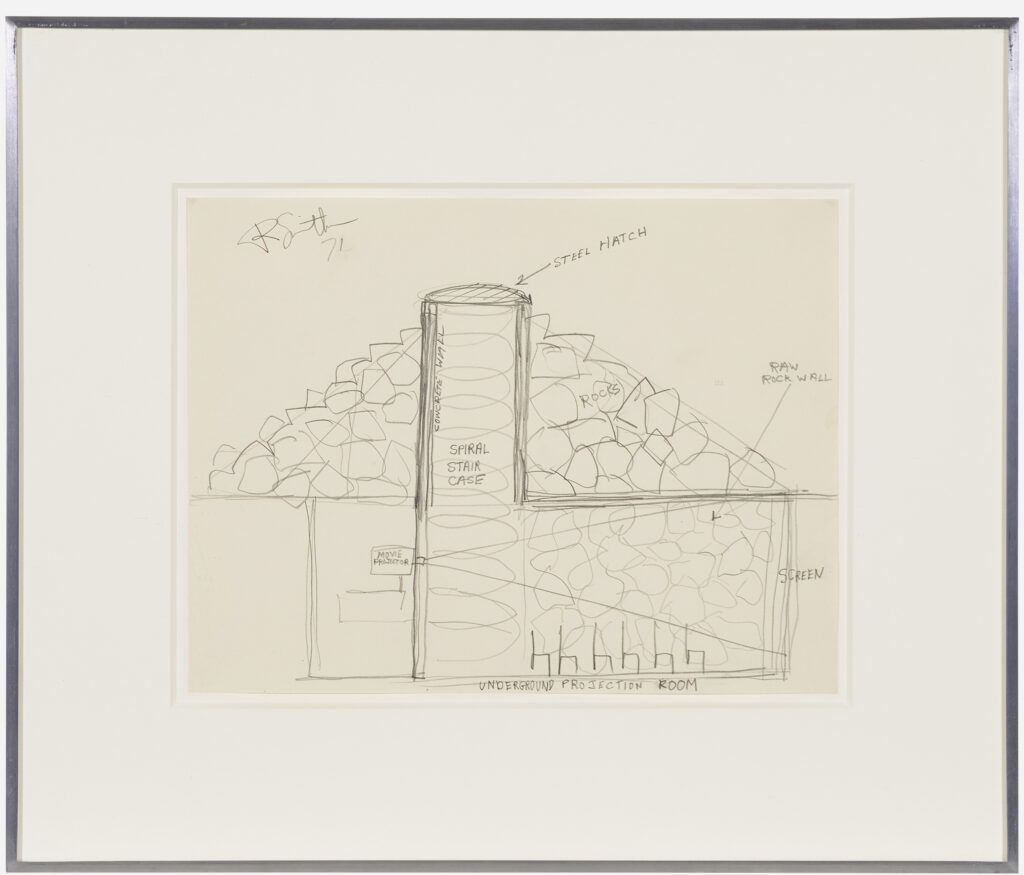
Robert Smithson, Underground Projection Room (Utah Museum Plan), 1971, graphite on paper, 9×11.75 inches, lot 145 @ LA Modern, 21 June 2023

According to the friend of my mom’s whose family used to own the ranch land on and around Rozel Point, the basalt-strewn hill above the Spiral Jetty is full of rattlesnake dens. I don’t know if Robert Smithson knew this when he picked the site, but I doubt it. He was more focused on the scenic qualities: the pink salt water of the Great Salt Lake, and the collapsed oil derrick a little further along the shore.

I’ve thought about it a lot, though, especially when I think about Smithson’s original plan to show the Spiral Jetty film on a continuous loop in an underground screening room on the site. A sketch for that idea (above) will be sold next week at LA Modern auction house.

Which is as good an occasion as any to propose that Smithson’s idea be realized. For the snakes.

greg.org, Study for Underground Projection Room For Snakes, 2023

As half the human population on earth knows, tiny flatscreens are a thing. And so is solar power. Smithson’s film, Spiral Jetty, is 36 minutes long and can easily fit on a micro SD card that plugs into an Arduino-compatible 60×94 pixel TinyScreen+, which can be lowered into the snake den.

The TinyScreen+ next to a US quarter, $39.95 at TinyCircuits.com

A small solar panel on the surface, connected to a battery connected to the Tinyscreen down below will keep the movie streaming endlessly, or until the heat death of the planet, whichever comes first. Before installing them for the snakes, I think I need to make a small edition of prototypes first. And to start by extracting out my copy of the film from the not-solid-state external drive. Fingers crossed that this project isn’t over before it starts

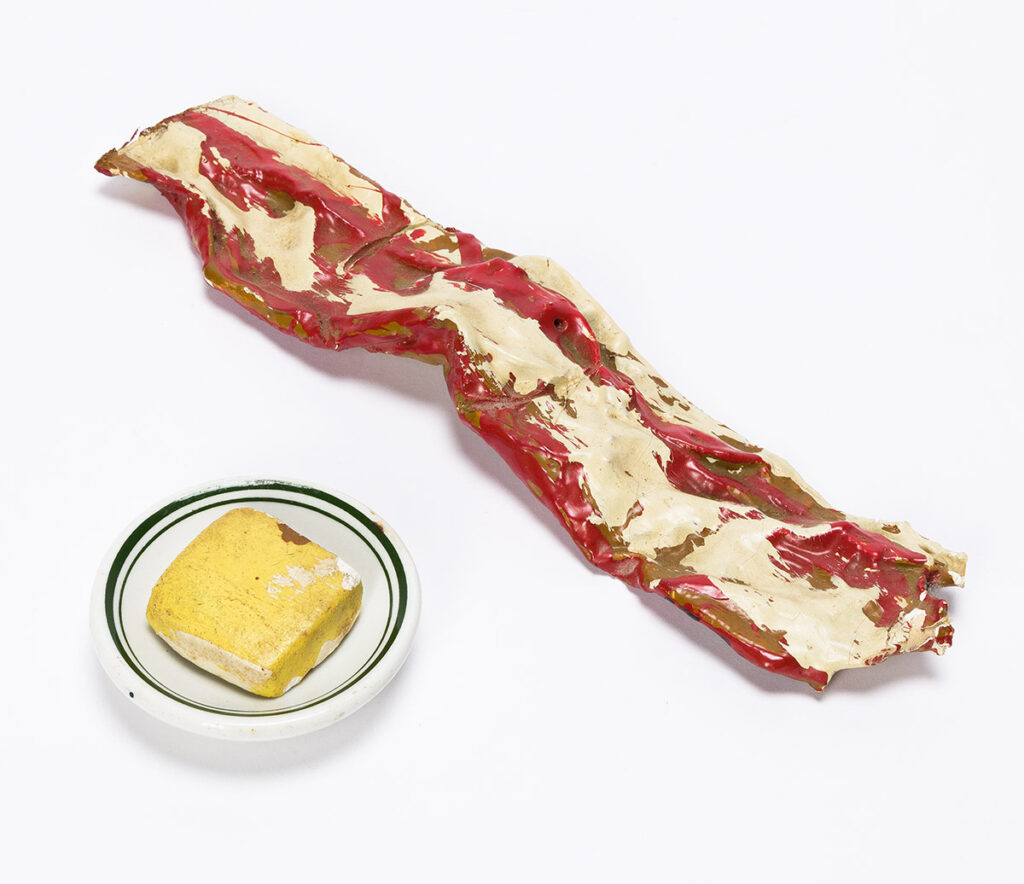
Tiny Oldenburg Store Objects, Bacon & Butter

Lot 171: Sturtevant, Oldenburg Store Objects, Bacon & Pat of Butter, 1967, being sold at Swann

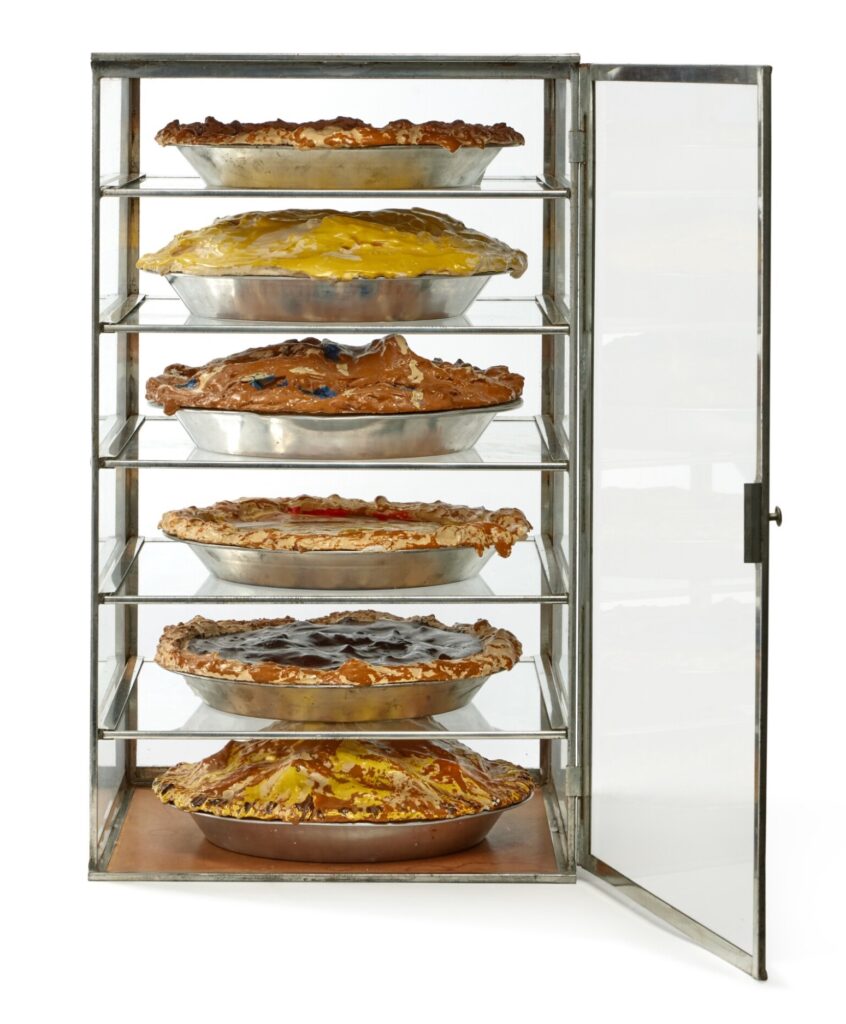
I lost track of the Schwartzes selling Sturtevant’s Oldenburg Store Object, Pie Case amidst the Pompon hype. It was one of the most prominent objects from Sturtevant’s April-til-June 1967 repetition of Oldenburg’s The Store, and it was being sold by some of the most important collectors of Sturtevant’s work. [Eugene organized the 1986 Sturtevant comeback show at White Columns that brought her work into the context of the appropriationist Pictures Generation.

Sturtevant, Oldenburg Store Object, Pie Case, 1967, from the Barbara and Eugene Schwartz Collection, sold at Sotheby’s 19 May 2023
Continue reading “Tiny Oldenburg Store Objects, Bacon & Butter”

Jacques Barthélémy Delamarre Facsimile Object [D1] ‘Pompon’

Lot 353: Jacques Barthélémy Delamarre, “active 1800-1824”??, Portrait of a small poodle, said to be “Pompon,” a favorite of Marie-Antoinette, 9.5 x 12. 5 in., est. $3-5,000. image: sothebys.com

Please sit with this image of this painting by Jacques Barthélémy DeLamarre of Marie Antoinette’s purported dog for a minute. It will be sold tomorrow at Sotheby’s. There is no reserve, and the estimate is $3-5,000 US, so it will sell.

[Day after the sale Update: by now one of the most interesting things about this painting, for most people, anyway, is that it sold for $279,400, 50x its original estimate. There is no logical explanation for this. 15 bidders were reported, though by the time it got into six figures, I suspect only a couple remained. Please note the update from the day before the sale at the bottom of this post. It seems to indicate that when this painting sold at Bonham’s in 1986, the narrative of Pompon and Marie-Antoinette was missing. So far, I haven’t been able to find when it comes in, either. Whether this is just a moment of Pomponomania (as Michael Lobel calls it), or a wider spread Pompondemic remains to be seen.]

From the minute this post goes live until the minute the painting sells, I will make a full-scale Facsmile Object of it available on this website for $300, 10% of the low estimate of the painting. It will include a handmade, full-scale Certificate of Authenticity, signed, numbered and stamped.

[Thursday Update: I misread the auction, which *started* today, and continues for eight days. I was pacing myself for a Pompon sprint, not a marathon, and I think we’ll all be better off without a week of wheezing Pompon hype. The Facsimile Object is no longer available. Within hours there were 20 bids; the price now stands at $US 6,000 220,000. Holy smokes, this is where it ended, $279,400. Thank you for your engagement.]

There is absolutely no reason anyone should buy this Facsimile Object or, for that matter, this painting. Within the next 24 hours, someone will clearly do the latter, which should be folly enough. It is buck wild to me that in that same time frame, someone will also do the former. Because they will want to have the physical experience of sitting with this picture, and sitting with an image of it on a screen will not suffice. I absolutely get it. [Huge shoutout to artist Jeanette Hayes who says, understandably, “I have never loved a painting more.”]

Continue reading “Jacques Barthélémy Delamarre Facsimile Object [D1] ‘Pompon’”

Yves Klein Proposte Minicrome

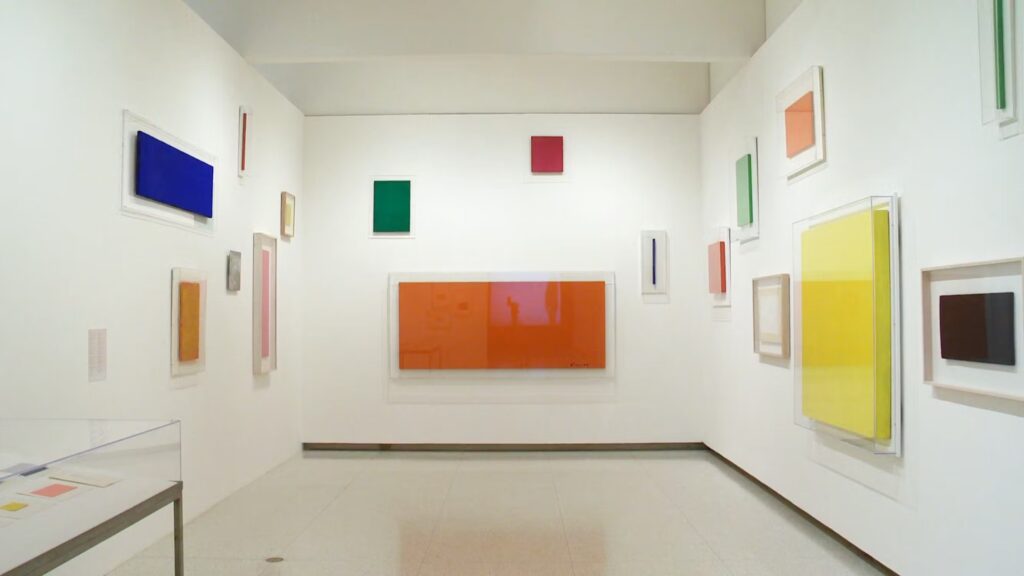
Yves Klein: With the Void, Full Powers, installation view at the Walker Art Center, 2011

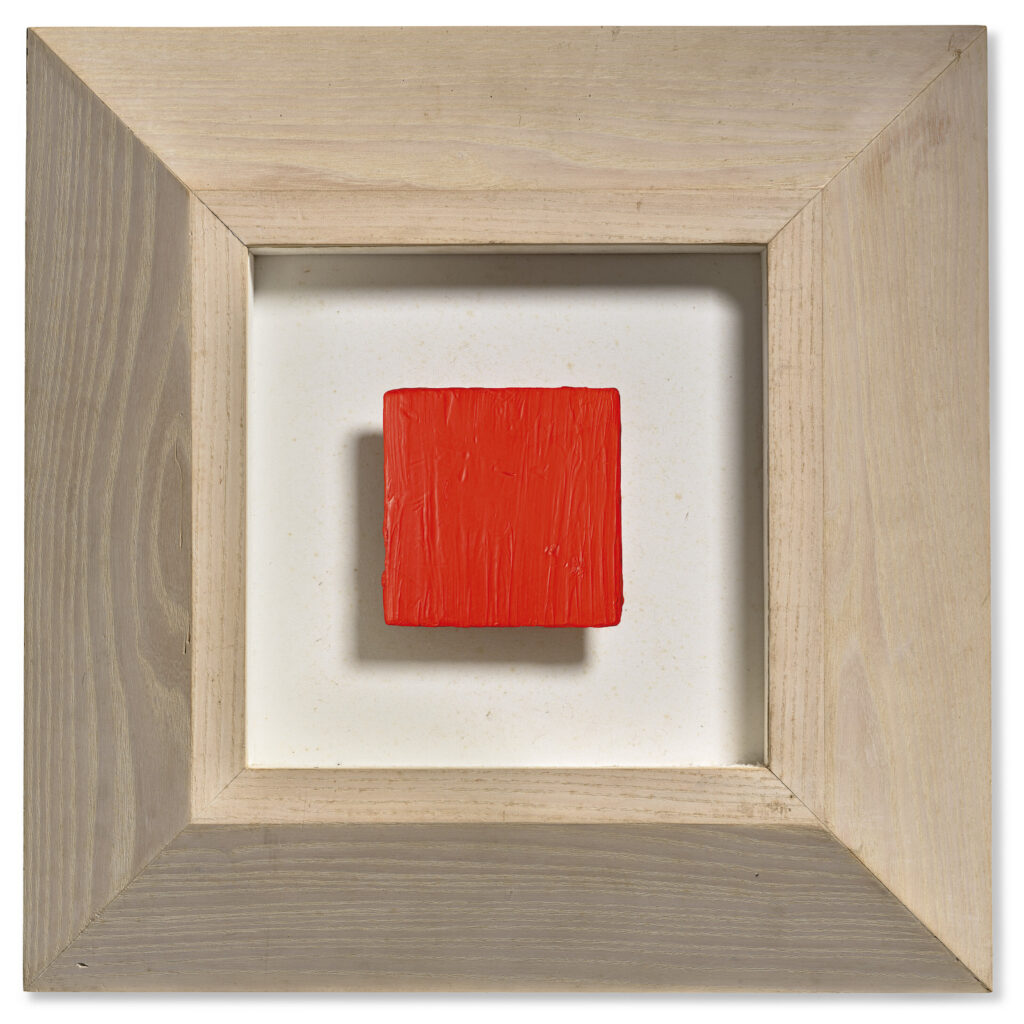
In the 2010-11 retrospective of Yves Klein’s work organized by the Hirshhorn and the Walker Art Center, there was a wall (in DC) and a nook (in Minneapolis) filled with early, small-ish monochromes in a variety of colors that weren’t blue. They surrounded a vitrine with Klein’s amazing 1954 catalogue for an imaginary monochromes exhibition, Yves Peintures.

Yves Klein, untitled (M 109), 1955, 10×10 cm, oil on gauze on panel, being sold at Christie’s Paris

This little red square was not among them, but can you imagine if it was, looking like an emergency button in its gigantic, beveled frame?

Continue reading “Yves Klein Proposte Minicrome”

Polly Pocket-Size Pavilion

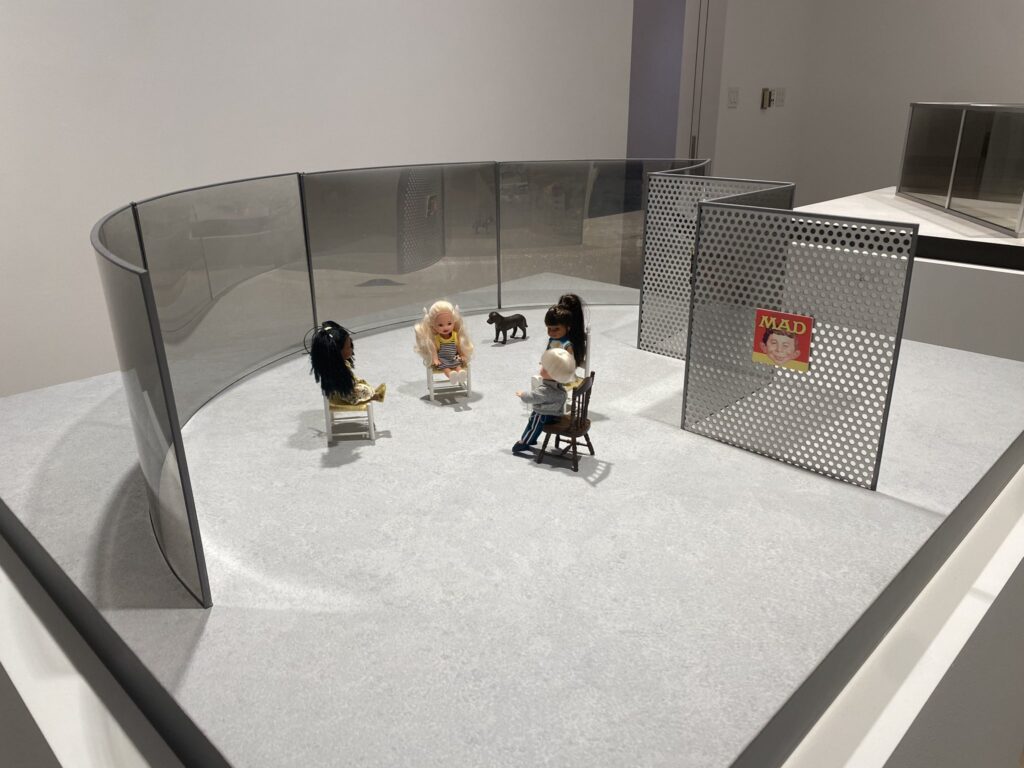
Dan Graham, Children’s Day Care CD-Rom, Cartoon, Computer Screen Library Center, 1998, at Marian Goodman, image via @visitordesign

The Dan Graham tribute show at Marian Goodman looks fantastic; there’s a whole gallery of models/maquettes/studies, tiny little Dan Graham pavilions on pedestals that almost make me want to move to the country.

Visitor took this picture of one of what look like a mountain of gems: a 1998 model called Children’s Day Care CD-Rom, Cartoon, Computer Screen Library Center.

Is There Life After Breakfast? organized by Peter Fischli, runs through Apr. 29, 2023 [mariangoodman]

Little Mobile For Tuttle Pyramid

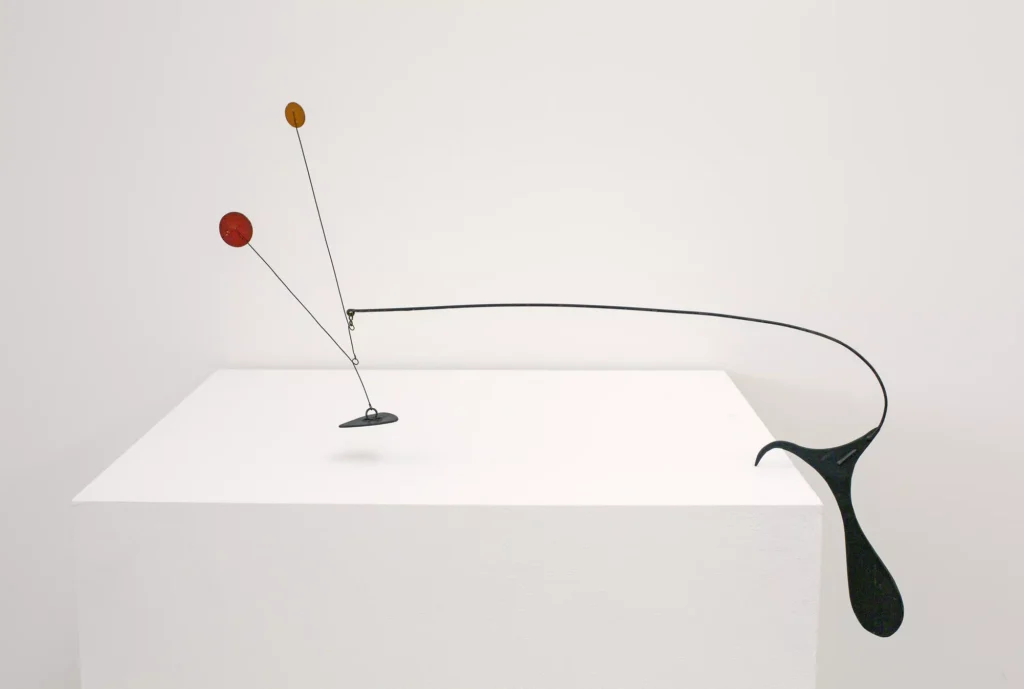
Alexander Calder, Little Mobile for Table’s Edge, c. 1939, sheet metal, wire, and paint, 19″ × 24″ × 1-3/8″ (48.3 cm × 61 cm × 3.5 cm), image: Pace

A two-artist show, “Calder/Tuttle: Tentative,” just closed at Pace LA today. Richard Tuttle made sculptural and spatial responses, or recontextualizations, to a series of works by Alexander Calder. I’d first seen someone criticizing it, but to look at the installation shots, I’d say it’s a fresh and interesting way to see both artists’ work.

The Calders are nice enough, but the one above, Little Mobile for Table’s Edge, is exceptional, a mobile that sits like a stabile. Tuttle’s response?—Solution? Proposition? Alteration? Companion? I am undecided what the word should be. In this too-brief video, Alexander Rower calls them vessels, while Tuttle calls them pavilions or frames, none of which apply here.

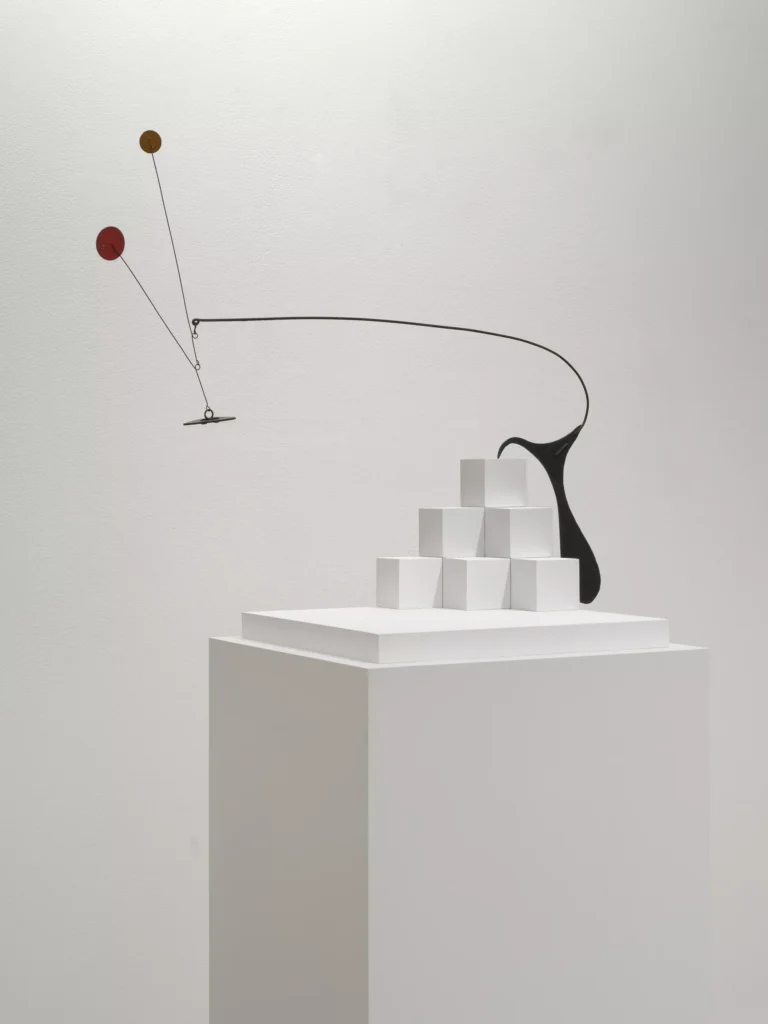
Tuttle took the mobile off the table’s edge and put it on a sculptural plinth, with a Q*bert-friendly corner of square blocks. As the show’s press release explains, “On a formal level, Tuttle explores enactments of verticality and horizontality—as well as plays of light and shadow—in Calder’s work,” as he focuses “on the space discovered in the mobiles.”

Richard Tuttle enactment [?] with Calder mobile, as installed at Pace LA.

I assume whoever is buying one is buying both, if they can. If you, too, missed it, no sweat; there will be a book.

A companion presentation of Tuttle objects—works of and on paper—made in response to Calder and his work’s context ran concurrently at David Kordansky.

[next day update]: roaming through the Calder Foundation’s archive, it appears that this was the first of only two or three mobiles Calder made with this type of hanging-off-the-table dynamic. Orange Under Table is a much larger mobile from 1949, now in the collection of the MCA Chicago. Meanwhile, the tiny 1948 work, Toadstool With Feather, hangs a counterbalanced feather off the edge of a toadstool disc balanced at its center, putting the “table” element itself in motion. Scrolling through Calder’s oeuvre, it becomes clear that he used or revisited some mobile dynamics often. This is not one of them. I wonder why.

Calder/Tuttle: Tentative closed at Pace LA today, 25 Feb 2023 [pacegallery]
Calder/Tuttle: Tentative also closed at Kordansky today [davidkordanskygallery]

Joan Didion’s Mantle

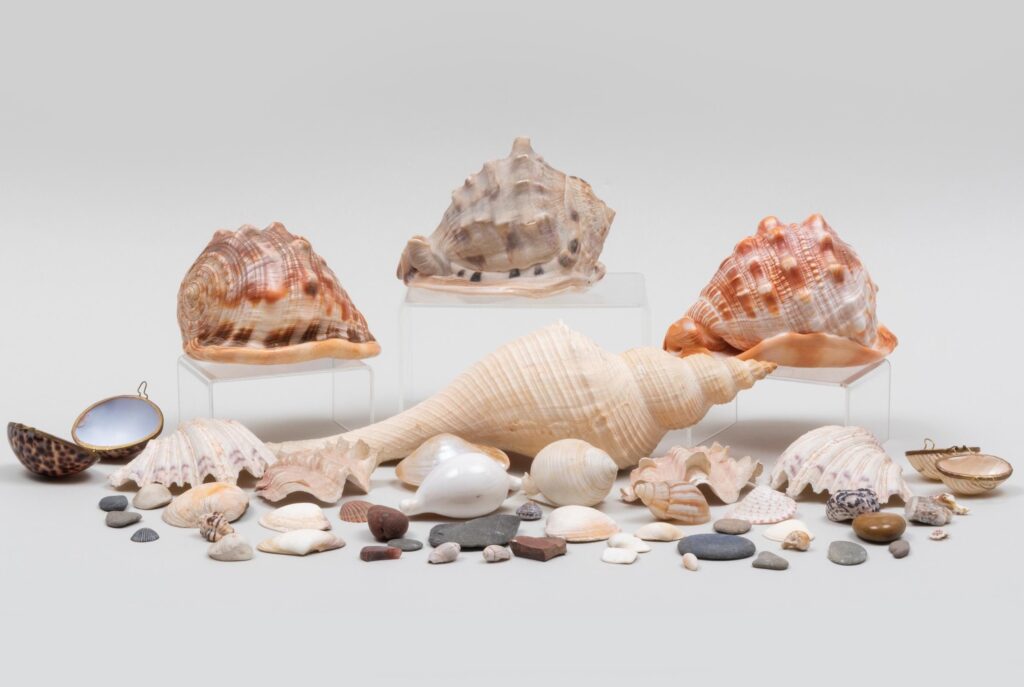
stair galleries' artfully arranged group of seashells from the estate of joan didion features three similar, large, bull cowrie shells, on lucite medal platforms like they won the shell olympics, and a large whelk laying in front of them, like their dog, surrounded by smaller shells and pebbles, all in a featureless white setting. this pile of shells and pebbles sold for $8960 in 2022
Lot 50: Group of Shells and Beach Pebbles, from the Estate of Joan Didion, image: stairgalleries

Let’s for a moment say we won’t even think about the money. If that seems hard, just imagine that someone donated $7,000 to Parkinson’s research and Sacramento women’s college writing scholarships, and in return, rather than public recognition and a tax deduction, they received Group of Shells and Beach Pebbles.

And then they paid $1,960 to a Hudson Valley auction house to warrant that these “approximately 26” shells and rocks–there are, in fact, 32 shells, 17 rocks, and one item whose rock-or-shell nature I could not determine in the auction house’s display photo–that “[t]his group of shells decorated the fireplace mantle in [Joan] Didion’s living room.”

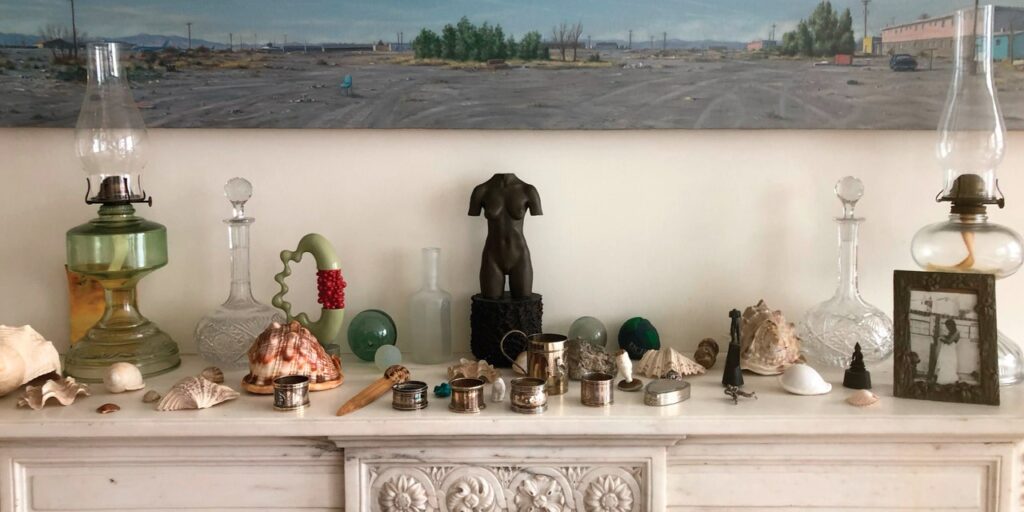
an architectural digest photo of the assemblage of stuff on joan didion's fireplace mantle, which includes lamps, sculptures, shells, boxes, candle holders, a bunch of stuff that gets explained and listed multiple times throughout this article.
The Mantle Does Hold: the flagship image for the sale of Joan Didion’s belongings at Stair Galleries, as promoted on architecturaldigest.com
Continue reading “Joan Didion’s Mantle”

Cy Twomblino

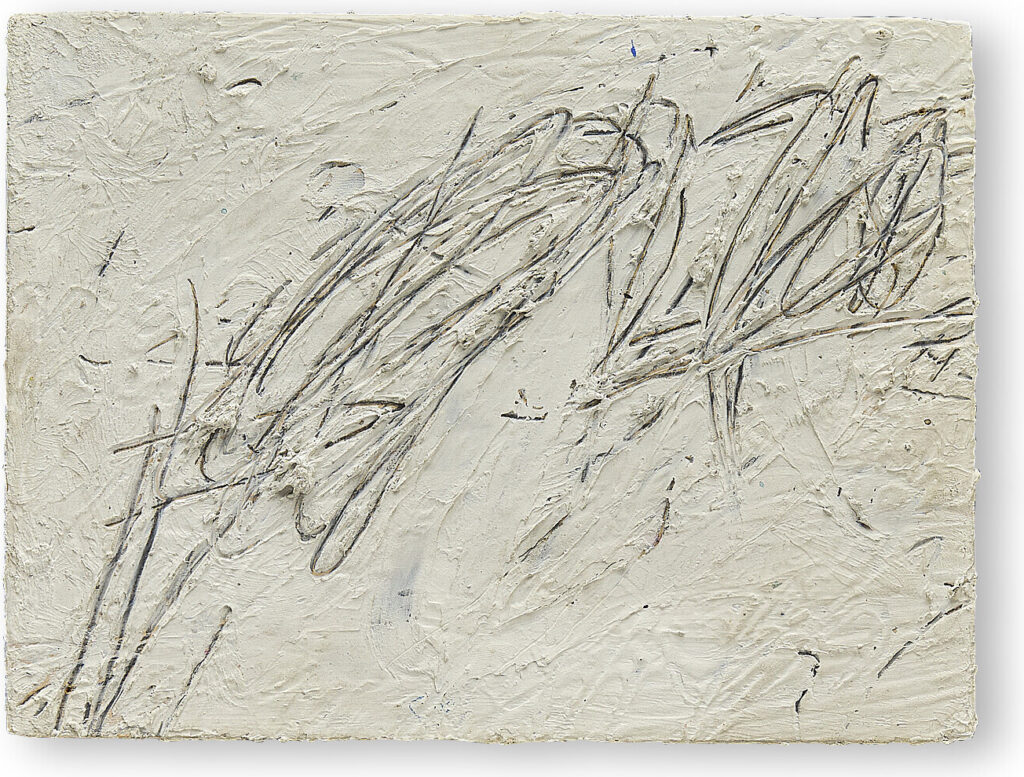
Cy Twombly, Untitled, 1957, white lead and pencil on panel, 7 x 9 3/8 in., image via Christie’s

I absolutely love this tiny Cy Twombly painting from 1957, which is being sold from the collection of Margo Leavin, iconic LA gallerist.

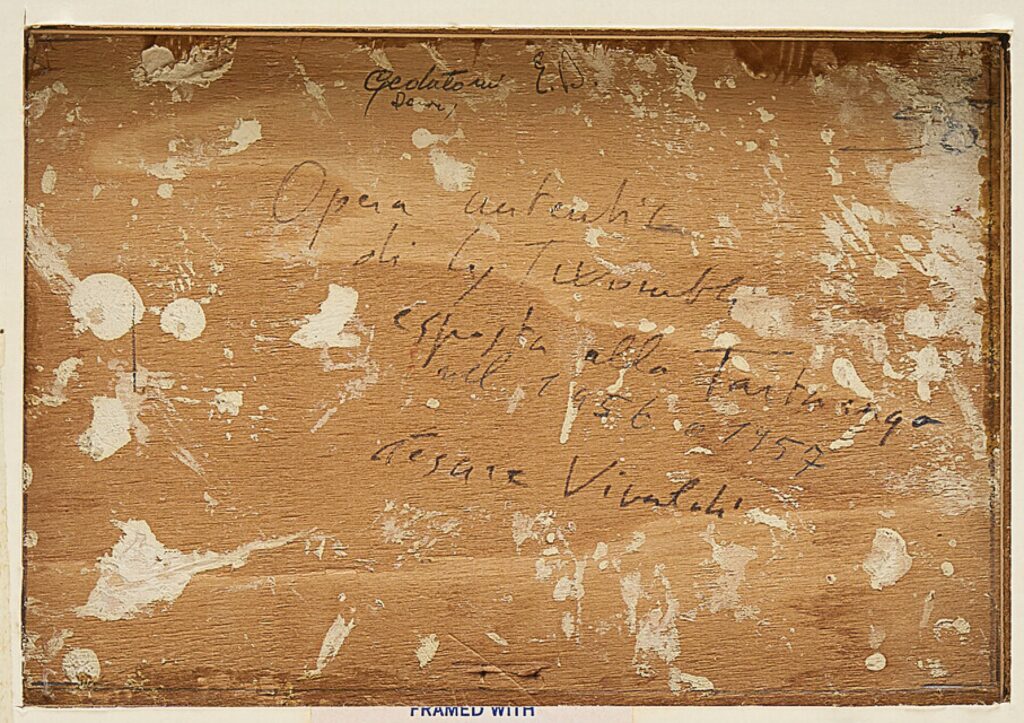
Leavin’s label says it’s oil on canvas, but it does seem to be on a panel. The scrawl on the back, declaring this to be an “Opera authentico/ di Cy Twombly/ esposti alla Tartaruga/ (nell 1956-1957)/ Césare Vivaldi” by Twombly’s Roman dealer, is almost as perfect as Twombly’s marks on the front.

Cy Twomblino, verso

1957 was the year Twombly moved to Rome. The possibly early date makes this feel like something he brought with him. Or did he make it there? Was it a gift to his new dealer?,

From Galeria la Tartaruga, the provenance shifts to a couple of galleries in Milan, then London, where it was included in a group show at the Royal College of Art in early 1974. By late 1974, it was in Los Angeles, where Leavin showed it in a Small Paintings show. And there it apparently stayed, until now, where it is poised to possibly enter non-trade hands for the first time. If you’re buying it for me, please dm for shipping details. Or if it’s more convenient, I’ll gladly come to you to pick it up.

UPDATE: OK, since it sold for $819,000, I will definitely include a Facsimile Object and Certificate of Authenticity in the trade for this little Twombly. HMU.

May 13, 2022 Lot 175: Cy Twombly, Untitled (Rome) (sic), est. $150-200,000 [christies.com]
Previously, related: Twombly’s Schifano