Little Johns

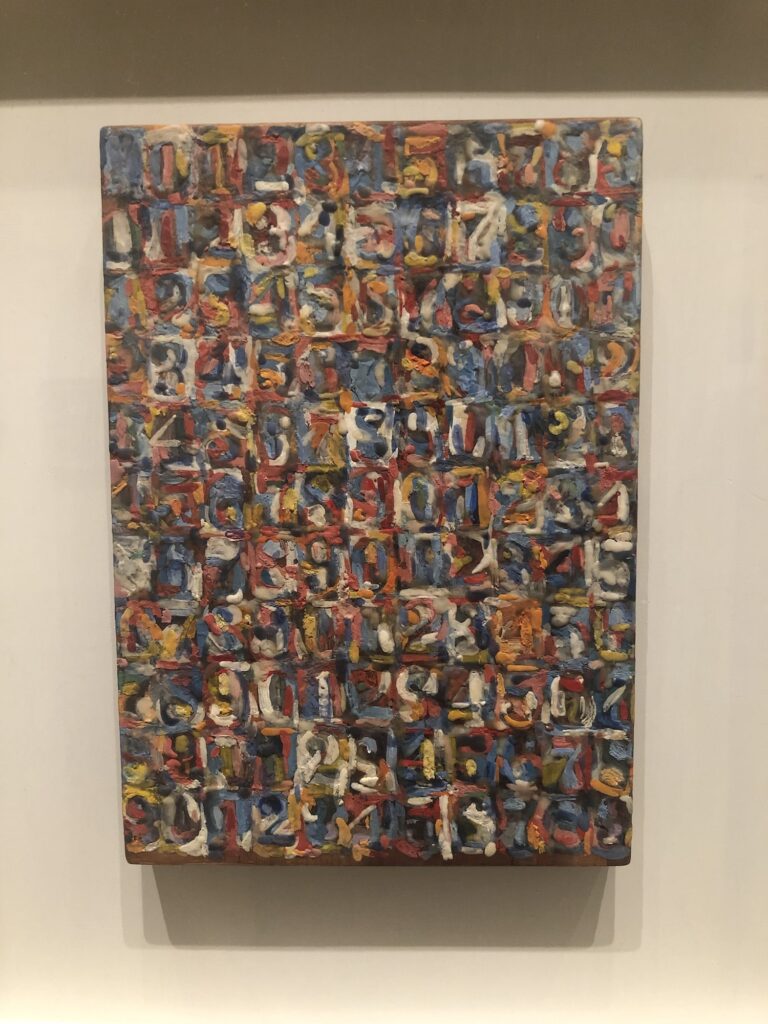
Jasper Johns, Small Numbers in Color, 1959, 10 1/8 x 7 1/8 in., encaustic & collage on wood printing block, installed at the Philadelphia Museum of Art for Mind/Mirror, collection:the artist

I went to the Philadelphia Museum today to see the Jasper Johns exhibition before it closes. There’s a lot to like, and a few things to love. The absolute winner for me was a little painting, rarely shown, which Johns has kept for himself since making it in 1959. Small Numbers In Color is extraordinary, one of two superlative works in the gallery devoted to Johns’ use of numbers.

It’s small, around 10 x 7 inches, and painted in encaustic on wood. The catalogue raisonné (P74, btw) says the wood is “the reverse side of a printer’s block with metal type.” [Which, a block would have cast metal affixed in a permanent way. A case would hold the sorted metal type, and a frame would hold type that has been set. Even though the metal type is not listed as part of the work, it does make me wonder what it says. Or looks like.]

None of that is evident from looking at the front; all you see is a tiny riot of color with an over-all grid, and then, the shapes of individual numbers coalescing into a whole. It looks to me like it replicates the basic color composition of Numbers In Color, a large (67 x 49.5 in.) painting from 1958-59 which went into the Albright Knox Museum collection soon after it was completed. Given the CR chronology (P58 vs P74), Small Numbers is presumably a documentation, or a memorialization, of Numbers, maybe made before the large painting shipped off to Buffalo. [In Roberta Bernstein’s 1975 dissertation that was the first published catalogue of all Johns’ paintings & sculpture to that point, Numbers in Color comes first in the 1959 works list, and Small Numbers comes almost at the end.] Who knows? There is almost no discussion of the work online. Actually, Johns Friend Craig Starr might know; the last time it was exhibited publicly was at the inaugural show of his gallery, in 2004.
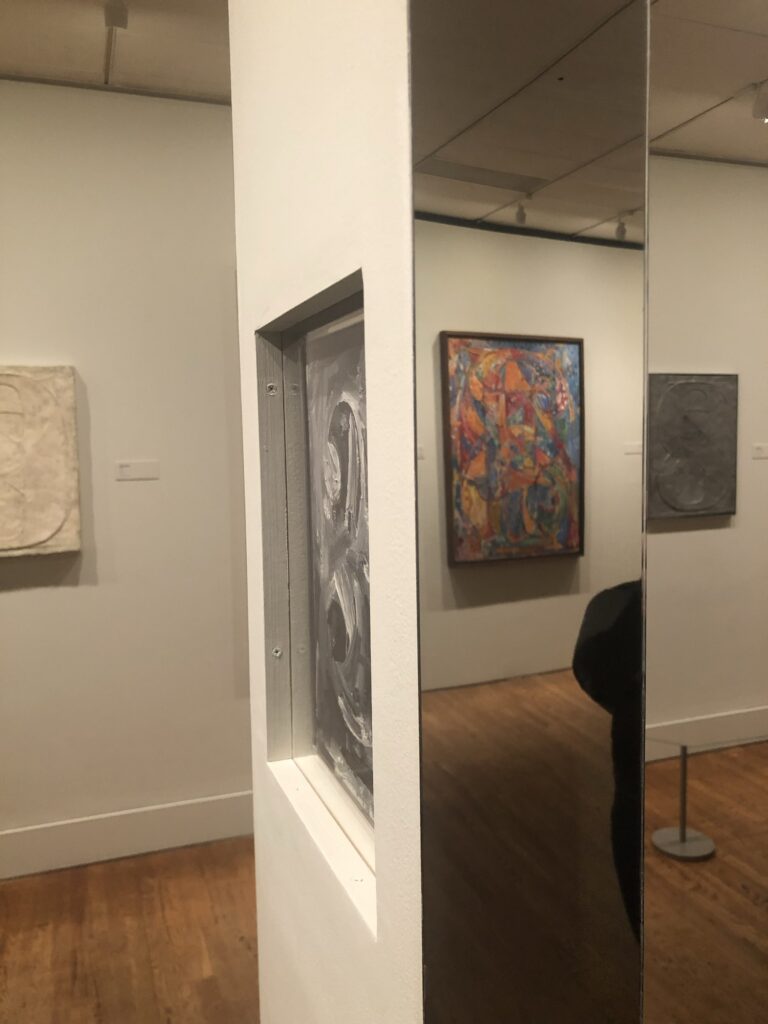
Jasper Johns, Figure 3 (1960), a double-sided painting, installed in a column at the Philadelphia Museum of Art’s Mind/Mirror. Collection: Yale Art Gallery

The other standout from the same gallery is even smaller. Figure 3 (P84), from 1960, is Johns’ only double-sided painting. The 9×6 painting is framed so that both sides are visible. The verso is an approximation of the front, reversed, as if it were painted on a transparent ground, not canvas. The precise-enough brushstrokes of the back make their simulating point in the same way Small Numbers echoes Numbers.
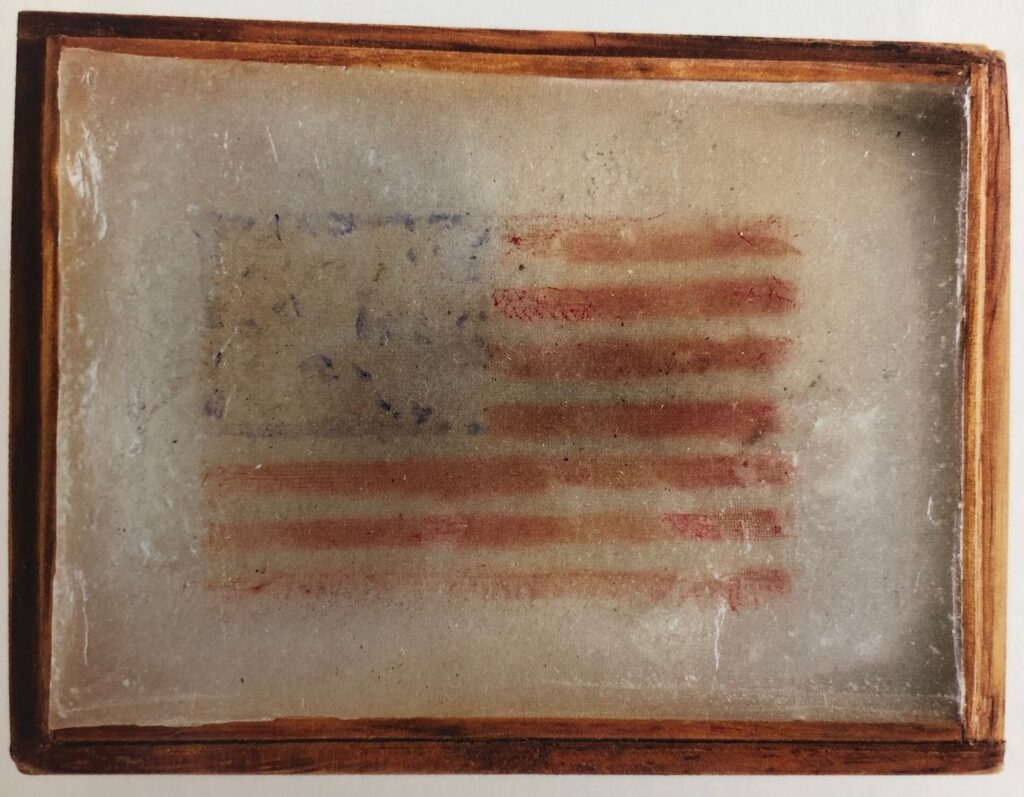
Jasper Johns, Flag (P56), 1958, silk printed flag, paraffin, in wooden frame, 2 3/4 x 3 3/4 in., via JJCR

Which is interesting, but is only a part of the fascinating intimacy of the very small artworks Johns created (creates?). The Whitney had a whole gallery of them, miniature examples of some of Johns’ most relevant motifs. In addition to the tiny silk flag encased in wax Johns made for Merce Cunningham, barely the size of a credit card, my favorite was the 3-inch encaustic Figure 2 (1959) made for Astrid and David Myers to celebrate the birth of their second child.
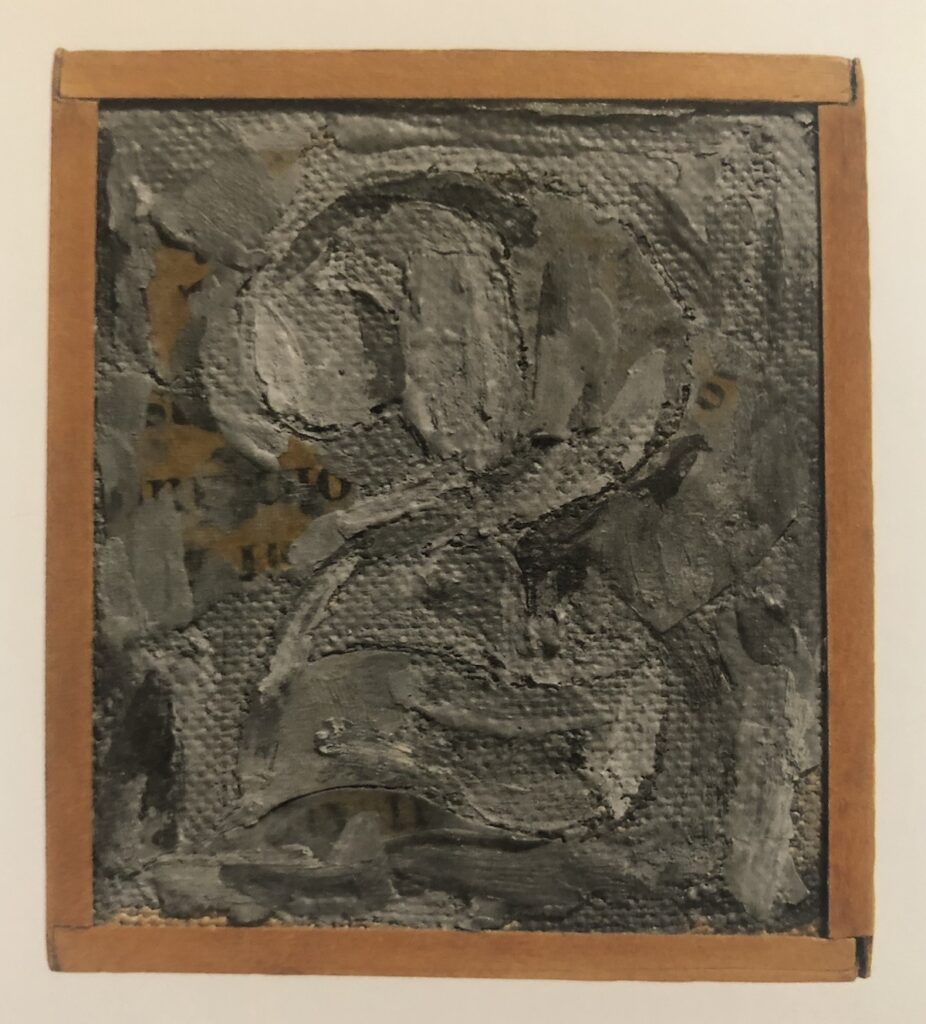
Jasper Johns, Figure 2, 1959, 3 x 2.75 in. encaustic on collage on canvas, originally made as a baby gift for a friend’s second kid. image via the JJCR

Besides the major concerns of Johns’ practice, these instantly recognizable works come with bonus content–like 2 for the second–and bonus context, marking the artist’s social network, his community of supporters and interlocutors. [Philadelphia has a vitrine filled with small artworks he received as gifts from Japanese contemporary artists he met while visiting in 1964. The so-called “hermit of Sharon” in fact trades art with his colleagues, and makes art for his friends.]

Part of the appeal of these works is that they exist outside the market–or at least they were created and first exchanged that way. Their miniature size is still determined by the market, though; even by the end of 1958, it would feel a bit much for someone to give a full-scale, “real” [sic] artwork, one that could be seen as having “real” market value. [Or worse, one that doesn’t, in which case, you’re assuming and asking a lot if you give a whole-ass painting to someone as a gift.] So they have to function on an emotional, personal level, as a gift, a gesture, but also as something the mind already knows–in this case, a Johns painting.

And of course, like the question, “Is it a flag or a painting of a flag?” these gift works are both gifts and works: Figure 2 has traded hands seven times and been auctioned twice since little Coco Myers turned 18.
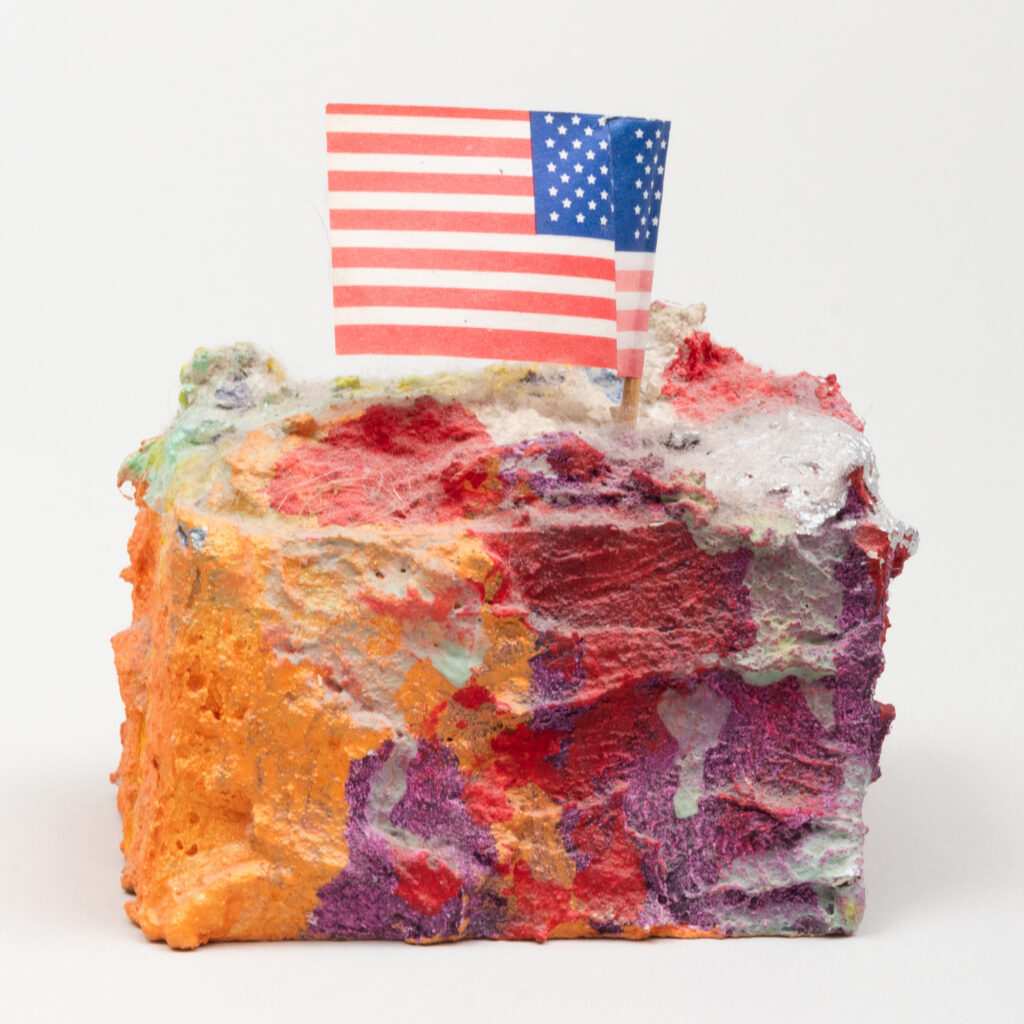
Tiny Rachel Harrison 🇺🇸🍰

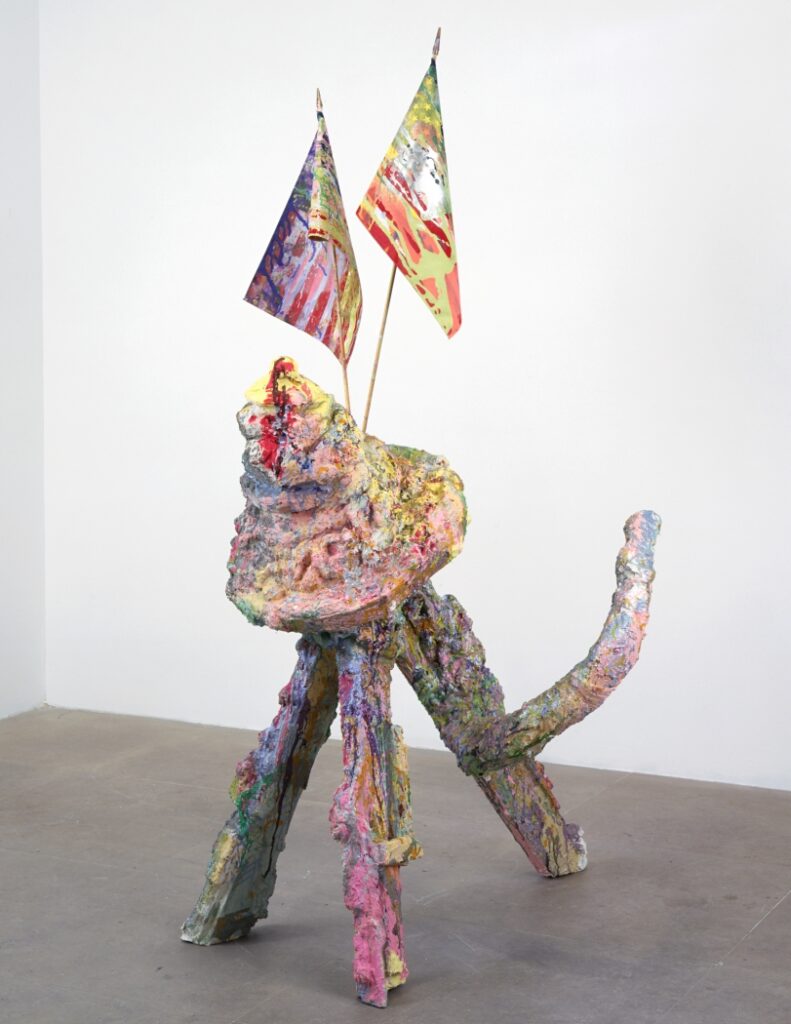
Rachel Harrison, Untitled, 2004, mixed media, 2 3/4 x 2 3/4 x 2 in., to be auctioned June 4, 2021 at Stair Galleries

Here are some things that are larger than this untitled 2004 Rachel Harrison sculpture:
my iphone
my 15yo SonyEricsson k790i smartphone
a box of Altoids
a deck of cards
a Metrocard
a piece of grocery store sheet cake at a Fourth of July block party
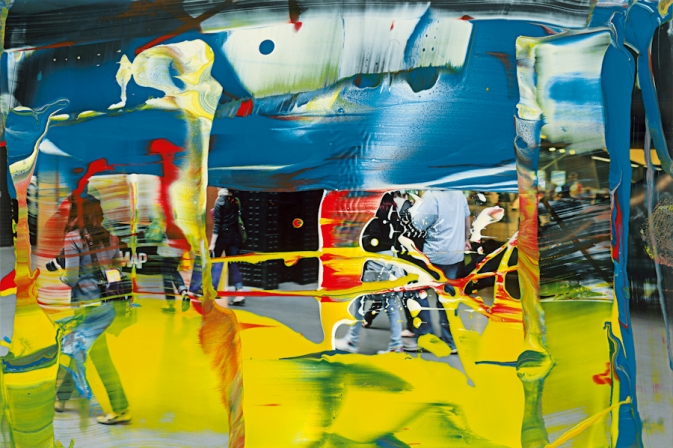
a 4×6 inch snapshot overpainted by Gerhard Richter while he’s cleaning up at the end of squeegee day

Gerhard Richter, MV.101, 2011, overpainted photograph, 10 x 15 cm, image: gerhard-richter.com

Here are some things that are about the same size:
a piece of grocery store sheet cake at a Fourth of July block party where a lot more people showed up than expected, and there was only one cake, and they had to stretch it.
a little piece of polystyrene foam trimmed off the end of a larger sculpture, or maybe the leg, now laying around the studio where a work like Hey Joe [below] is being made.

Rachel Harrison, Hey Joe, 2004, mixed media, as seen in Latka/Latkas, Harrison’s 2004 show at Greene Naftali Gallery

That’s the second reference to works that sound like castoffs or afterthoughts of some ostensibly more important studio activity, but I do not think that’s what Untitled actually is. I count ten colors of paint, in multiple layers, on every sculpted surface, plus the bottom, plus some fur, and a flag. This is a little object that has seen some stuff. [update: I have heard from the successful buyer of this little object that the fur was dust–which, though also a sign that the work has not been overhandled, is hilarious and gross–and has been removed.]

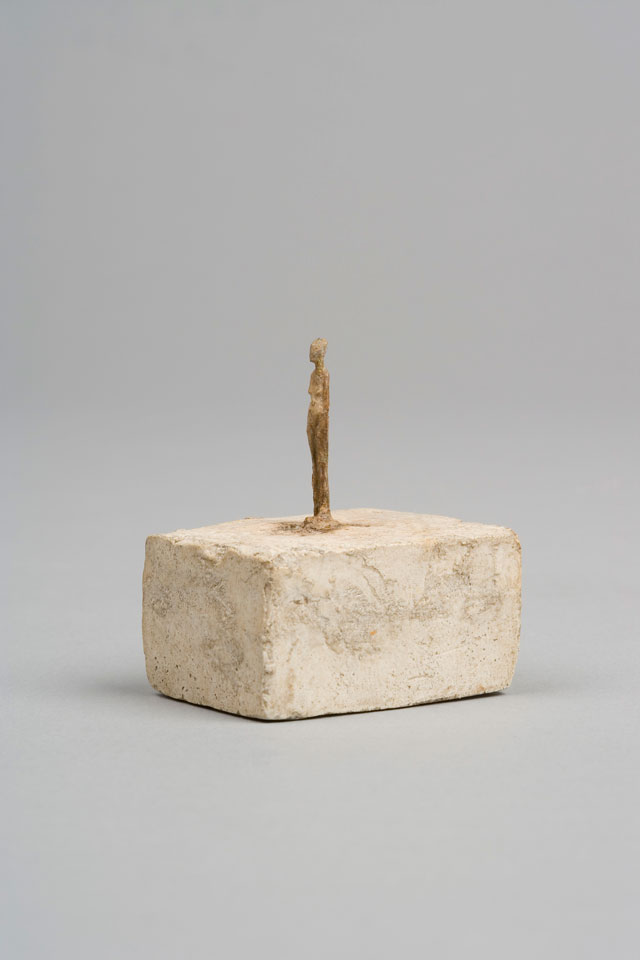
Alberto Giacometti, Very Small Figurine, 1937-39, plaster with traces of pigment, 4.5 x 3 x 3.8 cm, seen at Tate, from one of the Fondations, I’m not getting involved

Here are some things that are about as small that have also seen some stuff:
a 1937-39 Giacometti literally titled Very Small Figurine, from the era when he supposedly said he fit all his sculptures into a matchbox as he fled across the Alps.

Jasper Johns, Flag (P56), 1958, silk printed flag, paraffin, in wooden frame, 2 3/4 x 3 3/4 in., via JJCR

And one of my absolute favorite things in the entire Jasper Johns Catalogue Raisonné, a tiny flag embedded in wax in a little frame, from 1958, which he gave to Merce Cunningham, and which had never been exhibited before 2014.

Whatever brought this Harrison into existence and out of the studio was not the market, or the demand for a show, but something else. Whether it was a private gesture or a gift or some daily or exceptional practice, I don’t know, but it is interesting. This is the point where I wonder if I should hold off on posting until I try to get this, or where I say, if I don’t get it, I invite whoever does to give it to me. I mean, it’s meant to be a gift, isn’t it?

June 4, 2021, Lot 670, Rachel Harrison, Untitled, 2004, est. $1,500-3,000 [update: sold for $2,700, not to me] [stairgalleries]

I Shall Call Him Heni-Me

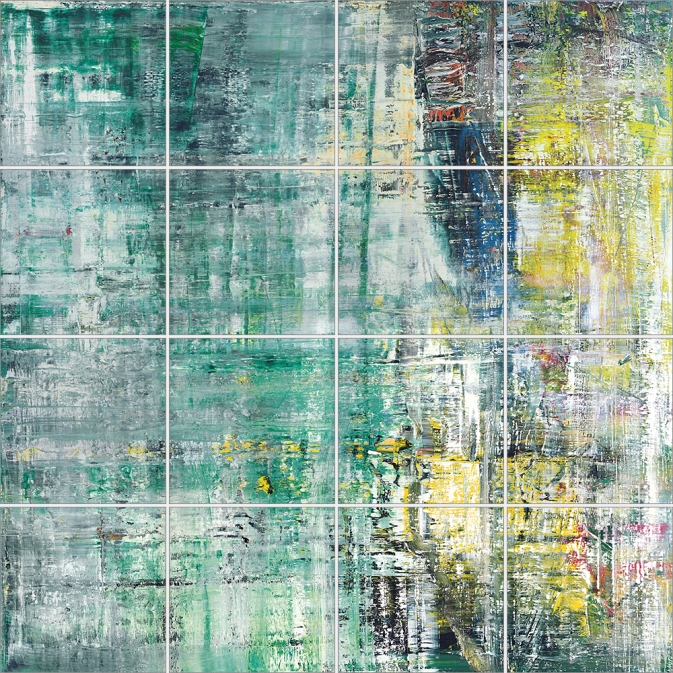
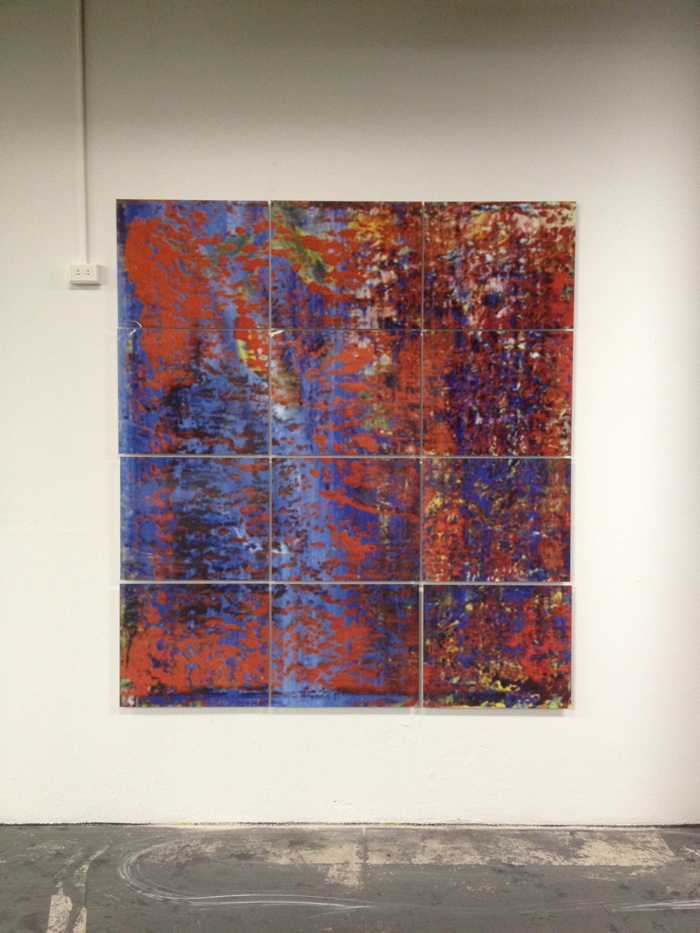
Gerhard Richter, Cage Grid I, 2011, 303 x 303 cm installed, 16 giclée prints mounted on aluminum panel, ed. 16+4AP

My old qualms about the capitalist reality of Gerhard Richter making photo copies of his greatest paintings were rendered quainter than the Geneva Convention by the introduction of an entirely new category, “facsimile objects.” These mass- and masterfully produced giclée prints, numbered and unsigned, and mounted on aluminum composite panels, are the creation of a print foundry founded by Joe Hage, Richter’s lawyer/collector/OG webmaster, Heni Productions.

Now known as Heni Editions, the firm makes stunning prints for other artists as well. [My favorite non-Richter Heni has to be their full-scale print of Hans Holbein’s the Younger’s The Ambassadors, published to benefit the National Gallery, which is still on my Christmas list.]

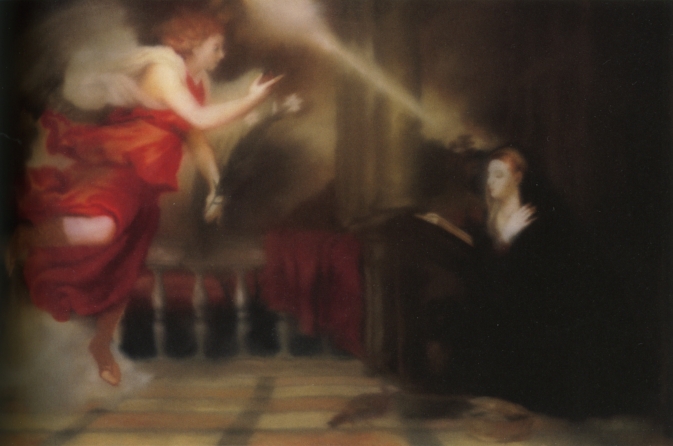
P12, “Annunciation After Titian,” 2015, facsimile object, 125x200cm, ed. 50+3AP

Heni got its start in 2011, when it made Cage Grid I, a giclée edition of Richter’s monumental squeegee painting Cage 6, divided into a 16-part grid. The panels were sold in the gift shop of the artist’s retrospective at Tate Modern, both as a set, and individually (as Cage Grid II).

Though facsimile objects initially seemed like they were designed to exist outside Richter’s art, they now appear alongside it. Gagosian included at least two facsimile objects–(P1) and (P12), above–in a Richter prints show earlier this year.

Destroyed Richter Grid No. 1 A-L, 2016, UV pigment on aluminum, 50x60cm each, unique, image: Tamas Banovich

They’ve been installed in my head even longer. In 2016 for Chop Shop, a show where large-scale works were sliced up or parted out to order, I used this grid mode to create Destroyed Richter Grids, full-scale recreations of lost squeegee paintings.

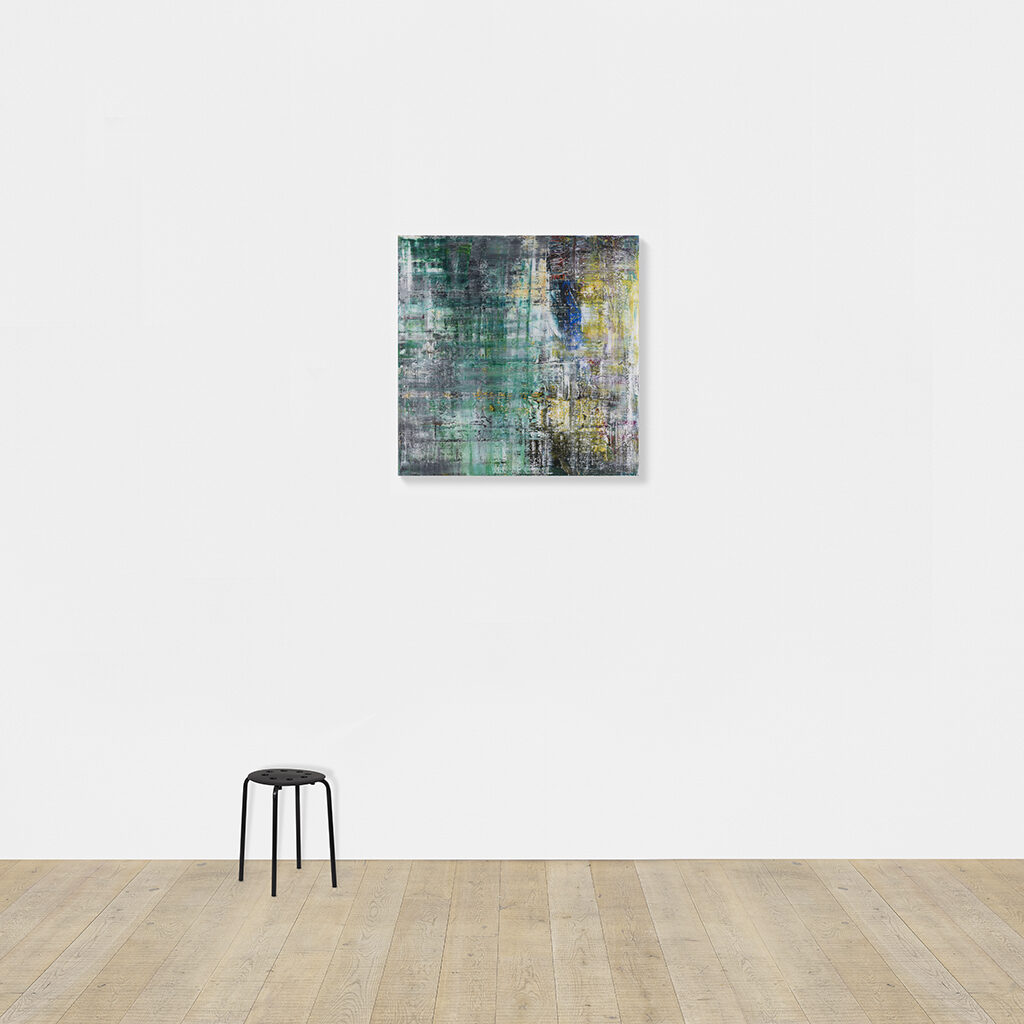
Cage Print (P19-6), 2020, 100x100cm, Diasec-mounted giclée print on aluminum composite panel, ed. 200, image via Heni Leviathan.

Time being a flat circle, Heni has now announced the drop of Cage Prints (P19), facsimile objects in editions of 200 (each) of all six of Richter’s Cage paintings, but at 1/9th-scale, or 100×100 cm. Applications for purchase are currently being accepted (decisions are made on Dec. 6), though with no guarantee of Christmas delivery.

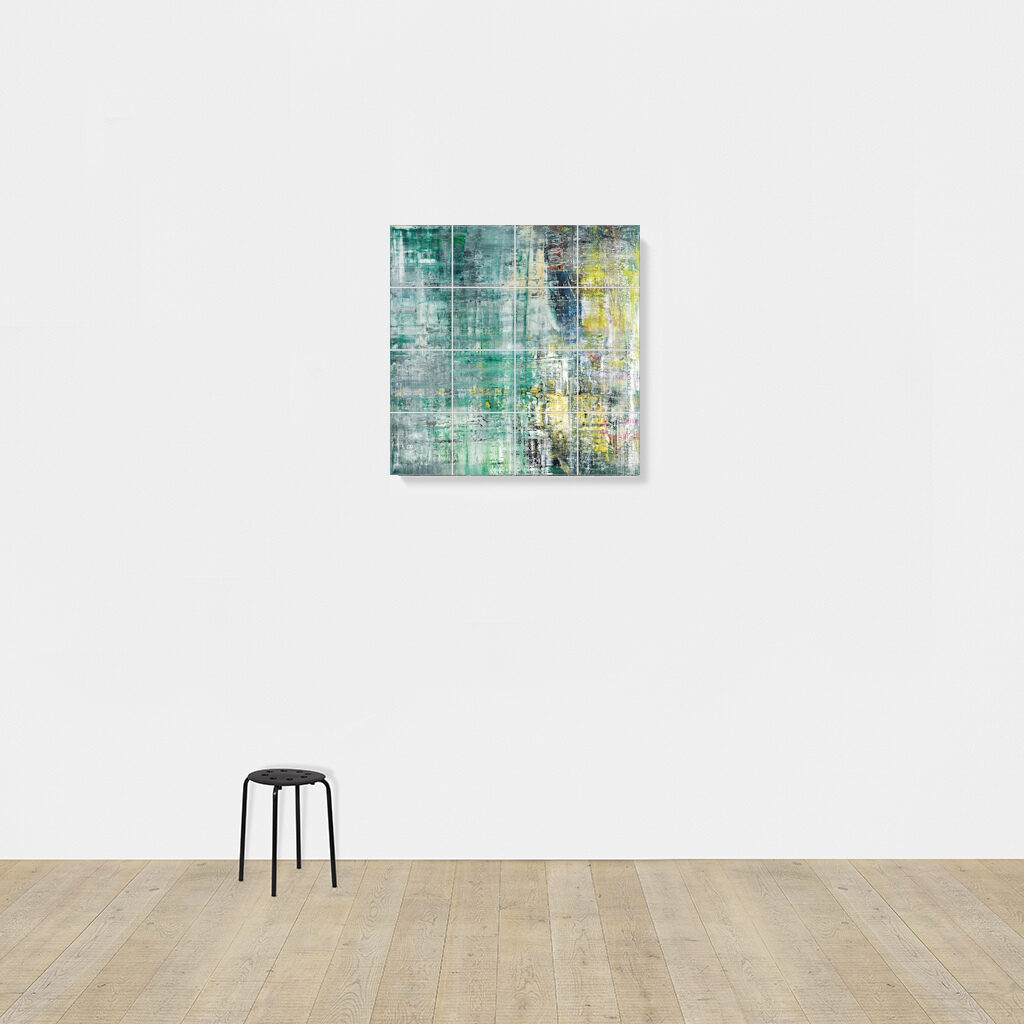
Untitled (Heni Cage Grid), 2020, 103 x 103 cm, Diasec-mounted giclée print on aluminum composite panel, in 16 25 x 25 cm parts, ed. 16+4AP

And so I, too, must, compelled by fate, announce a new work, Untitled (Heni Cage Grid), in which a Heni facsimile object of Cage 6 is cut into 16 pieces, each 25×25 cm. Like Richter’s Cage Grid I, it will be available in an edition of 16, plus 4AP. Each piece will be labeled and numbered, and a couple will include fragments of the original label. Some may be sold separately.

Unlike Heni, I can guarantee it will not be available before Christmas.

Cage Prints (P19-1 thru P19-6), 2020, $6,000 each, upon application [heni.com]

Previously, very much related:
Cage Grid: Gerhard Richter and the Photo Copy
Gerhard Richter Facsimile Objects

Previously, also related:
Untitled (Re-Graham), 2016
Untitled (Glafira Warhol), 2015

Destroyed Gerhard Richter Stamps

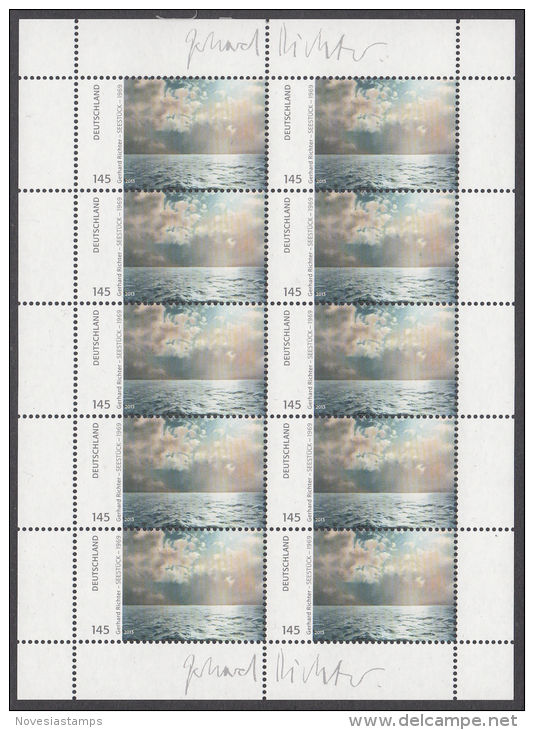
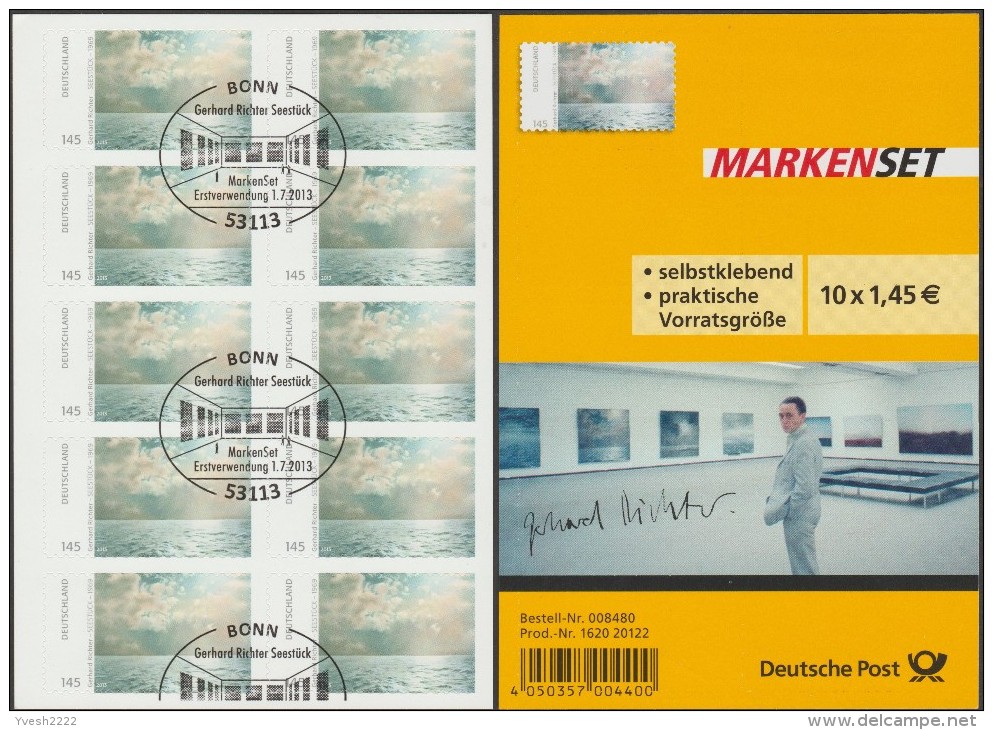
GERHARD RICHTER DEUTSCHLAND 145 SEESTÜCK – 1969, 01.07.2013, offset print on adhesive, signed in plate, edition unknown, image: delcampe.net seller novesiastamps

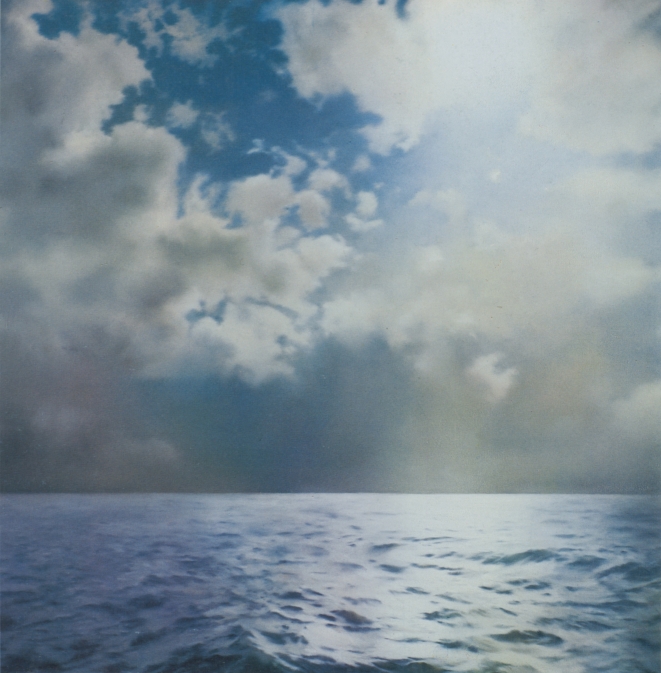
Deutsche Post published Gerhard Richter stamps in 2013. EUR1.43 stamps showing text alongside a rectangular cropped image of the artist’s 1969 square painting Seestück (Gegenlicht)/ Seascape (Contre-Jour) [GR233] were available in collectible sheets of ten. If, as the two facsimiles of the artist’s signature in the sheets’ margins would infer, the stamps constituted the largest edition the artist has ever published, the use of these stamps also amounts to the greatest act of artistic destruction Richter has ever faced. And at the hands of his own countryfolk, no less.

Gerhard Richter, Seestück (Gegenlicht)/ Seascape (Contre-jour), [CR233], 1969, 200x200cm, oil on canvas. image: gerhard-richter.com
Thousands–tens of thousands, hundreds of thousands?–of pictures just ripped asunder, flung hither and yon, pummeled, shredded, and then dumped. Even in these trying times, the scale and apparent casualness of the obliteration shocks the conscience. The apparent readiness of the German people to trivially use then abandon the work of one who is ostensibly so revered, whose work has–had?–provided a searing beacon of objective light? Staggering.

Did the artist somehow know this was coming? Is that why he chose–presumably it was he–to use the picture depicting contre-jour, backlighting, the photographic technique of directly facing the light source–in this case, the sun–to produce heightened visual contrasts and unsettling shadows?

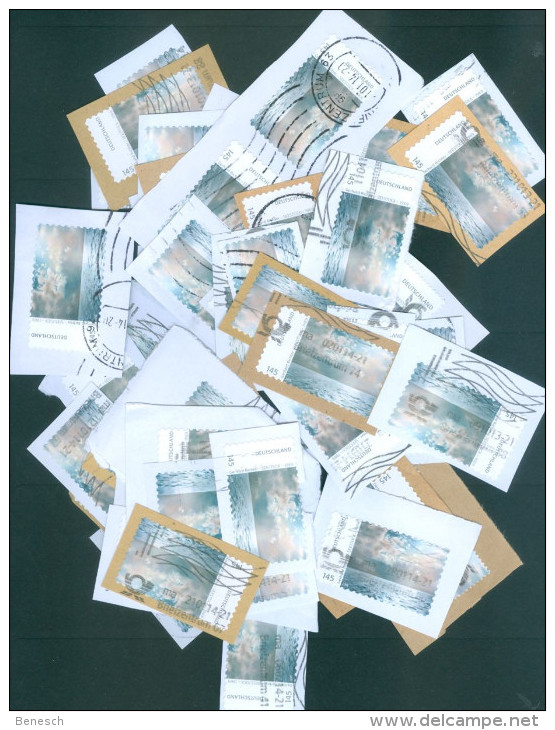
Cancel Culture: Gerhard Richter Seestück edition showing evidence of ceremonial mutilation on 01 July 2013, image: delcampe.net seller Yvesh2222

Fortunately, even in the face of such widespread destruction, there is hope. Faithful stewards in the collecting community are doing what they can, preserving stamps and sheets in whatever form they can: some sheets have the signatures intact; some don’t; some stamps have a signature fragment; a rare few include the commemorative envelope (also with a signature, historians); some [above] are mutilated ceremonially–canceled, they call it, with euphemism that cannot conceal the inherent pictorial sadism; and some, marred and disfigured on the field of postal battle, are rescued from oblivion by angels wielding tiny, little scissors.

Study for Destroyed Richter Stamps 01–50 [sic], 2019, image: delcampe.net seller benesch
These are the pictures that haunt me, the ones pulled from the very brink of doom. Theirs is the story I’ll tell; theirs is the fate we must #neverforget.

Whether it’s 50 original works or ed. 50, we’ll see when the studies arrive from Austria.

Previously, related: Robert Rauschenberg, Piece for Tropic, 1979, ed. 650,000

Untitled (George Washington’s Coffin), 2016 –

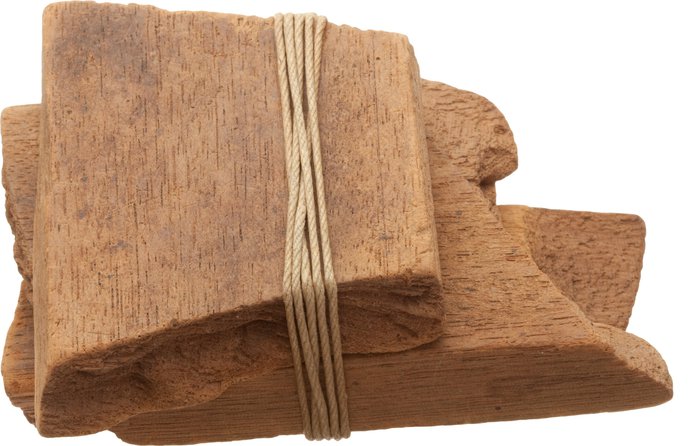
george_washington_coffin_twine_ha38019-2.jpg

I cannot explain how I didn’t catch this when I saw it many months ago, but re-reading Steve Roden’s blog post about his return to painting after a year-long hiatus, this completely floors me:

Recently, I have also been obsessed with a photograph of two seemingly insignificant pieces of wood about the size of the inner part of a closed fist. The photograph appeared in an auction catalog, and I was fascinated to discover that these seemingly ordinary, or pathetic objects were pieces of George Washington’s coffin, and as such, their presence transcends their objectness.

Probably! But right now it is their objectness that I’m obsessed with.

Continue reading “Untitled (George Washington’s Coffin), 2016 –”

In The Palm Of Your Hand

johns_untitled_rosenthal_hirshhorn.jpg
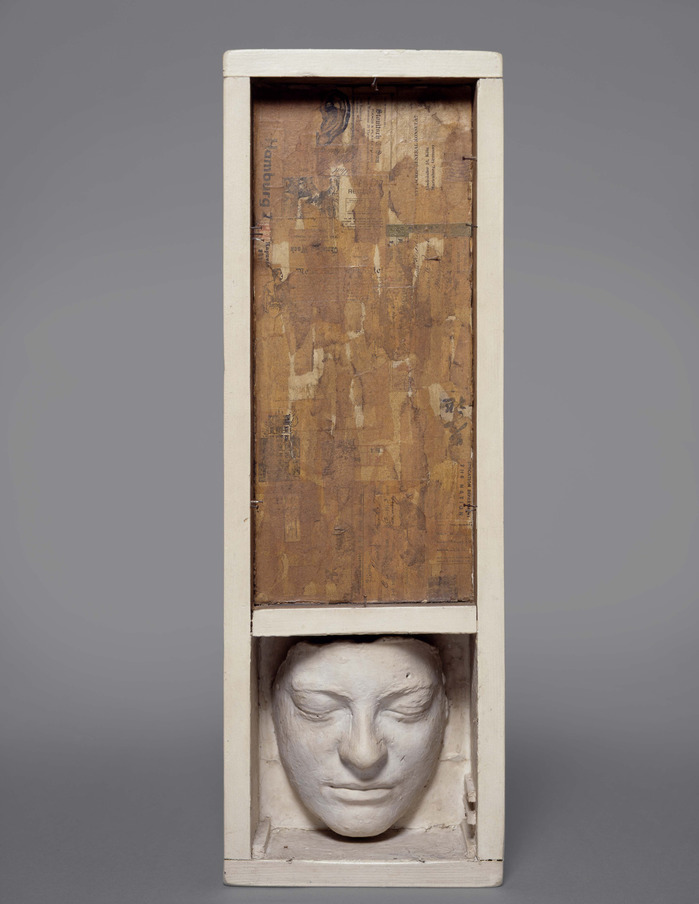
Jasper Johns, Untitled, 1954, collection hirshhorn
I went to a gallery talk at the Hirshhorn by Amy Boyer, of the museum’s education department, on their rare, early Jasper Johns work, Untitled (1954). It’s one of just four known Johns works to survive destruction by the artist in 1954, because it was in someone else’s possession. That someone was Rachel Rosenthal, an important friend and collaborator of Johns, whose face is cast in plaster there in the bottom. [Rosenthal sold the work to the Hirshhorn in 1987.]
In his 1996 conservation interview at the Menil with Carol Mancusi-Ungaro Johns noted that the collaged element in Untitled, probably shared paper and stationery from various “exotic,” foreign sources with the work he made next, Untitled (Green Painting), which first belonged to Rosenthal’s mother. [Asked her name, Johns replied with a laugh, “Mrs. Rosenthal.”] The torn printed bits are overlaid with similarly sized fragments of brown tissue paper that veils but doesn’t obscure the texts. A piece of glass is fitted over the collage, held between pairs of tiny nails in a fashion similar to Star, the Star of David-shaped painting Johns made for Rosenthal.
johns_untitled_hirshhorn_verso.jpg
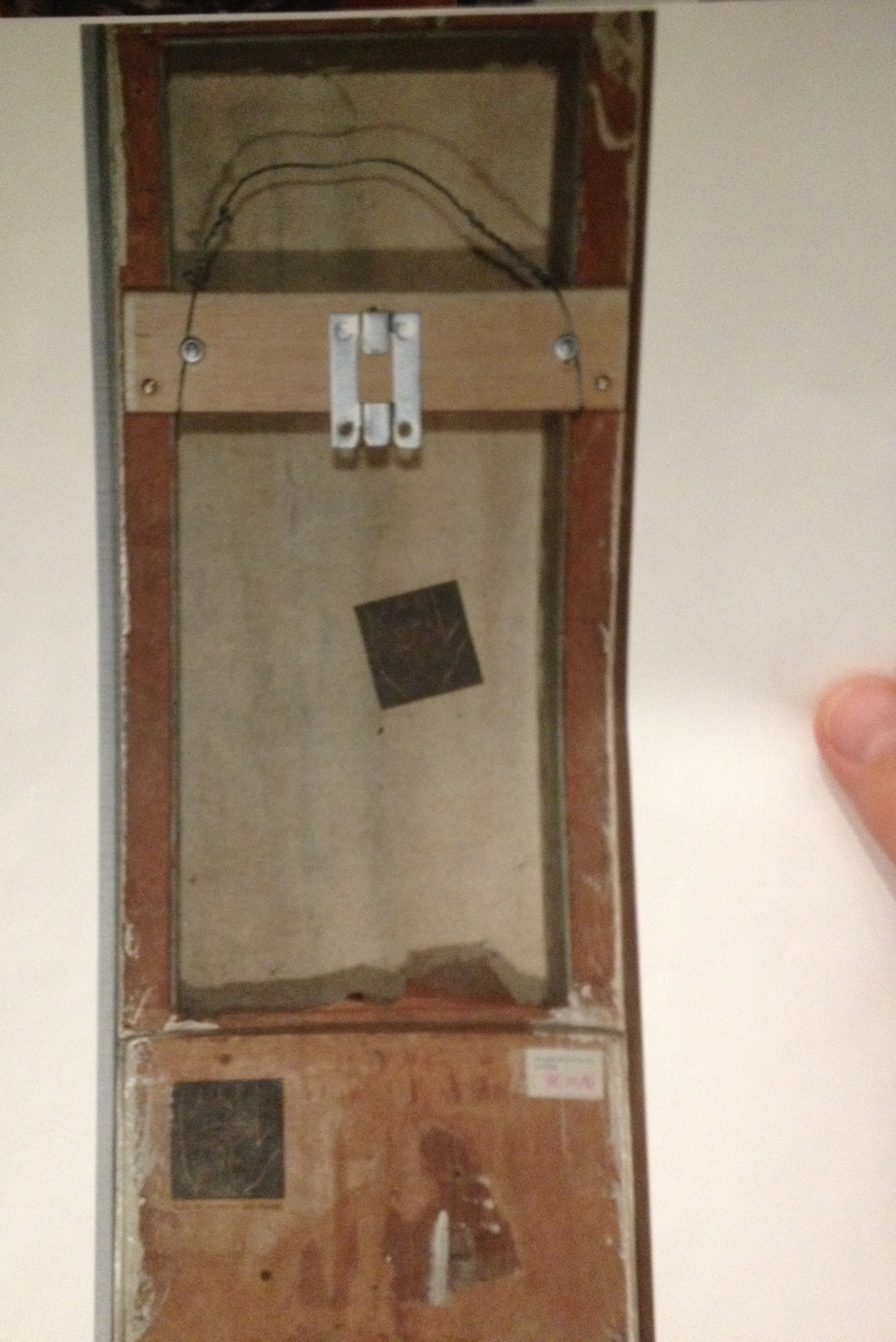
bad photo of a laserprint of a 2006 photo of the back of Johns’ Untitled, 1954 via hirshhorn
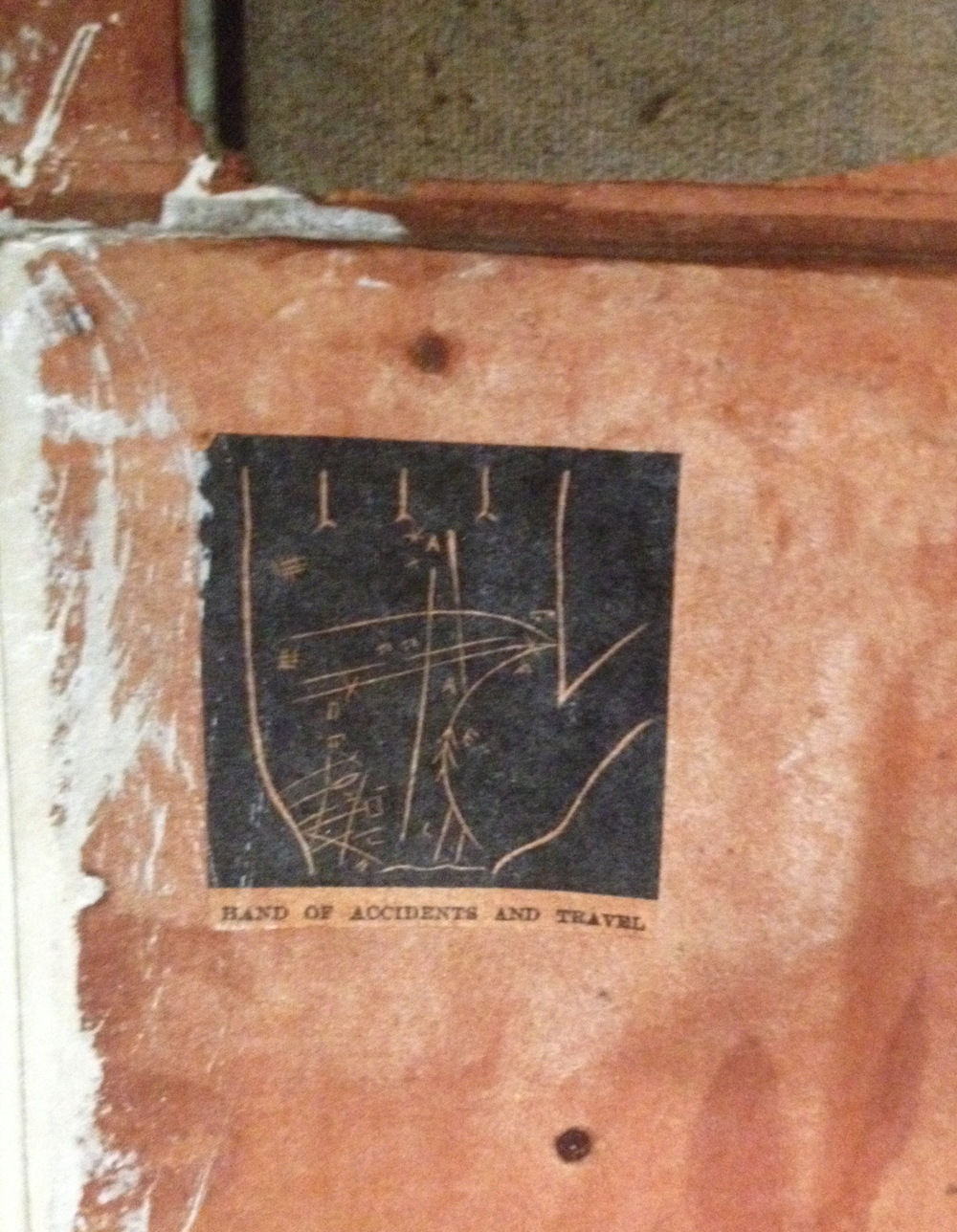
But today the party was definitely in the back. Bower presented images taken at the Hirshhorn in 2006, which showed two images Johns had affixed, one to the canvas, and one to a wooden backing. They were identical white-on-black palm reading diagrams printed with the caption, “Hand of Accidents and Travels.” Bower wondered if this indicated the work was originally intended to stand, like a sculpture, or possibly to be handled.
johns_untitled_hirshhorn_verso_palm.jpg
same, a detail: “Hand of Accidents and Travel”
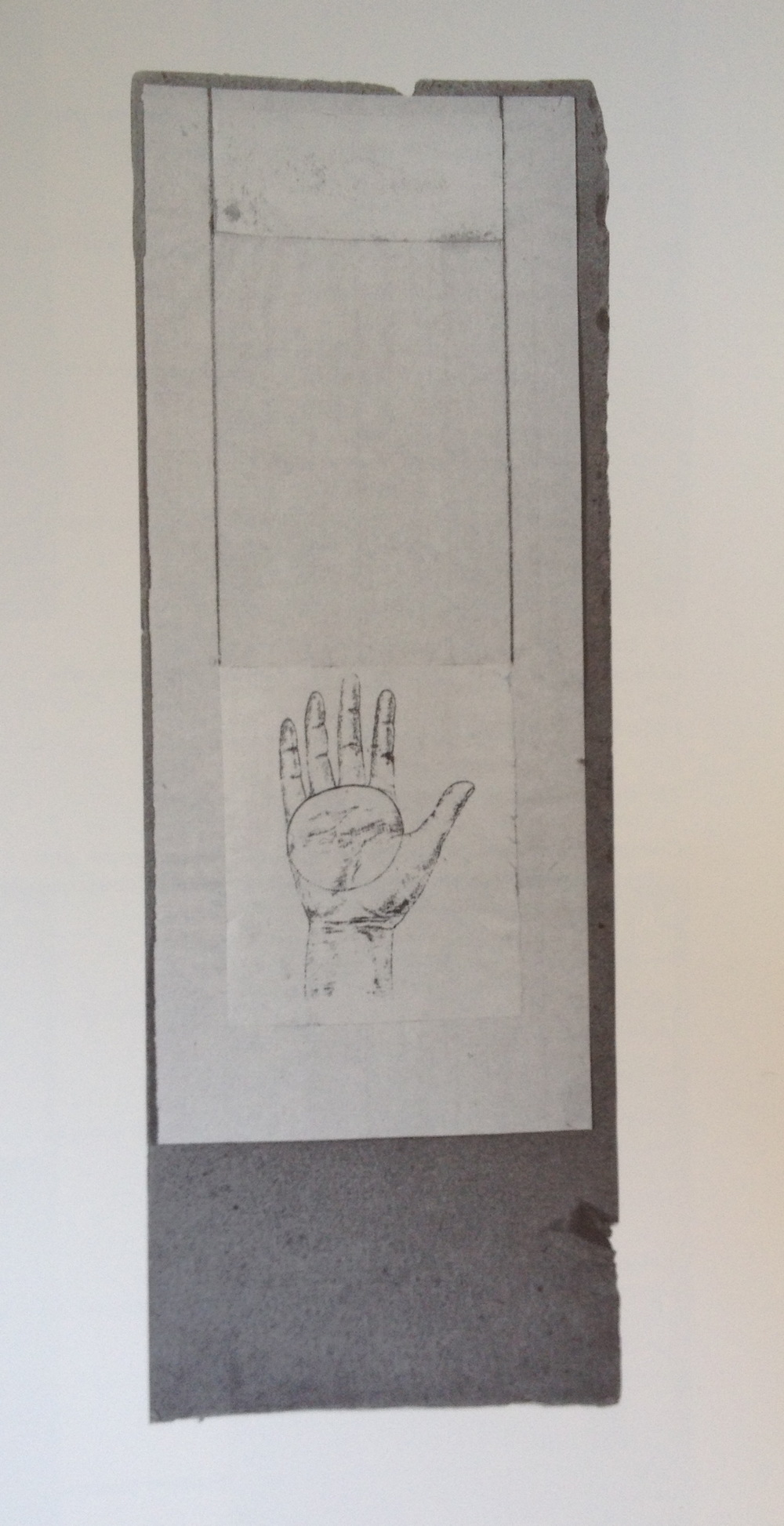
Seeing the palm reading hands, along with the shape of the Untitled collage (16.4×7-inches), made me think of the Shirtboards collage/drawings Rauschenberg made in 1952 while traveling through Italy and Morocco with Cy Twombly. Bob would glue etchings and illustrations he found or bought in street stalls onto the leftover cardboards folded inside his laundered shirts. Hopps wrote that because Rauschenberg never framed the Shirtboards, “they exist potentially as hand-held objects.”
rauschberg_destroyed_shirtboard_palm_hopps.jpg
Robert Rauschenberg, Shirtboard collage with palm reading diagram, 1952, lost or destroyed, image: Walter Hopps’ Rauschenberg: The Early 1950s
Of the eleven elongated (14×5-in.) Shirtboards included in Walter Hopps’ 1990 catalogue, ten were in the collection of the artist, the Sonnabends, or Sue Weil. The other one was listed as “lost or destroyed.” It had a palm reading diagram, in black on white, the inverse of Johns’s.
Did Johns bury Rauschenberg’s Shirtboard palm down under the collage of Untitled, only to bring it back as an X-ray, or was he just giving Bob a secret high five?
Jasper Johns, Untitled, 1954 [hirshhorn.si.edu]

The Berkowski Daguerrotype

eclipse_photo_1851_jena.jpg
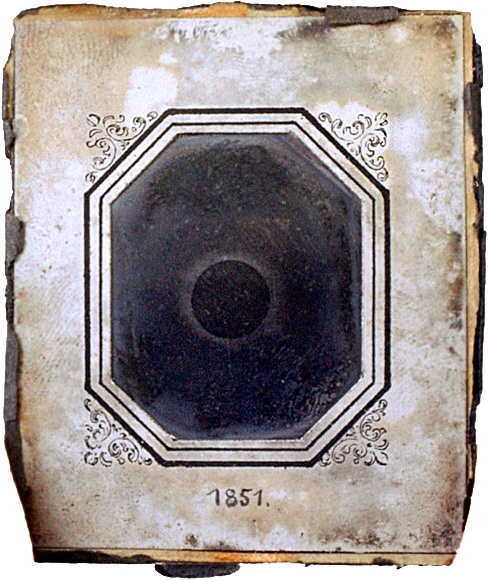
The first successful photographic image of the sun’s corona was taken 164 years ago today. A daguerrotypist named J. Berkowski was brought to the Royal Observatory in Königsberg, Germany (now Kaliningrad, Russia) by the director, Augustus Busch, to record a solar eclipse on 28 July 1851. According to this 2005 paper in Acta Historica Astronomiae, Berkowski soon made some daguerrotype reproductions. Busch commissioned Robert Trossin of the Royal Academy of Painting to make a steel engraving of the daguerrotype. In 1891, CFW Peters had Berkowski’s original daguerrotype photographed for publication. It has since been lost.
Four of Berkowski’s copies were known, including one in the Jena Friedrich Schiller University in Jena, Germany [above]. The order of copying events in the Jena description does not quite line up with the 2005 paper, even though the author, Dr. Reinhard Schielecke, is the same.
The moon in the 2nd-generation daguerrotype is tiny: 8.7mm across. The original was under 8mm. The Jena print is thus only around 5x6cm, as wide as the screen on an iPhone 4s, but shorter. It was recently conserved, and the Google translation makes me wonder if images of the daguerrotype have been Photoshopped a bit.
I don’t expect to beat diehard collectors of Prussian daguerrotypes to the rediscovery of another of Berkowski’s prints. It would probably be easier to start from scratch and make a new daguerrotype of a solar eclipse somewhere.
ABSTRACT: “On the Berkowski daguerreotype (Königsberg, 1851 July 28): the first correctly-exposed photograph of the solar corona” [adsabs.harvard.edu via @coryspowell]
Daguerreotypie der Sonnenfinsternis vom 28. Juli 1851 [museum-digital.de]
Konservierung der Berkowski-Daguerreotypie abgeschlossen [daguerrotype-gallery.de]

Teeny Tiny Kelly

hh_kelly_ryb.jpg
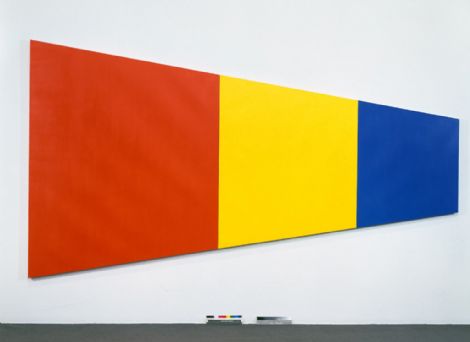
Tyler thought the inadvertent awesomeness of this Hirshhorn photo of Ellsworth Kelly’s Red Yellow Blue V (1968) was right up my alley. And he’s right. It is awesome enough to make me think the photographer might have been especially advertent when placing that color key.
Also nice: somehow I never noticed that when you load a jpg in Firefox, it uses the image itself as the favicon in the tab.