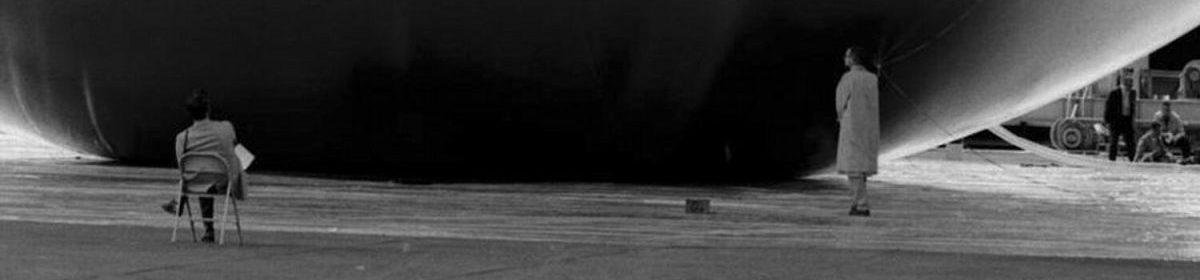
vintage photo of the 1960 Arne Jacobsen all-encompassing design for the SAS Royal Hotel, Copenhagen, which I’m sure a million people will claim copyright to
But I think Phillips is right. I like them better as a Judd stack. Or at least the start of one.
Before I get into his newly reopening Hirshhorn Sculpture Garden, here are a couple of useful backgrounders of Hiroshi Sugimoto talking about museums, architecture, and museum architecture:
“My idea was to transform the Hirshhorn’s Lobby into an artwork that symbolizes what is unique about both the building and the collection. Ideally, this piece is sculpture, furniture, and conceptual art, all at the same time.”—Hiroshi Sugimoto, NMRL/Yukihiro Sakakida, Hirshhorn Lobby, 2017-18, 📷: HH/SI/Cathy Carver
In 2013, Sugimoto spoke at the Asia Society’s Arts & Museum Summit, organized by its then-museum director Melissa Chiu. Chiu would soon become director of the Hirshhorn, where she would commission the artist’s two renovation projects for the museum.
The cover of Hiroshi Sugimoto’s Sense of Space, 2011, with his exhibition at 21C
Though his talk was nominally titled, “Museums of the Future,” the future museum he was most interested in was his own. Sugimoto began by sharing his complaints and reviews as a “consumer” of museum space, criticizing many starchitect-designed museums he’d shown in for their awkward spaces, and especially their bad lighting. In 2011 he even published a book of museum architecture criticism, Sense of Space (空間感), which, Chiu noted, was shrewdly only published in Japanese. Though Ando, Isozaki, and Taniguchi could obviously read it. And SANAA’s clearly fine with it; their 21C in Kanazawa is on the cover.
In December 2017, Sugimoto spoke at the Japan Society about his Odawara Foundation and the Enoura Observatory he was building. The occasion was his own exhibition, and the unveiling of his redesigned interior garden for the Society. The thick bamboo that had long grown there had begun to die after a Trump condo tower was built next door, cutting off its light. Sugimoto’s solution was a bonsai on an island in a water garden, which could be brought outside when it needed more sunlight.
Hiroshi Sugimoto’s Japan Society Garden Lobby, which opened in 2017
But his main discussion was the creation of his own spaces for experiencing solstice events, staging Noh, and exhibiting his work. And also his burgeoning fascination with stone. Even right up to the weeks before his talk, he was adding new ancient and historic stone to his collection.
This will be relevant for understanding the Hirshhorn, but Sugimoto’s construction and stonework experience also feels like useful context for his unsettling comments about how everything was better in the old days. Because centuries-old technologies really were the only feasible way to move boulders from the quarry for the Imperial Palace. And the foundation stones of the 6th century Buddhist temple in Nara really are only available because it was razed by a Meiji-era rush to nationalist modernization.
John Pound, Investiture Souvenir Chairs, 1969, with seats of gilt-embossed, ash-veneered plywood and frames of beech, original Welsh tweed cushions, formerly in Malcolm Forbes’ collection, being sold 11 Nov. 2026 by Bliss on Fifth LLC at Stair Galleries
Anthony Armstrong-Jones, Earl of Snowdon, is usually credited with designing the souvenir chair for the 1969 investiture of Charles as Prince of Wales because he is the most famous, and because he was married to Princess Margaret. Carl Toms, a set and costume designer who used to be the assistant of Armstrong-Jones’s theater designer uncle Oliver Messel, was also involved, which I think means he focused on set design. But there’s an April 1969 picture of a proud Public Works designer John Pound posing with the chair on the bleachers of Caernarvon Castle, and the caption calls him the “designer of the chair.” As for the design of his own outfit for the ceremony, a dark green cross between a Nehru jacket and a morning suit, I have no doubt Armstrong-Jones gets full credit.
Throughout Frieze Week I heard conflicting reports about how available the WHERE’S OOZEWALD? poster actually was at the Cady Noland show at Gagosian. Were people not aware they could take one? Were they prevented from taking one, or somehow given different information from others? Were the posters gatekept by the gallery, the artist, the security guard, or did some people just go through the little show with museum hands, not ever thinking at all that the stack is for the taking?
I do not know, I only know of people bummed in hindsight for not getting one. And when these FOMO folks are combined with the people who skipped London altogether, there’s probably a decent potential market ready to pay £100 for a free poster there’s no other obvious way to acquire. This is the second poster the seller has listed so far.
What I’d love to see is a Cady Noland poster version of Doordash, an art handler as an app, who picks up a free Oozewald poster like a civilian, then ships it off to its waiting customer. Are there daily poster sharks, like professional autograph hounds, amassing their merch for resale? I don’t know. The Cady Noland swag space is way too young to have fostered much innovation beyond eBay. So far.
Olafur Eliasson spread in The We Global Times, 10th Anniversary Edition, Oct. 24, 2026, via museumfortheunitednations.com
For its 10th anniversary the Museum for the United Nations invited some people to share headlines they would like to see in 2036, and Olafur Eliasson said, “Science has proven that being in love is good for the climate,” next to this absolutely inscrutable photo of a wonky sculpture.
Which is how the best Olafur sculptures should be, of course. As the production and computational sophistication of his studio has expanded, I confess I really do love the more nakedly makeshift aspects of Olafur’s sculptures. They can feel more like experiments than proofs. Or maybe proofs of concept.
Olafur Eliasson, A slightly desynchronised but otherwise perfect couple, 2014, as installed at Galería Elvira González, Madrid, 📷: Cuauhtli Gutiérrez
Anyway, here is this poetically titled situation, A slightly desynchronized but otherwise perfect couple, as it was installed just the once in Madrid, inYour successful uncertainty, Eliasson’s second solo show at Galería Elvira González: A pane of dichroic glass and a mirror, mounted at slightly different angles, both reflect the shadow of the spotlit, curved sculptural element rotating in front of them.
There’s an interesting resonance of a couple’s different perspectives with human binocular vision, but there’s also a nice rebuttal to Felix Gonzalez-Torres’ Perfect Lovers, treating desynchronization as a feature, not a bug.
With the King’s Road House out of contention, the Lovell Beach House is literally the greatest Schindler you’ll ever be able to buy. And it comes with the furniture and built-ins the architect and is woo-woo client began with.
The brokers’ video walkthrough is intercut in the video above with commentary from architectural historian Judith Sheine, who expresses hope for a deep-pocketed buyer committed to a [needed?] restoration, and then says how terrible it would be to lose this masterpiece.
And honestly, the idea of someone tearing down the Lovell Beach House so they can have 5,000 shitty square feet on Oceanfront instead of just 2,700 has me fuming. If that’s your plan, there are at least three comparable houses within a block that no one will curse you and your entire family for eternity for replacing with your own garbage dream house.
David Hammons was among the fourteen artists commissioned to make permanent works for the new Atlanta Airport in 1979-80. For more than ten years, I’d tried to find out what Hammons’ work was like, and if it still existed.
Dr. Kellie C. Jones had seen the works, of course, which “is made from a variety of hair constructions. Located over an escalator that connects Concourse C with the intra-airport transportation system, he installed different configurations in each of four overhead bays. Glittering brown bags with hair tassels; a linear, automatist scrawl of hair strung wire; swooping bird-like forms of dowels, feathers, hair balls, and 45-rpm records that conjure up the work’s title, Flight Fantasies (1980).”
David Hammons, Untitled (Flight Fantasy), 1978, bamboo, Georgia clay, record fragments, plaster, colored string and hair, 22 x 60 x 9 in, sold at Christie’s in 2o24
But her footnote was troubling: “Although this work by Hammons and those of the thirteen other artists commissioned by Atlanta International Airport are still extant, they were all in bad disrepair when I last visited in September 1989. It seems there was never any provision made for the upkeep and conservation of this collection.” She wrote that in her essay for Hammons’ 1991 PS1 catalogue. Rousing The Rubble. How extant the ATL works were since then is the mystery.
In 2024, an incredible 1978 sculpture, Untitled (Flight Fantasy), came up for sale with a title and materials list that fit Jones’ description, but Christie’s made no mention of the airport commission.
This was enough of a mystery to set greg.org hero Ian of 202arts into motion, and amazingly, somehow, incredible, awe-inspiringly, he found them. And it turns out they were right where Dr. Jones said they were.
David Hammons’ Flight Fantasy, 1978-80, installed above the escalators of Atlanta Airport’s Concourse C, in a c.1980 photo at Sunshine Skies
Ian found a collection of scenic views of Atlanta’s new Midfield Terminal, from around the time of its opening in 1980, at Sunshine Skies, a website dedicated to the history of airlines in Florida and Georgia. And there is one photo of the escalators descending from the center of Concourse C, then occupied by Eastern Airlines, to the “underground transportation mall.” And there are five Hammons sculptures of various sizes mounted on the wall above.
There are at least two other types of works installed in three other escalator bays, but surely it will not take ten more years to find them.
these John H. Howe pieces and many more, are at Wright20
My first reaction to the 25 pieces of instantly recognizable Frank Lloyd Wright furniture being sold in Chicago without a single mention of FLW was trademark outrage. The “Private Midwest Commission” they came from was probably a FLW house, I imagined, that’d been stripped of its original furnishings, and in 1980 a dutiful owner was trying to make things right.
And all of that might still be true. Also. John. H. Howe was Wright’s chief draftsman for decades, and he ran Wright’s successor firm until he went out on his own. It’s just as likely that Howe actually designed these objects in the first place. And could have done the house they came from, or the house they went into. So by all means, John. H. Howe furniture ftw.
It was only after months of combing through metres of correspondence and minutes of meetings that, in the autumn of 2021, I first noticed this modest piece of paper. I had moved to Zurich to write a dissertation on the buildings operated by Swiss banks in the Alps associated with the transportation, trade and storing of gold.
The house on Cap Ferrat Norman Foster designed for himself is for sale for EUR29.5 million, is the headline, but very much not the story here.
Foster gut renovated a 1950s house on Av. de la Corniche, between the Four Seasons and the Mediterranean, in 2000, clearing out the stone and masonry shell, and filling it with an atrium living space of steel and glass, and a Richard Long installation of mud.
Three wise men, three angels, a shepherd, Mary & Joseph, who are we missing? wright20
I was the first great-grandchild, and one thing that imprinted on my family was that I liked nativity sets. Because when I went to my great-grandmother’s house, I played with a nativity set. The timing of the visit—Christmas, obv—and the absence in Grandma’s living room of any other things a 2yo was allowed to touch had nothing to do with it, of course.
Anyway, if my great grandmother really thought I liked nativity sets so much, she would have invented a time machine and gone back to 1966 and tracked down a copy of the Holiday issue of Woman’s Day magazine and ordered Eames Office designer Marilyn Neuhart’s patterns for making your own psychedelic embroidered & stuffed nativity set, and the next Christmas, she would’ve hooked me up.
a picture of the Holiday 1966 Woman’s Day feature about ordering the patterns, sold separately, from a website that scrapes eBay sellers of modern copies of the patterns and charges you to see the listing details. This is the timeline we’re in, and I guess we have my great grandmother to thank.
Instead, she didn’t invent a time machine, I was born too young, and now I’m supposed to bid on someone else’s hippy dippy grandma’s Neuhart nativity set, which doesn’t even have a Baby Jesus in it?
The elephant and pig are Neuhart Textiles & Objects product, the rest have been split from the DIY nativity set in lot 189. Incredible auction behavior.
[mocking someone’s grandma then continues scrolling the auction site five minutes later update] BABY JESUS SOLD SEPARATELY? Are you kidding me? they put all the animals, extra angels, AND BABY JESUS in a separate lot with two actual Marilyn Neuhart products.
And then I add it to the post and see that in fact, it’s in the lot directly preceding the one I just posted about, but wait, how could I have missed it? And no, I’m scrolling, but the lots are arranged out of numerical order, for some layout purpose. So brace yourselves, there may be yet a creche that looks like the It’s A Small World ride from the Pepsi Pavilion at the NY World’s Fair being sold separately as a Marilyn Neuhart bookcase.]
Jasper Johns, Flag from Lead Reliefs, 1969, GEL proof from an ed. 60+10AP, collection NGA
Rummaging around through the remnants of Gemini GEL’s archive at the NGA, I got caught up by—surprise, surprise—this Jasper Johns Flag, the best from the 1969 Lead Reliefs series. This example entered the NGA’s collection early, in 1981, directly from Gemini. So it’s likely to be in the most pristine condition 57 years in existence will allow. If nothing else, it’s among the most carefully tended.
They are made from very soft, cold-rolled lead sheet, 1/64 (0.015) in. thick, worked into the mold. The embossed lead was then backed to a polystyrene backing, which is then laminated to a wood panel. This three-layer sandwich is set in an aluminum frame. So these are ridiculously fragile.
RJ Sangosti photograph for The Denver Post of unidentified men released from GEO processing center carrying Rev. Edward Nalwamba out to his waiting car.
This photo of Rev. Edward Nalwamba, 78, unable to walk after 13 months of ICE detention, being carried by two fellow detainees who were also released yesterday, because GEO, the operator of ICE’s for-profit prison, refused to let him take the corporation’s wheelchair all the way to the edge of the prison gate, should haunt those executives and officials and politicians that did this and the country that continues to let this happen until the end of days.
Dec. 8, 1967 issue of Time Magazine, with cover by Robert Rauschenberg, at Gallery98
To mark the 101st anniversary of Robert Rauschenberg’s birth today, @davidhudson posted the 1967 Time Magazine cover Rauschenberg designed around Arthur Penn’s film, Bonnie & Clyde.
Robert Rauschenberg, Storyline I, 1968 from Reels (B + C), lithograph, 21 1/2 x 17 in. sheet, ed. 62, collection MoMA
Which is far more legible and pictorial than the Bonnie & Clyde-related lithographs Rauschenberg went on to publish at Gemini in 1968, Reels (B + C). [Which reminds me that the Gemini GEL catalogue raisonné at the NGA is still down, and the Internet Archive shoebox full of jpgs Gemini and the NGA are offering during this 2-year upgrade somehow does not include Robert Rauschenberg? Is it really impossible to just put the old folder back until you’re done, people? Are you really writing straight into the CMS on the live server?]
The V&A claims copyright on this 205 yr old John Constable full scale study of The Hay Wain, 1821, oil on canvas, 6 x 4.5 ft, while the National Gallery purports a Creative Commons license applies to the version Constable showed at the Royal Academy in 1821