So September 10th

I have no idea what to make of this. Dresden painter Eberhard Havekost’s Kontakt is coming up for auction at Phillips de Pury on May 17th. Its oblique, cropped composition depicts the flat, linear patterns of the facades of the Vista Hotel and the North Tower of the World Trade Center, and a wind-flipped American flag.

havekost_kontakt.jpg

Here is Phillips’ catalogue text for the painting, which is expected to sell for between $80-120,000 [1]:

Vertiginous and fiercely cropped, Eberhard Havekost’s Kontakt reads as taut with the freight of its symbolism, the allotted canvas actually failing to contain the plus-sized reality of its subjects. Although executed prior to the terrorist attacks of September 11, 2001, it is unlikely that contemporary viewers will escape a connection—thematically as well as visually—to the journalistic and sentimental imagery that flooded the United States after those events. The buildings are rendered as flat, surface without depth, with the only indication of shadow in the image serving to slightly dim the stars and backward curl of the flag, arguably drawing more attention to them than the flag itself, boldly outlined in black. This decision on Havekost’s part seems particularly prescient, as it is a simplified graphic image of the ‘stars and bars’ at attention before a towering skyscraper—while pruned entirely of context for anyone not familiar with 9/11’s events—that has arrived as a new unassailable image in the national mindset, much like Joseph Rosenthal’s 1947 photograph at Iwo Jima, which would serve as the model for Felix W. de Weldon’s Marine Corps Memorial in Washington, D.C.

Obviously, the destruction of The World Trade Center is going to factor into any encounter with a work of art which features the buildings. As the text notes, Havekost made this painting long before the September 11th attacks, in 1998. Whatever his idea or intent was for making Kontakt, though, the context around the painting has shifted dramatically.

rosenthal_iwo_jima.jpg

But rather than just make mention of the situation, Phillips is explicitly running with it, pumping up the importance of Havekost’s painting by torquing it into a kind of prophetic artifact. Even more disturbing, they’re marketing, not the painting, but the personal experience of weighty remembrance that comes from seeing it: it isn’t “symbolic”; instead, it “reads as taut with the freight of its symbolism.” It’s unassailable image in the national mindset.”
The Iwo Jima photo-turned-memorial comparison is another extraordinarily explicit claim to historic, iconic status that is belied by the painting’s origins. Rosenthal’s staged photo was immediately seized upon as a homefront propaganda tool to invigorate the war-weary country. If anything, its transformation into three dimensions is a memorial to the lingering echoes of the media’s own rallying cry.

wtc-firefighters-raising-flag.jpg

If a comparable image exists from the WTC, it’s surely of New York City firefighters rigging a flag comandeered from a nearby yacht, a cloying attempt by the media to regain their once-galvanizing reach by re-staging–lamely and literally–Rosenthal’s photo. But whatever, the icon is definitely not Havekost’s depiction of a pop-flat, human-free vacuum. Not that that stops Phillips from trying to sell it as an icon.
Kontakt‘s current owner, Charles Saatchi, is not known for his reticence, but compared to the auction house’s ambitious historical reading, Saatchi’s is pretty subdued:

Predating 9/11, Kontakt contains an almost ominous forbearance, emblematic of an unblemished innocence.

This isn’t the first time Kontakt has come up for sale. It failed to reach the $20-30,000 estimate at Christie’s in 2003. Whether Saatchi bought that innocence at a private discount after the auction, or whether he was left holding onto the work for a few more years, I don’t know.
So which is it, unblemished innocence, unassailable sentimentality, or taut surface? Until I tracked down a review by David Ebony of Havekost’s first US show, in 1998 at Anton Kern, I thought I had an idea. Kontakt wasn’t included in the show, but similar architectural paintings were:

The people and places that Havekost depicts are bathed in a harsh, artificial light that adds to the work’s sense of unease and often implies a scenario of intrigue, terror and murder.
While the images are dazzlingly clear, there is a consistent distortion in the cropping and brush work that conveys a feeling of loss — a loss of the lost moment or, perhaps, lost hope…Havekost proffers an expression of modernist existential angst that is perhaps more gut-wrenching that anything found in the films or videos upon which his paintings are based.

The answer then, was ‘none of the above.’ And yet if the 1998 reading is accurate, Havekost’s painting is actually more prescient and symbolic than ever: it showed a superficiality-obsessed culture, vulnerable and oblivious to the target on its back. Which, on a morning where the headlines were of Lizzy Grubman, Chandra Levy, and getting into Marc Jacobs’ afterparty, sounds about right.
[1] It sold for $90,000, $75,000 final bid, which means only one or two bidders.

The Ingredients In The MoMA Artists’ Cookbook

Seriously, where do they find this stuff? In the 25th issue of the inimitable Cabinet Magazine, Jeffrey Kastner has a few tasty excerpts from The Museum of Modern Art Artists’ Cookbook, by Madeleine Conway and Nancy Kirk, published in 1977.
The day I got my magazine, I quickly ordered one of the few copies of the cookbook I found online [Abebooks, the Museum edition is much more expensive, but the spiral bound trade edition seems easier to cook from.]
Definitely read Kastner’s piece for some great quotes about food and meals from various artists, including some who are still household names, and others who are decidedly not. The book is as quaintly provincial as you’d expect, a fascinating time capsule of circa 1970’s culinary sophistication.
Will Barnett enthuses over “a small shop on Spring Street where they make the best bread in the world.” Louise Bourgeouis likes to entertain after the galleries close and before the jazz clubs open, serving foods “that are largely unfamiliar to most Americans but are a delicacy in her native France,” such as endive and fennel. Helen Frankenthaler worries where in the city to get red lettuce from California. Alex and Ada Katz have a thing for fresh chanterelles, “the essence of conspicuous consumption.” So many things that have since been thoroughly absorbed into the mainstream of American food, whether by expansions of taste or distribution.
The other thing that caught my eye is the mix and age of the artists included in the book. It’s unrealistic to judge a museum’s curatorial program by the cookbooks it publishes. If it the list of recipe contributors is indicative of anything, it’s probably the social networks of the authors and who they could get to respond to their solicitation.
Still as I scan the list of recipe contributors, who the subtitle bills as “thirty contemporary painters and sculptors,” I can’t help but think of The Modern’s ongoing relationship with the contemporary art world, which has come under increased criticism the last few years.
There’s a definite New York-centricity to the list. And the youngest artist included, Red Grooms, was 40 years old at the time, born in 1937. [The next youngest is Richard Estes (1936).] Were younger artists in their 30’s–like Nauman, Serra, Marden, Elizabeth Murray, for example–not on MoMA’s speed dial at the time? What about artists not included, Pop artists like Rauschenberg and Johns, or Minimalists Flavin, Judd, or Morris?
Between the middle age and the omissions, I can’t help but wonder if MoMA’s complicated, incomplete, and variably unsatisfactory interactions with the art of the moment isn’t a new phenomenon brought on, supposedly, by corporatization, but something persistent, recurring, endemic? I’ve read interview transcripts of Robert Smithson and Allan Kaprow inveighing against Bill Paley and his CBS friends at the museum.
But isn’t rebelling against authority what the kids in any era do? Just as longing for the good old days is a pasttime for the aging/aged? These kinds of cultural criticisms resist self-awareness. But by comparing snapshots of the past to the present, we can see how and where our cultural constructs have changed. At least 12 of the artists in MoMA’s 1977 cookbook–Indiana, Grooms–have receded from the current art world dialogue; the names of some, like Raphael Soyer, Audrey Flack or Ernest Trova, would draw blank stares from most of the art-engaging world today. Meanwhile, endive and arugula are available at McDonald’s.

This Japanese-American Internment Camp Life

We finally made it to the DeYoung Museum in San Francisco last weekend. I’ll see a Sheeler show any time, any place, but except for a nice population of Diebenkorns and the well-stocked Oceanic galleries–oh, and Gerhard Richter’s disorienting photomural commissioned for the atrium, and a few other little pieces I photographed and may post later–I’m afraid the de Young’s Herzog & de Meuron building left more of an impression on me than their collection.
With two notable exceptions: there was a painting that looked like a charcoal drawing and dated 1944, which appears to have been done in the Japanese American internment camps. I’ve been armchair-fascinated–and since 2002, increasingly outraged–by the camps and how my country managed to incarcerate its own citizens–over half of them children–in the name of defending freedom.
But except for Ansel Adams’ photos of Manzanar and portraits of its internees, I hadn’t seen art that had been created in the camps. And I’ve been stalling for two paragraphs because I can’t remember the artist’s name… Danny…
Anyway, the permanent installation of sculptor Ruth Asawa‘s ethereally minimalist work was great, too, but I wish we’d been able to see the full Asawa retrospective [which left the de Young in January, and is at the Japanese American National Museum in LA until May 27.] I didn’t know but should have that Asawa was interned as a girl; at Santa Anita, the horsetrack-turned-prison camp, Asawa began taking drawing lessons from older artists who had worked at Disney before Pearl Harbor. Black Mountain was a far greater influence on her aesthetic, perhaps, but the experience in the camp is a piece of her puzzle as well. Getting up to speed on her work and career is on my shortlist.
And for another, more surreally quotidian look at life in internment, there’s Densho, the primary source/oral history initiative which has just put online a massive collection of newspapers published within the camps. The LA Times has an article about it today.

“MRS. Arikawa received a wire from Washington saying her son had been killed in action in Italy, but no one in the block knew of it for the whole day. She and Mr. Arikawa ate their meals unobtrusively and as usual at their table in the mess hall, he with his omnipresent cane laid against the bench and she quietly leaning over her plate…. Made homeless and their security jeopardized by the very agency to which they have given their sons, they must wonder what their reward will be.” — Manzanar Free Press, July 29, 1944

A movie about daily life in the camps has been brewing in my head for years now, and I’d always been seduced by the rich tones and contrasts of Ansel Adams’ photos, relying on his outsider’s eye to capture the insidiously banal contradictions of loyal Americans stripped of their rights and property and rounded up into prison camps. But obviously now, that’s because I haven’t read enough of the Manzanar Free Press. Which, despite its title, was one of the more rigorously censored camp papers around.
Previously: I Mean, Just Look At How Happy They Were!

Neutra For Sale: Calling Michael Govin [sic]

neutra_office_bldg_4sale.jpg


Richard Neutra’s office building in Silver Lake
is for sale. It’s about 4900sf, plus two apartments in back, with some Neutra built-ins and fixtures. No price is mentioned, but the broker does helpfully provide a ceiling:

RECENT SALES OF IMPORTANT EXAMPLES OF ARTISTS LIKE KLIMPT & POLLACK SOLD IN THE 140M RANGE! WHAT SHOULD THE UNIQUE AND ONLY SURVIVING INTACT EXAMPLE OF NEUTRA COMMERCIAL ARCHITECTURE BE WORTH?

Or is that meant as the opening bid? Either way, maybe they can add it to the LACMA collection.
An architectural landmark on the market [neutra.org via andy at reference library]

It’s Hard Out There For A Cremaster

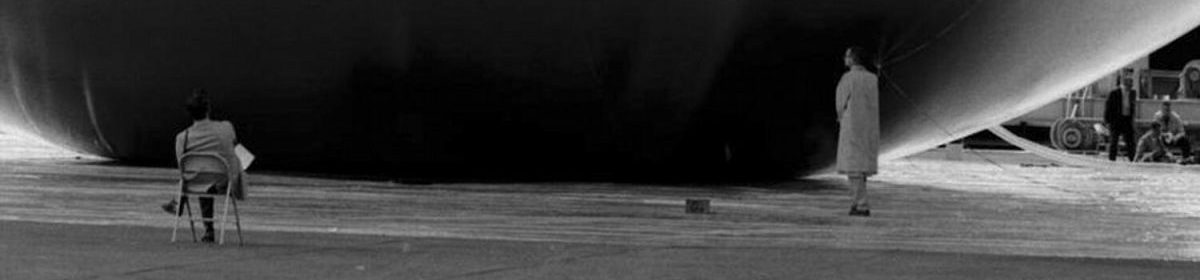
cremaster_1_blimps.jpg

And by ‘out there,’ I mean in North Korea. And by ‘a Cremaster,’ I mean Cremaster 1, Barney’s foray into Busby Berkley stadium spectacle.

arirang_fest_ev4eva.jpg

NK’s Arirang Festival has choreographed logistics to make even Barbara Gladstone blush [well, maybe]: 100,000 performers training for a year…actually, I bet they’re pretty cheap.
With stuff like this going on in the world, once-quixotically grand projects like Cremaster seem almost quaint. It’s like how almost any earth art you name pales to the inadvertent aesthetic alterations of the US Army’s Dugway Proving Ground.
The interesting/odd thing is how undercovered the Arirang Festival appears to be, especially given the Great Leader’s supposed fascination with film. The event remains a totalitarian spectacle intended to be experienced live.
There are only a few clips on YouTube [some are at everyoneforever, where this great photo came from as well]. Add live event producer/director and publicist Kim Jong Il’s “to kidnap” list, I guess.

The Fake Warhol Lectures, Part III: “He Used The Medium Of The Lecture Circuit, You Might Say”

My favorite line in the Daily Utah Chronicle interview with Paul Morrissey, where he admits Andy Warhol sent a double, actor Allen Midgette, to a lecture at the University of Utah, is from Kay Israel, assistant editor campus paper:

Mr. Morrissey:…On the back of Nico’s Chelsea Girls Album there is a picture of Warhol…That’s where the talk of Andy having Nico impersonate him. And Andy once impersonated Nico. We do it a lot in New York…”
Israel: Well being from the West I don’t think we’re quite used to it.”

Nothing gets closer to capturing the mutual bafflement between the University representatives involved–at least the organizers and the student reporters–and the Warhol/Morrissey camp. It’s fascinating how much the subject of the speaking fee comes up, as if the whole lecture series were a con orchestrated by some flaky New York grifters going after the money of gullible country folk from “out West.”
There’s also a regular skepticism that crops up about “Pop Art,” as if it, too, is a scam. It’s a sentiment I was surprised to find still, when I spoke about the vagaries and influences of money on the reception/perception of a work of art. Minimalism, conceptualism, pop, whole generations of contemporary artistic production and exploration were all still suspect.
And I feel my questions about the sources of authenticity and artistic value only fueled that doubt, as if astronomical prices paid for art could somehow be warranted, after all, by a single artist’s craftsmanship and technique, but not by their ideas, or even by the other aesthtetic qualities of the objects they created [or “jobbed out,” to use one audience member’s derogatory term.]
The entire practice of art is wrought with subjectivity, which translates into money very roughly. So it’s fascinating to read an almost obsessive investigation into the art-money flimflam from nearly 40 years ago–and find it still resonates. Things are still different “out West,” I guess.

Continue reading “The Fake Warhol Lectures, Part III: “He Used The Medium Of The Lecture Circuit, You Might Say””

Part II: Ute Reporters Scalp Warhol Over Fake Lectures

Staffers in the University of Utah Art Department raised suspicions that night that the man who’d just presented on campus was not, in fact, Andy Warhol, but an impersonator. As a result, event organizers withheld the $1,000 speaking fee while they conducted their quiet investigation.
The questions were not reported until several months later, when the student-run paper picked it up. For more than a week, the investigation was front-page news and provided the first inkling of the switch to other colleges where “Warhol” had appeared. Michelle Condrat, a UofU art history student researched the investigation and found the articles.

Continue reading “Part II: Ute Reporters Scalp Warhol Over Fake Lectures”

The Fake Warhol Lectures

So this week I gave a lecture about how collectors and the market get weird with art at the University of Utah. It was a lot of fun for me, and it seemed to go over alright. I took as a point of reference an earlier, well-known lecture at the UofU by Robert Smithson, the audio of which has posthumously been repackaged–without much justification, based on my research–into Hotel Palenque, a “multimedia installation” work that was purchased by the Guggenheim Museum.

phony_warhol_uofu_013168.jpg

It was only during a post-game wrapup with Prof. Monty Paret, the contemporary art historian who invited me, that I learned Hotel Palenque was only the university’s second most infamous artist lecture. After the famous Fake Andy Warhol lecture tour of 1967, that is.
In 1967, Warhol agreed to take a cross-country college lecture tour organized by the American Program Bureau. His appearance at the University of Utah was scheduled for October 2, and created “a mild furor,” according to the campus paper, The Daily Utah Chronicle. [One of Monty’s students, Michelle Condrat, researched the lecture history, including the series of articles of the Daily Chronicle’s investigation.]
From the lecture to the reception following, several people were suspicious that it was not, in fact, Warhol, but an impostor. The school held off on payment of the $1,000 speaking fee for several months. Then on January 31, 1968, after comparing photos of the U’s speaker with film footage of the artist, the Chronicle announced “Phony Warhol Suspected, Film Reveals Hoax On U”. It took about a week for Warhol–via then-manager Paul Morrissey–to come clean.
The impostor–who did not actually look anymore like Warhol than anyone with a shaggy silver ‘do and a pair of Wayfarers–turned out to be Allen Midgette, a young actor and Warhol posse member who appeared a couple of months later in Warhol’s Lonesome Cowboys. [Shooting for Lonesome Cowboys took place in Arizona at the end of January 1968, just as the UofU story picked up.] He appeared in the artist’s place at the University of Oregon; Linfield College in McMinnville, Ore.; and at the Univ. of Montana in Missoula.

uchron_warhol_midgette_0268.jpg

The one-line mention of sending a double on a lecture tour is in Warhol’s art history bio, but I’ve never seen or heard any details of how the lectures appeared from the duped audience’s standpoint, nor how the impostor was unmasked, largely due to the doubts of people at the University of Utah and the investigations of the school paper.
The Chronicle articles are very focused on recognizing Warhol, getting Morrissey to come clean, and what should happen to the $1,000 fee. There’s very little about the content of the lecture or even about Warhol’s art generally beyond a couple of namechecks of Campbell’s Soup.
I’ll excerpt the Daily Chronicle articles below.

Continue reading “The Fake Warhol Lectures”

Get Me Chocolate Jesus’ Publicist

We had a four-hour layover at O’Hare yesterday, which was long enough to become thoroughly disgusted with CNN’s non-stop toggling between three major crises: what if that dude with the hair wins American Idol? the daily truck bombings in Iraq, and the Chocolate Jesus scandal. [The fourth piece in CNN’s rotation–how the Iraqi version of American Idol is bringing the country together–was obviously a feelgood story of hope.]
As disingenuously imaginary artistic affronts to religion go, Chocolate Jesus is definitely no elephant dung Madonna, not even a Piss Christ. The otherwise ignorable artist, Cosimo Cavallaro, is no Andre Serrano, much less Chris Ofili; his previous work seems muddled, messy, and unserious [or deathly self-serious, which amounts to the same thing.]
That said, even as my own religious self is discomfited, I think there could be some serious readings of the work appearing during this high season of hollow chocolate bunnies, but those critiques of commercialized Easter are irrelevant now, drowned out by the Catholic League’s self-(pre)serving venality.
But where was the outrage two months ago, when the same streetfront gallery, The Lab at the Roger Smith Hotel, showed “Detainee,” a performance by David Duckworth that criticized the US government’s sanctioning of torture and prisoner abuse in Iraq, Guantanamo, its network of secret CIA prisons, etc. etc.

david_duckworth_detainee.jpg

In “Detainee,” the bound, gagged, and blindfolded artist was coated in red paint, then dragged across the floor to paint an American flag. The performance was repeated over several nights, Jan. 29-Feb. 2. [edited flash video is running on The Labs’ site.]
Duckworth’s piece is a clear reference to another transparently scandalous exploration of the exploitative dynamics of power, Yves Klein’s “Anthropometries,” performances in which the artist used nude female models slathered with his trademark blue paint as “living brushes,” sometimes with musical accompaniment.

“Detainee” has, at this moment, six citations on Google, including two from The Lab themselves. Not a peep of outrage from either patriotiness-loving demagogues or those zealots who “draw near to [Jesus] with their mouths.”
Either our media society is so sanguine about the idea of American torture that it’s not, in fact, outrageous any more, or Duckworth made a fatal mistake in the attention economy when he decided to keep his detainee jumpsuit on.
Detainee, by David Duckworth, Jan. 29 – Feb. 2, The Lab at Roger Smith [rogersmithnews.com]
Yves Klein Anthropométries [youtube]

Leaving On A Jet Plane, Speaking On Art Tuesday

Spiral Doily, found at the Sinclair Station, Corinne, UT, 2005

“Spiral Doily” postcard, Corinne, UT, 2005

Yow, didn’t realize how radio silent it’s been around here. I’ve been working on a couple of deadlines, one article I’ll go into later, and a lecture I’m just tightening up right now.
I’m heading off to Salt Lake City to speak at the University of Utah’s Visiting Artist [sic] Lecture Series. Given the venue, I’ll be talking a bit about Robert Smithson [who also rather famously gave a lecture at the school in 1972], the Spiral Jetty, and some of the stories and themes from both the blog here and my articles for the NY Times.
If I were pressed for a poetic theme, it’d be the mutable afterlife of a work of contemporary art. If I were presenting at CAA, I’d try to come up with a zingy title involving money. One thing that strikes me about most of the art historical world is the willful blindness on subjects of the market and its relationship to art and how it’s produced and consumed.
Once when I was talking to Tobias Meyer of Sotheby’s, he used the term “economic curatorship,” something of an attention economy wherein works get greater attention and exposure precisely because of their prices. It’s an undeniable effect, but unless you’re an auctioneer, money is usually only mentioned in relation to art in an uncritically pejorative way.
This is all part of what I’m thinking about for the talk–the audience will include BFA and MFA students as well as art history folks, as well as my Utah relatives up to two or three times removed, I hear–how much of it goes in is still TBD.
If you’re the reader of greg.org who’s in Salt Lake City and who’s not related to me, you should feel free to come, too. Tuesday, Apr. 3 at 5pm, ART 158, in the Fine Art building, just between the library and the museum.
There’s some webcasting/podcasting/streaming element to it as well; as soon as I figure that out, I’ll post it here.

Whew: Olafur Eliasson’s Art Car For BMW

bmw_h2r_concept.jpg

It had sparked one of those jump-the-shark anxiety attacks when I heard that one of the artists I most admire, Olafur Eliasson, had been commissioned to do an Art Car for BMW.
Even as it included such respected artists as Warhol, Lichtenstein, and Jenny Holzer, BMW’s Art Car series has always epitomized the superficial lameness of corporate co-optation of artistic practice.
For someone as serious and critically engaged as Olafur to decorate a BMW–and not just any BMW, but a hydrogen-powered PR-mobile, the H2R, the promotion of which would only deflect attention from the German auto industry’s complicity in global climate change and their aggressive efforts to thwart greenhouse gas emissions cuts–well, I was worried. And the BMW press release didn’t help
But then I read an account of a speech Olafur just gave at the NAI in Rotterdam, where he talked about the car: “‘They are increasingly unhappy about it’, he says about his commissioner. But it is about the relation between the automotive industry and global warming.”
I guess I shouldn’t have worried. but still.
“It makes a difference to make art.” [eikongraphia via archinect, image via mwerks]

Hello? Christian Marclay, Please. Speaking.

So the Oscars. Did I just miss their press release warning that they were going to inject off-off-Broadway wacky juice into the show? Because after being numbed into catatonia by years of Debbie Allen, Debbie Allen manques, and Gil Coates’ Hollywood-snake-eating-its-tail directing, a simple heads up that they were going all avant garde would’ve been nice.
Never mind that both Will Ferrell’s weird musical number and Tom Hanks’ speech made reference to alcoholism. Plus there was Ellen’s rolling papers joke at the end. That’s mainstream.
What threw me–after the very existence of the non-relevant Ferrell song, that is–was that choir of sound effects people. Cool, sure, but WTF? Their multi-channel video backdrop made me think they were doing a live cover version of Christian Marclay’s Video Quartet.
Obviously the biggest Marclay cover version was that iPhone commercial, though. I’d say I hope he got royalties, but then, I wonder how much he paid to license those clips. Exactly. The proper course of action would have been for Apple’s agency to hire Marclay to do the commercial. Or actually, to do other commercials.
And speaking of commercials, did anyone else think of that VW shadow hands commercial during the Pilobolus numbers? Also, Pilobolus???
update: [d’oh, I see kottke‘s already got people working on the Marclay iPhone thing.]

For The First Time, All Over Again

So Christie’s bought Haunch of Venison, which will open an outpost in Rockefeller Center, the spectacular, near-raw space where the Judd Foundation pieces were previewed? Great.
But is it, as the NYT calls it, “the first time, an auction house has acquired a gallery primarily to enter the market for new works by living artists”?
Have I just been in deep freeze, or didn’t Sotheby’s buy all–or was it half?–of Deitch in the late nineties for…one million dollars?

MoMA’s Feminist Future: A Picture Of Eileen Gray

e1027_photos_itsdaniel.jpg

WPS1 has posted the audio for MoMA’s recent symposium, “The Feminist Future: Theory and Practice in the Visual Arts.” Listening to a panel discussion with no access to the visuals can be a tough sell, but the two talks I heard were frankly awesome:
Artist Coco Fusco’s performance as Sargeant Fusco sounded fierce and relevant, while the Guerrilla Girls, bless their hearts, sounded a bit out of touch.
The killer, though, is Beatriz Colomina’s discussion of Eileen Gray and Le Corbusier. The thrust, if you will, of her presentation was that Corbu essentially raped Gray’s most important architectural work, E.1027, a house she built in Roquebrune/Cap Martin on the far side of Monaco, by putting murals depicting Algerian concubines throughout the house.
It’s obviously more complicated than that, and I find it remarkable that so little of what she talked about is generally known. I’ve heard people who should know better dismiss and diminish Gray’s work as recently as 2004.
Anyway, what’s also remarkable is that E1027 is still a deteriorating ruin. When I lived in Monaco in 1995-7 and set out to find it, no locals could figure out what I was talking about. The most comprehensive images I’ve seen from that era are on flickr, a photoset made by Daniel, an Irish architect, who hopped the fence in 1997 when the house was a squat [the last owner had been murdered a couple of months prior.]
I can’t find any images of Gray’s last house, Lou Perou, which was done near St Tropez, either. And I can’t find any word on the status of her own house, Tempe a Pailla, which was inland, up the mountains from Roquebrune & Menton in the village of Castellar. How is it that no modernist pilgrims have tracked and documented this stuff?
Listen to ‘The Feminist Future’ on WPS1 [wps1.org]
E1027: A Photoset by It’s Daniel [flickr]
update: Tropolist Chad points out that Colomina’s talk is an architectural classic. here’s the text of “Battle Lines: E.1027,” from 1995, for example, a lot of which she also presented at MoMA. As Chad puts it, “Of course, if I had to pick a dozen such texts to keep bandying about, that one would be near the top of the list. ” As Tropolism pointed out in Dec. 06, Colomina’s paper was also reprinted in the first issue of Pin-Up Magazine.
later update: Guy points out that Lou Perou is included in Caroline Constant’s 2000 monograph on Eileen Gray from Phaidon. I put it on my to-get list from the storage unit…