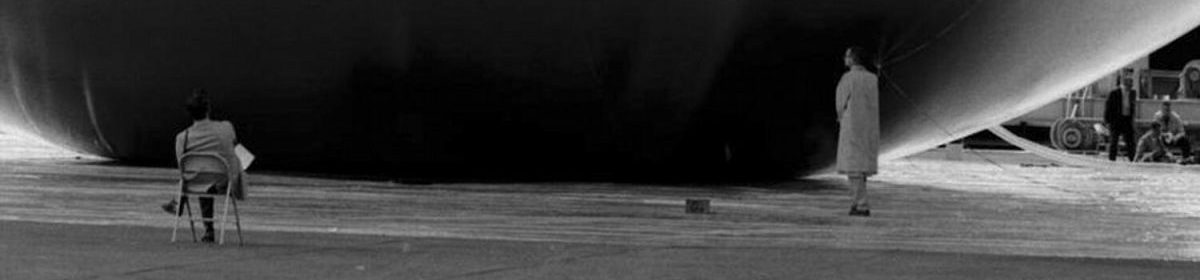
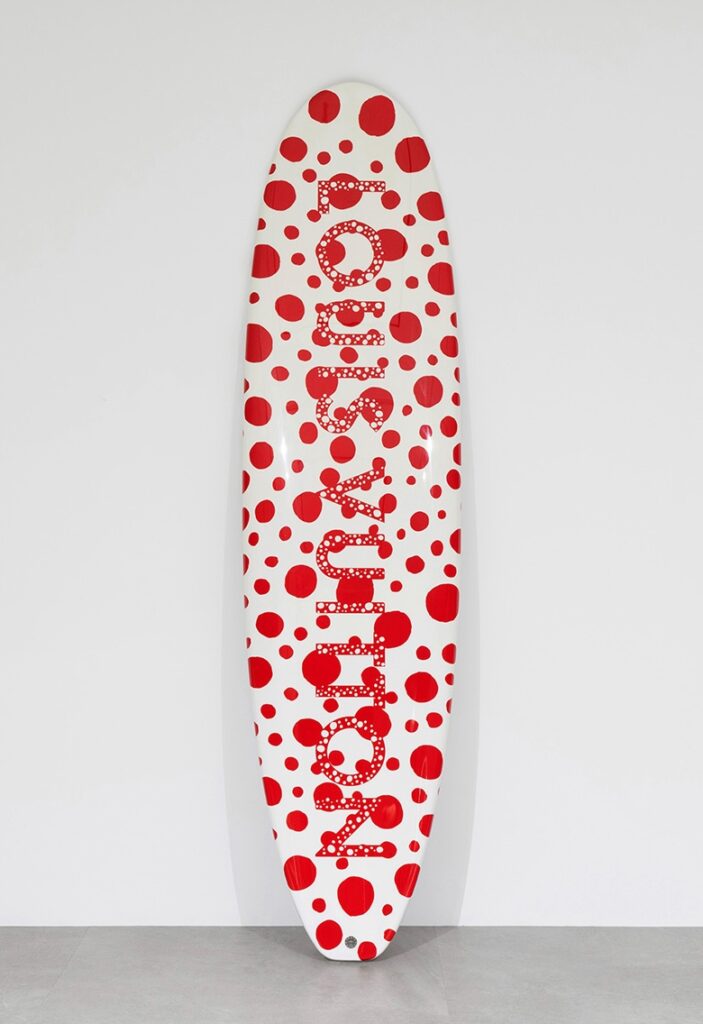
The best thing I can say about this is it’s 224 cm tall, via SBI Auction
I could have gone another couple of years without realizing Louis Vuitton made several hundred Yayoi Kusama surfboards as part of their sprawling animatronic collabsploitation in 2023.
There’s a longboard and a shortboard variant, and at least two motifs: dots and tentacles. The PR copy regurgitated on all the hypesites says they’re a tribute to Kusama’s pumpkin sculpture on the dock at Naoshima. If that’s the true, then why aren’t they all destroyed in a typhoon?
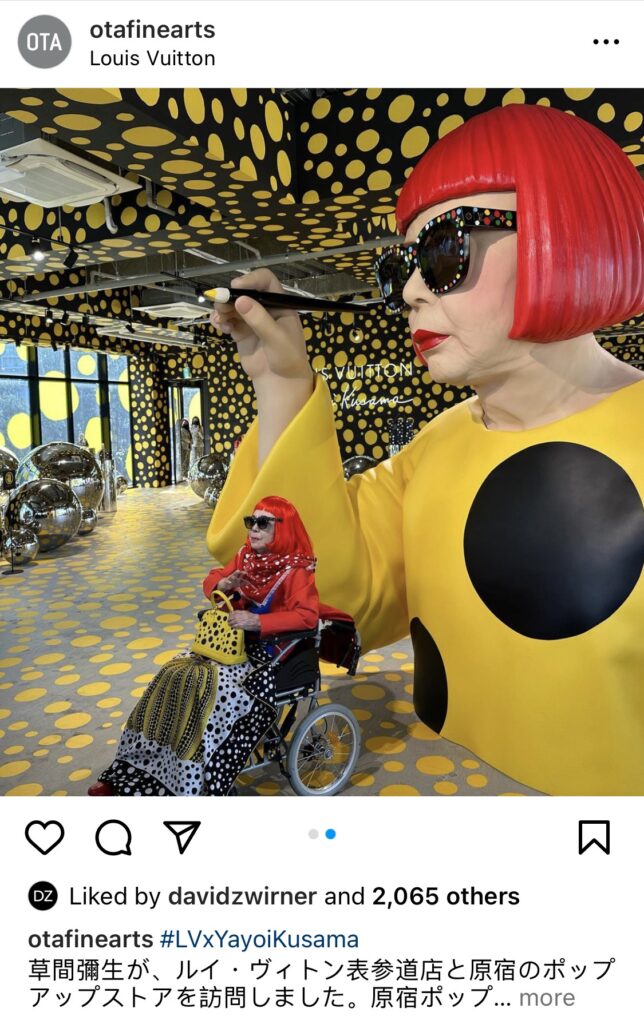
Kusama, an LV X Kusama scarf and bag on her lap, personally oversees every dot on the second floor of her immersive LV X Kusamaverse pop-up store in Harakuku. Image: Ota Fine Arts IG
Let’s stipulate that the artist either approves or at least knows about it. She’d certainly recognize it. But what exactly is going on with the Kusama X Louis Vuitton collaboration? To find out, I turned to an expert [whoever rewrote this December 2022 press release for Hypebae]:
The collaboration comprises ready-to-wear, bags, shoes, luggage, trunks and fragrances, set to launch in two distinct parts. The first drop is set to feature Kusama’s “Painted Dots,” “Metal Dots,” “Infinity Dots” and “Psychedelic Flower” collections, with a second drop due to launch a few months later. The application of every dot on each piece has been personally overseen by Kusama, alongside many of the objects that make up the partnership, with a distinct focus on precision and detail.
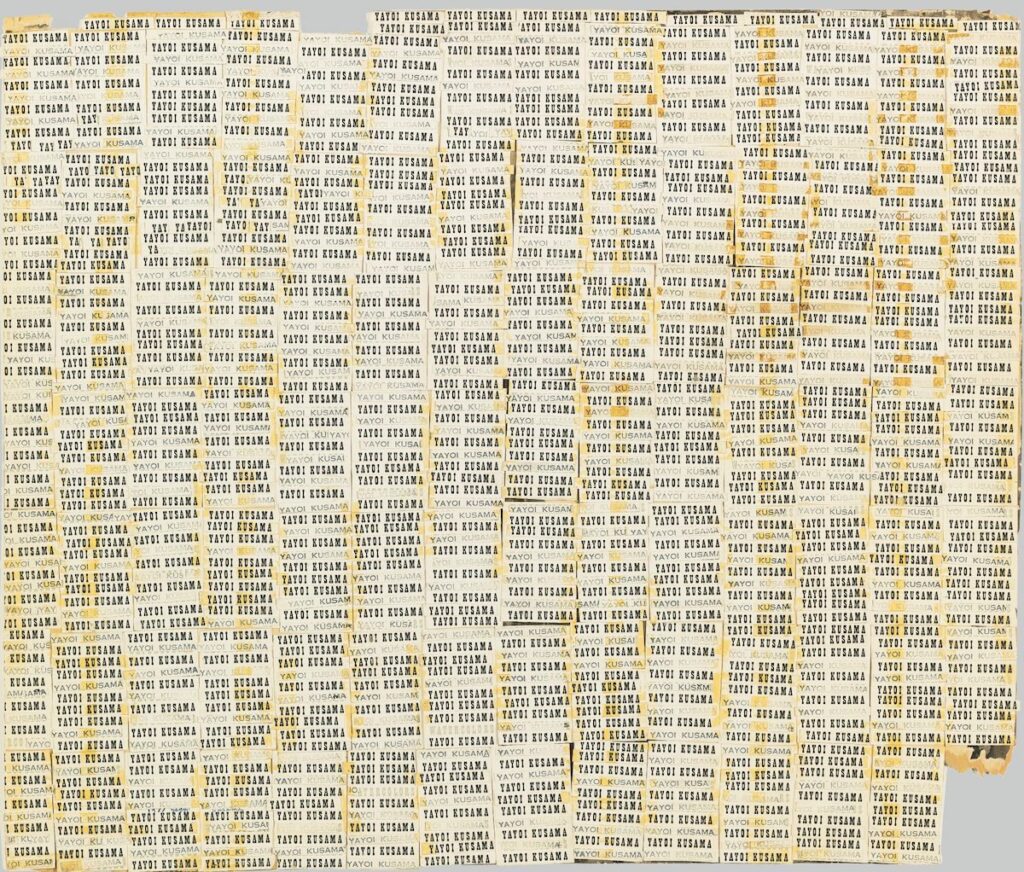
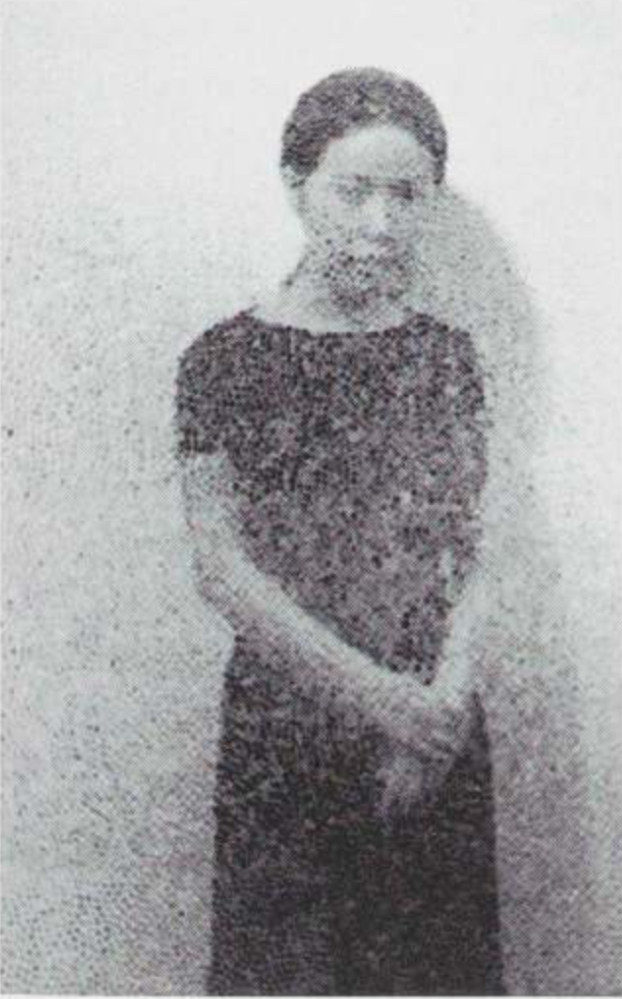
Yayoi Kusama, Accumulation of Letters, 1961, gift of the artist to Stella Waitzkin, sold at Sotheby’s in 2013
There were so many avenues to pursue in writing about Yayoi Kusama and her work; one that I found among the most compelling and the least considered is her practice of photographing herself among her work. I mean, it gets mentioned by various historians or curators, but I didn’t find anyone doing a deep, critical look at Kusama’s always deliberate, constructed, and embedded imagemaking of her body and her [sic] artworks.
Midori Yamamura’s research found examples of Kusama doing this at the very beginning of her artistic practice, organizing shows of her own watercolors at the Matsumoto civic center as a teenager. But it’s there with the Infinity Net paintings, and it’s there with the Accumulation Objects, too. And in between these two bodies of work, it is here in this 1961 work on paper that is related to the Air Mail stamp works she made and showed beginning in 1962.
Even though it interests me, I take auction catalogue essays with a raised eyebrow, but Sotheby’s nailed this one:
Accumulation of Letters is arguably one of the most art historically important works by Kusama. In many ways it can be read as a self-portrait, the artist’s name, or signature, standing in as a metaphor for the self. Known for her promotional talent and flair – Kusama regularly arranged for professional photographs to be taken of her with her work often wearing outfits that matched the paintings or sculptures – Accumulation of Letters acts as an artwork-cum-advertisement. In the exhibition catalogue for Kusama’s 2012 traveling retrospective, Rachel Taylor writes that Kusama “situated herself at the centre of her artistic universe, the key protagonist in a world populated by proliferating forms, endless nets and infinite polka dots”
This Accumulation of Letters is made by cutting up hundreds of left over gallery announcements from two shows at Gres Gallery in Washington, DC: one was a solo, and the other a group show of Japanese artists. Beyond the obviously laborious process, and the artist’s totalization of herself and the work, I am struck by the wrenching pathos of this piece, of those stacks of invites sitting in her studio. All these cards left over from shows out of town that no one in New York would see, or had seen. What was she supposed to do with them?
As it turns out, she gave this piece to a friend, an artist named Stella Waitzkin, who’d fled to downtown from the stifling patriarchy of suburban Long Island. Since surfacing at Sotheby’s in 2013, Accumulation of Letters has been shown at Kusama’s museum in Tokyo.
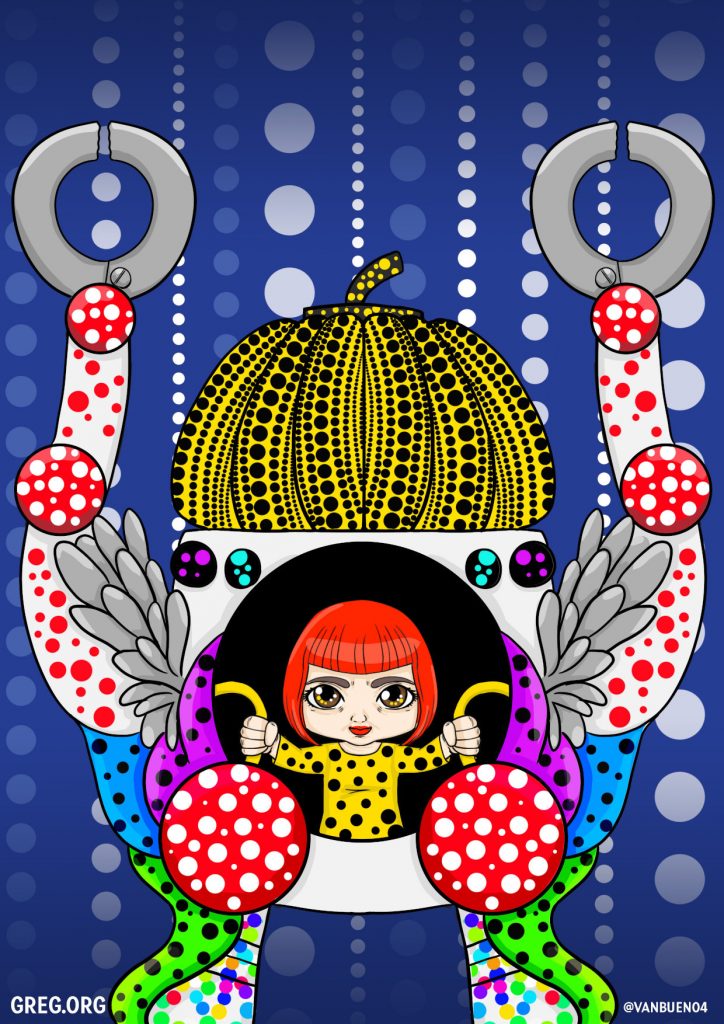
an interpretation of Kusama driving a mecha, by vanbueno for greg.org
[tl;dr I commissioned two anime artists to depict Yayoi Kusama in a mech-suit to hype the article I just wrote about her. Shout out to vanbueno {above] and onki [below] for their amazing work!]
One of the big questions we set out to answer when writing about Yayoi Kusama for ARTnews was how does the artist keep making so much work, of increasing scale and complexity, well into her 90s? Kusama has always worked at a relentless, obsessive pace; it’s as much a part of her story as of her practice. But her most high-profile work of the last decade especially–Infinity Mirror Rooms, installations, and giant pumpkins–and her many large-scale museum exhibitions, obviously requires an extensive organizational and fabrication infrastructure. How does that work, and who’s really in control of it?
Absolutely love this double exposure photo by Yayoi Kusama of her and an Infinity Net painting, c. 1960, via the MoMA catalogue.
If 4000+ words on Yayoi Kusama leaves you wanting more, here are some of the many sources I found useful in trying to understand and write about the artist and her work:
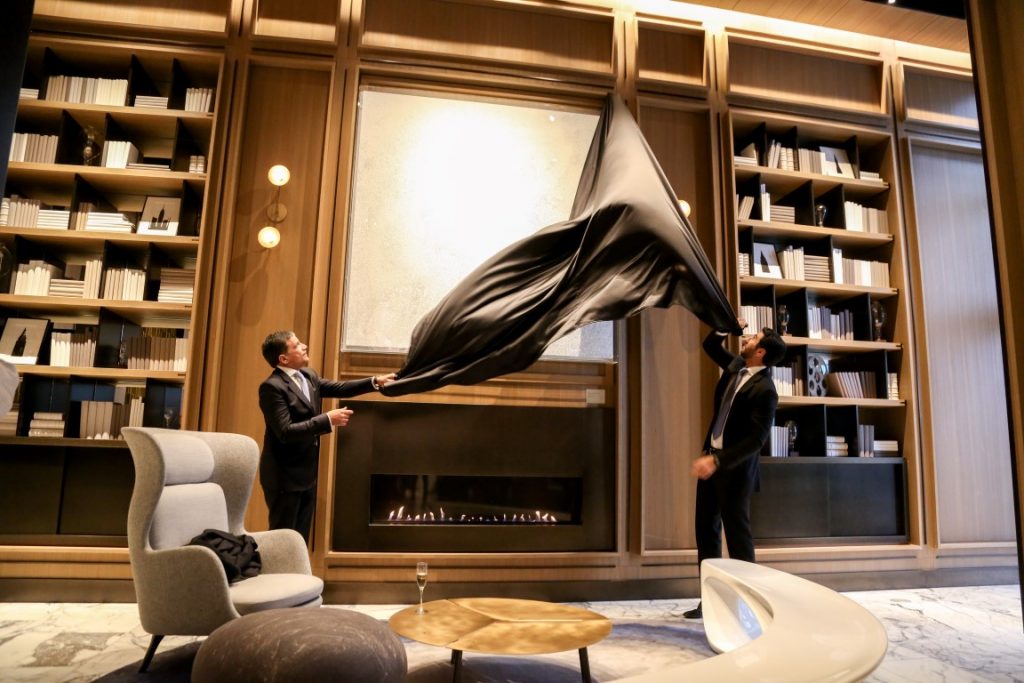
“SKY Unveils Artworks by Yayoi Kusama New York City, USA – 05.04.16 Photo – J Grassi” For a long time I worked to get the article to land on this photo, of two real estate developers unveiling their fresh, new Frieze Fair Kusama in the prop library of their huge rental building on 42nd and 11th or wherever. They have the only bronze pumpkin on public view in New York in the motor court, too.
At the end of February/the beginning of March, just as the Covid-19 pandemic started impacting the US, I was asked to make sense of the increasingly broad and intense interest in Yayoi Kusama and her work. As someone who’s looked at her work and tried to get smart about it for more than 25 years, I had tried to stop being surprised at how popular Kusama’s work has become–and I repeatedly failed. I just could not account for it. But I welcomed the challenge to figure it out.
Fortunately, there has been a surge of recent historical and academic interest, and a huge blind spot where Kusama’s Japanese career is concerned. So as museums and library shutdowns loomed, I dashed around town, taking snapshots of every Kusama-related publication the Smithsonian had: more than 1,500 pages, and then I started reading, and contacting scholars and curators and dealers, some of whom were very responsive to my inquiries. For their time and insights, I am very grateful. For those who did important work and never responded, I guess thanks for your work. For the unexpectedly large number of folks who did not respond at all, my interest is piqued.
The resulting article was published in the Summer issue of ARTnews, and is now available online. I’m fairly pleased with it, and am especially grateful to the editors at the magazine who helped guide and shape this look at an artist whose ambition and tenacity are absolutely unparalleled; Kusama has made transcendent, groundbreaking artwork while overcoming immense obstacles, both from within and without. I think her work holds a mirror up to the art world and how it’s changed in her 70+ year career.